Historic Ceramic Art, Cultural Heritage, Museum Collections & Auction Provenance.
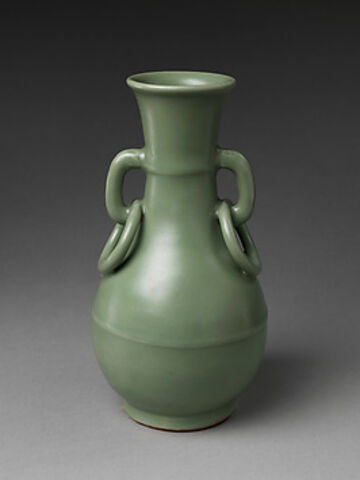
This archaistic celadon vase echoes the powerful silhouette of bronze zun or fanghu vessels, detailed with flange ridges and handles under a semi-translucent green glaze.
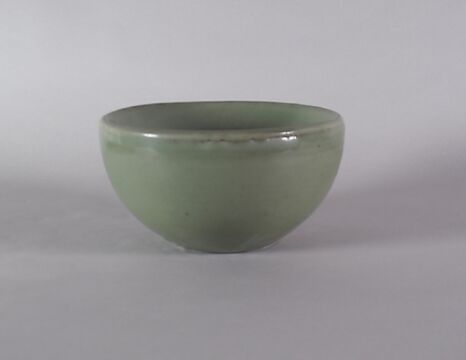
Designed with a hollow double-walled cavity to hold hot water and keep food warm, this functional bowl is finished in an unctuous green celadon glaze.
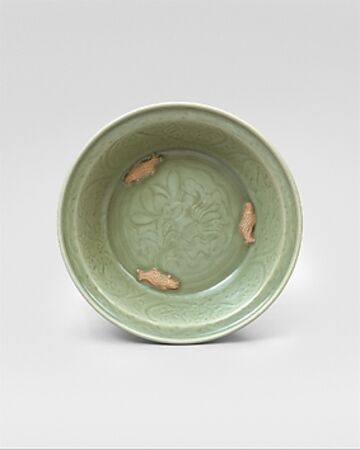
This substantial basin features steep sides, an everted flat rim, and carved floral motifs inside the well under a rich, glossy olive-green glaze.
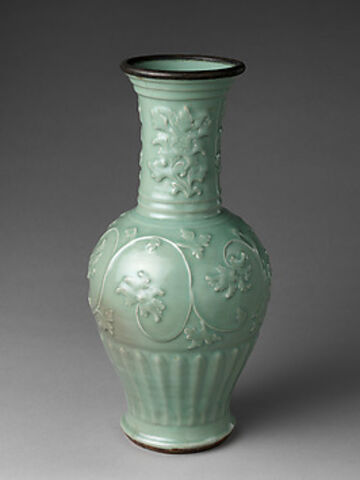
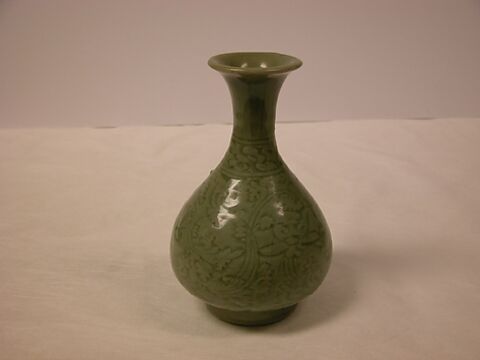
With a flaring neck and robust baluster body, this vase features deep, rhythmic carvings of scrolling peonies beneath a translucent green celadon glaze.
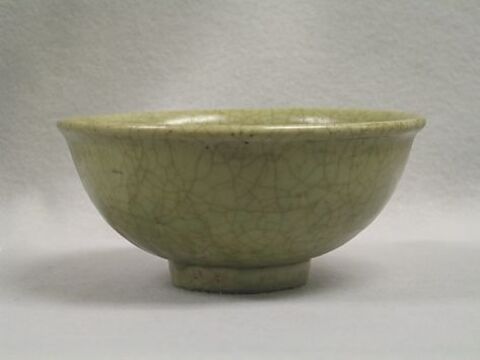
A 15th-century Ming dynasty Longquan celadon bowl of deep rounded form, coated in an unctuous sea-green glaze over carved motifs.
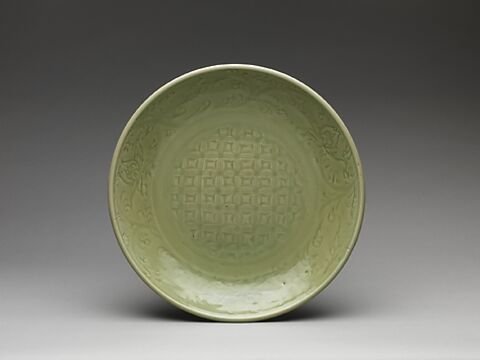
A 14th-century Longquan celadon ceramic dish potted with rounded cavetto walls and an even olive-green monochrome glaze.
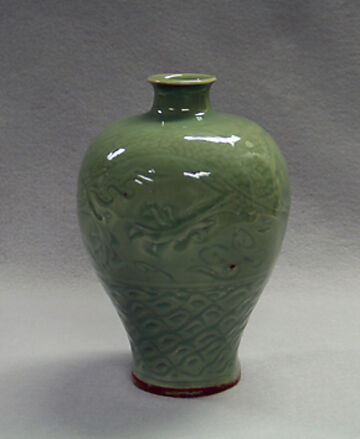
A 14th-century Longquan celadon meiping vase carved with a sinuous dragon soaring amid clouds beneath a transparent glaze.
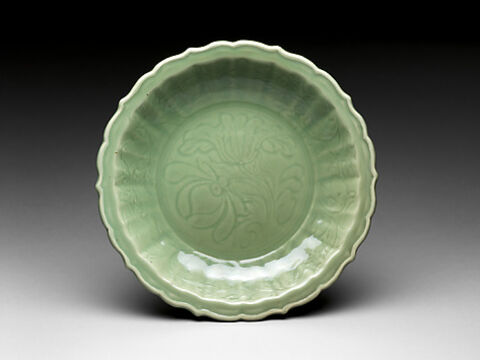
A 15th-century early Ming Longquan celadon plate carved with a blossoming lotus in the central medallion and fluting along the cavetto.
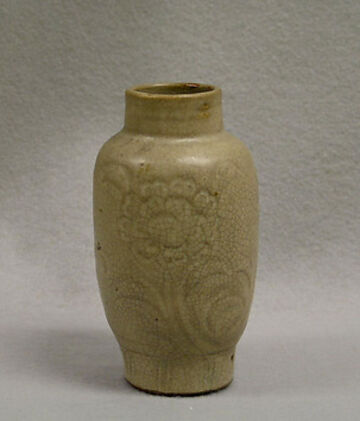
A late Ming dynasty Longquan celadon ovoid jar carved with undulating floral foliage, finished with a luminous translucent green glaze over a dense light grey stoneware body.
A 15th-century Ming dynasty celadon vase from the Metropolitan Museum of Art, featuring a balanced profile and an unctuous glaze.
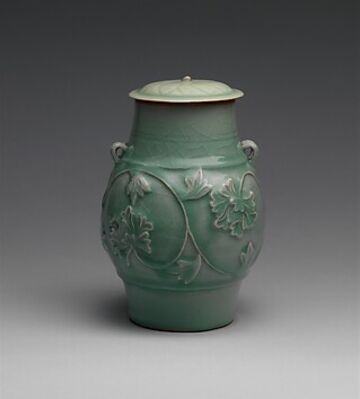
A sturdy 14th-century ovoid jar carved with undulating leafy peony vines beneath a viscous olive-green glaze.