Historic Ceramic Art, Cultural Heritage, Museum Collections & Auction Provenance.
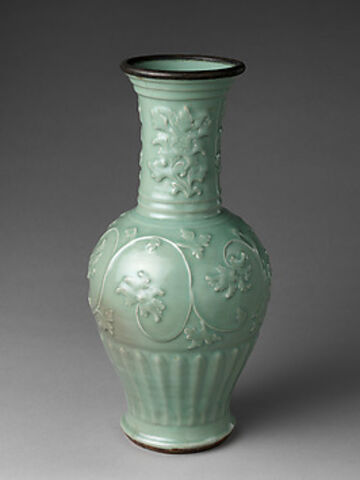
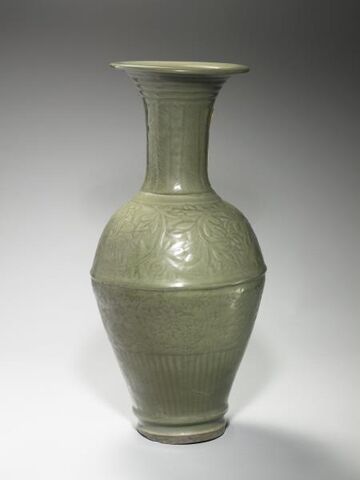
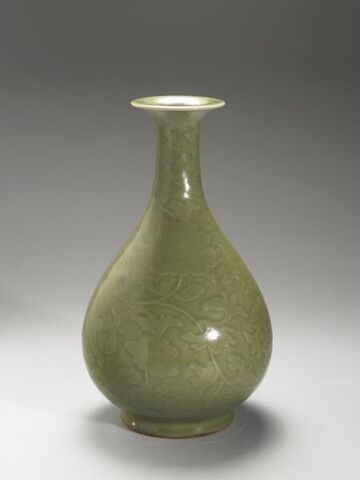
With a flaring neck and robust baluster body, this vase features deep, rhythmic carvings of scrolling peonies beneath a translucent green celadon glaze.
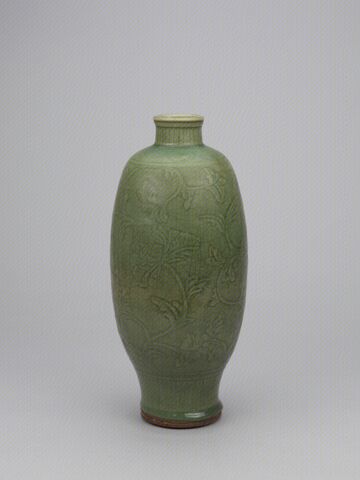
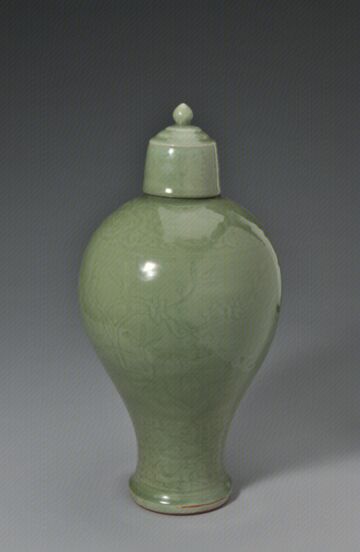
Featuring an upright profile with balanced proportions, this vase is decorated with freely carved scrolling floral motifs under a lustrous translucent green celadon glaze.
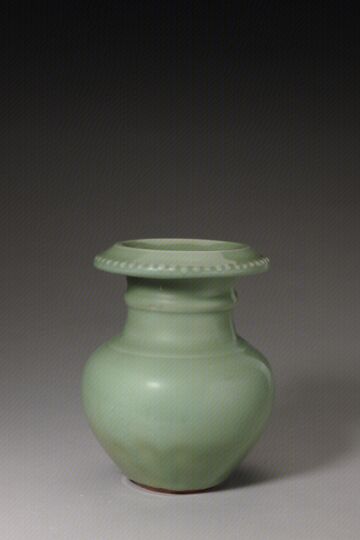
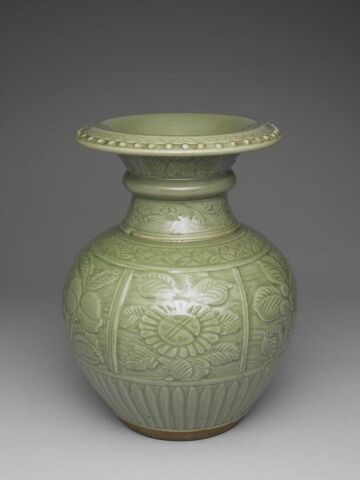
Known as a shiliu zun, this sculptural vase features a lobed globular body and serrated spreading mouth mimicking the calyx of a burst pomegranate, symbolizing fertility.
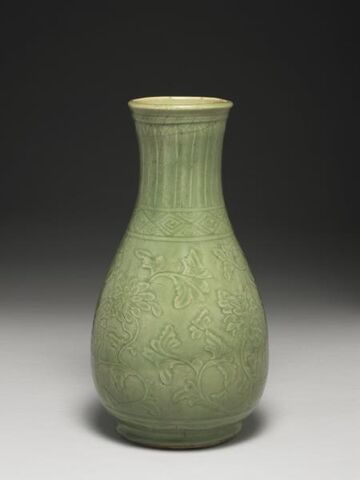
Featuring a trumpet-like wide mouth and tapered baluster body, this vase is incised with dynamic botanical scrolls beneath a clear green celadon glaze.
This dramatic vase has a trumpet neck and baluster body carved with scrolling peonies beneath a rich green celadon glaze.
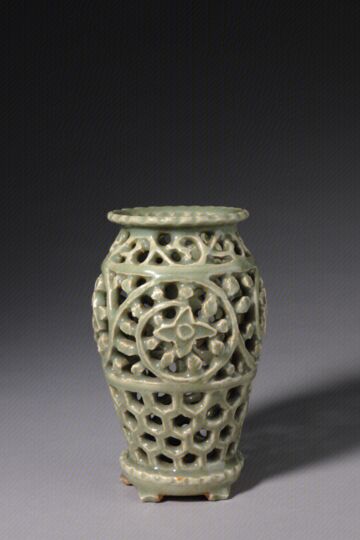
Demonstrating master potting, this double-walled vase features an outer reticulated shell carved with openwork floral scrolls over a solid inner core.
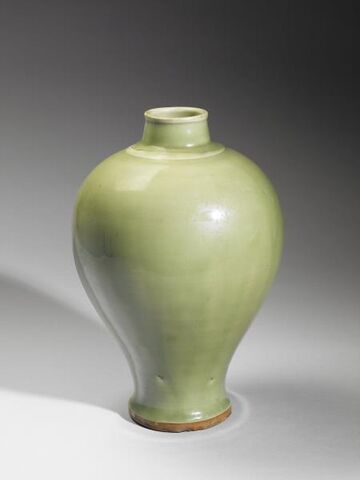
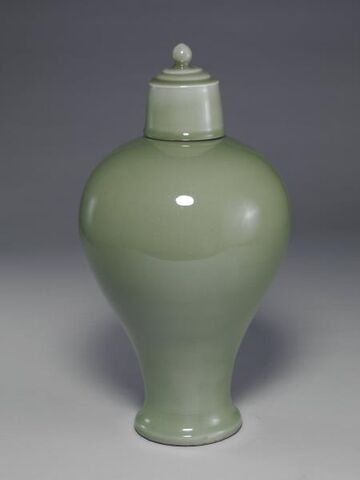
This meiping exhibits the classic profile with an understated mouth, high swelling shoulders, and tapered body covered entirely in a jade-toned celadon glaze.
An early Ming dynasty Longquan celadon zun vessel modeled in the shape of a pomegranate, embellished with raised flower and fruit sprays.
An early Ming dynasty Longquan celadon meiping vase retaining its original fitted cup-shaped cover, potted with robust high shoulders.
A Ming dynasty Longquan celadon meiping with matching cover, finely incised with auspicious sprays of bamboo and peach under glaze.
A Ming dynasty Longquan celadon pear-shaped vase (yuhuchunping) decorated with molded floral sprigs in soft relief beneath the glaze.
A 14th-century Longquan celadon stoneware vase with baluster body and olive-green glaze covering subtle carved elements.