Historic Ceramic Art, Cultural Heritage, Museum Collections & Auction Provenance.
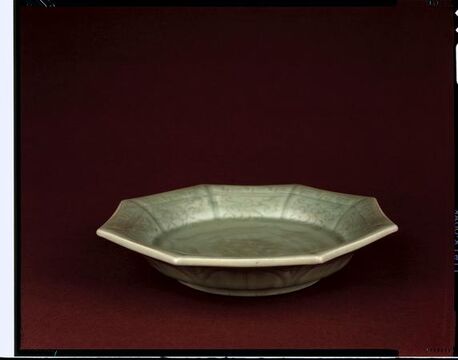
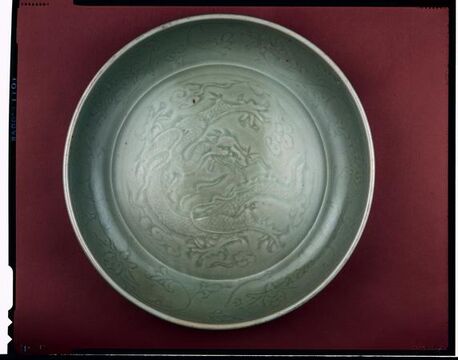
Commissioned during the Yongle to Xuande periods, this heavy dish reflects early Ming court taste with deeply carved botanical motifs and a fine, oily sea-green glaze.
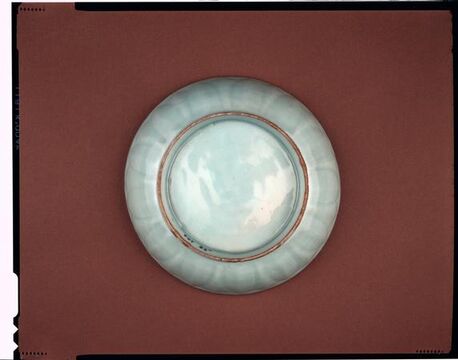
Featuring a gently curved well and neat footring, this dish displays the jade-like surface qualities and soft olive-green color of late Song and Yuan Longquan celadon.
With smooth potting and an even lip, this dish showcases the serene jade-green monochrome glaze favored during the late Southern Song and Yuan periods.
Produced in the waning years of the Ming dynasty, this dish retains the heavy potting and deep olive-green glaze typical of late Longquan kilns.
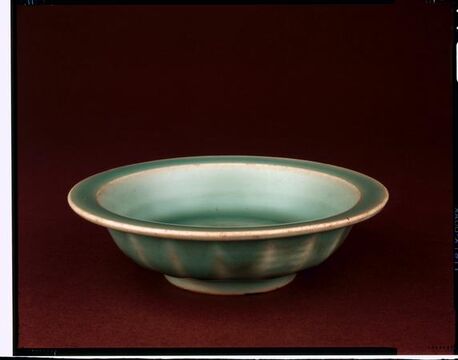
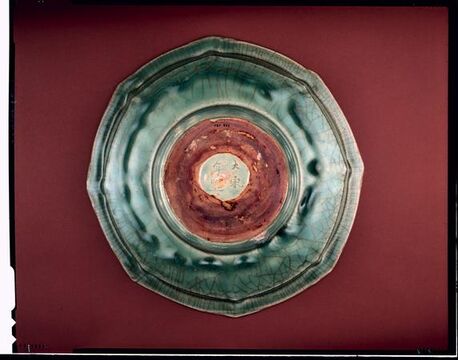
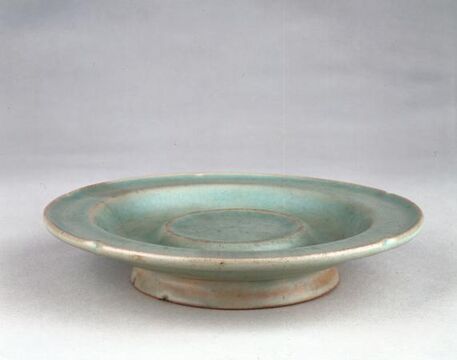
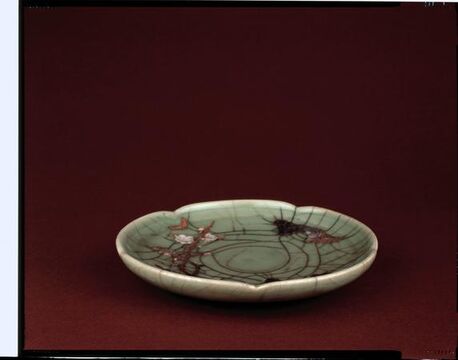
Constructed to hold a delicate tea cup, this stand features a wide flaring flange and raised central rim, covered in a translucent, finely crackled green glaze.
Featuring a thick, smooth celadon glaze, this dish has a gently curved cavetto and finely incised central medallion reflecting 15th-century Ming aesthetics.
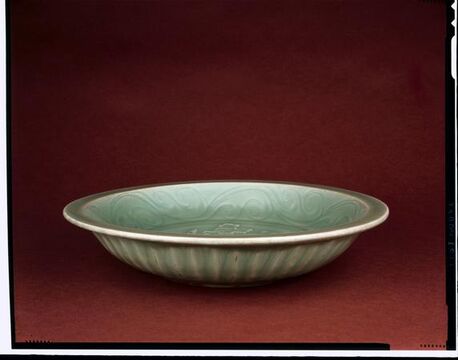
This sturdy dish has a flattened everted rim and an incised central medallion with lotus blooms beneath a glossy olive-green celadon glaze.
A Ming dynasty Longquan celadon dish produced during the Yongle reign (1403–1424) with thick unctuous olive glaze.
A Yuan dynasty Longquan celadon dish with shallow curved cavetto, coated in a thick sea-green glaze.
A Yuan dynasty Longquan celadon stoneware dish with rounded walls, coated in a lustrous olive-green glaze.
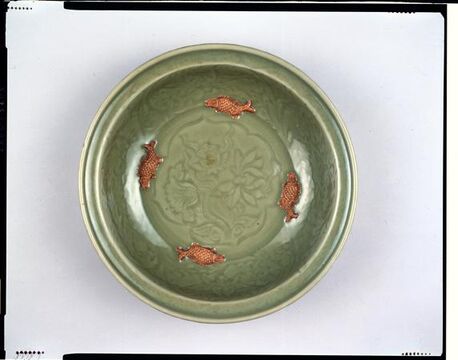
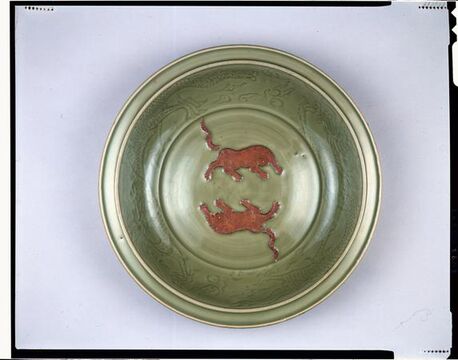
A 13th-century Longquan celadon shallow dish from the Percival David Collection, decorated in relief with twin swimming fish beneath a lustrous sea-green glaze.