Historic Ceramic Art, Cultural Heritage, Museum Collections & Auction Provenance.
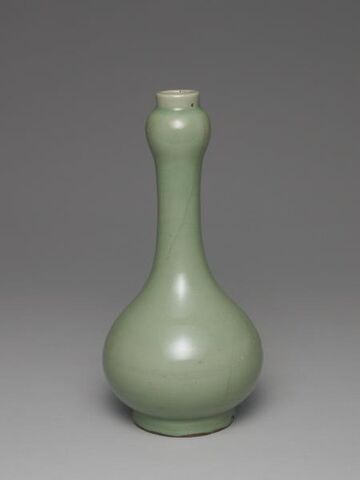
Known as a suantou ping, this elegant vase exhibits a bulbous lobed mouth resembling a garlic bulb, tapering neck, and rounded body enrobed in a serene green celadon glaze.
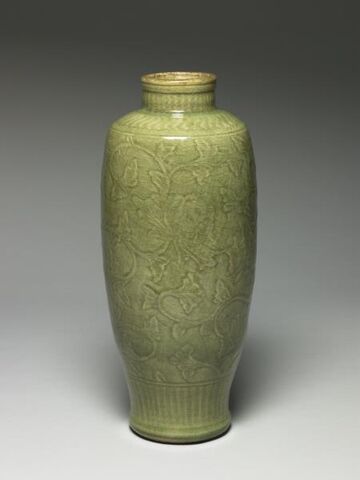
Featuring bold floral carving, this vase highlights lush peony blossoms with freely combed leafy branches, wrapped in an olive-tinged celadon glaze.
Featuring a classic pear-shaped body tapering to a slender neck and flaring mouth, this early Ming vase is incised with elegant floral sprays under an unctuous celadon glaze.
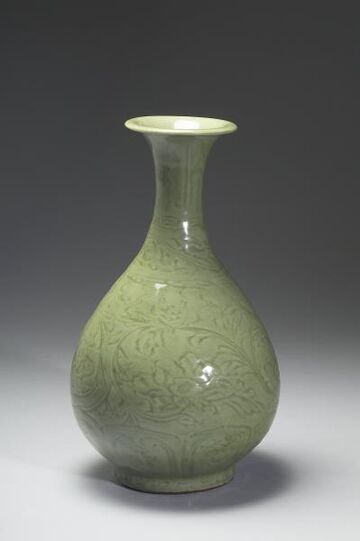
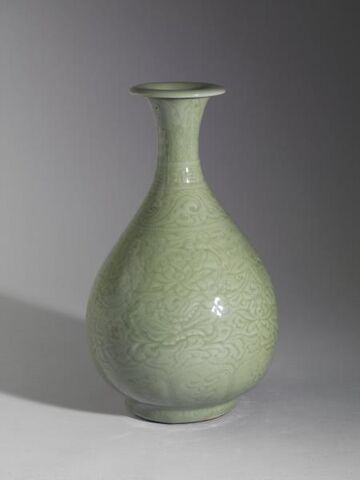
Showcasing a classic pear-shaped form, this bottle vase is carved with broad scrolling floral registers beneath an even, translucent celadon glaze.
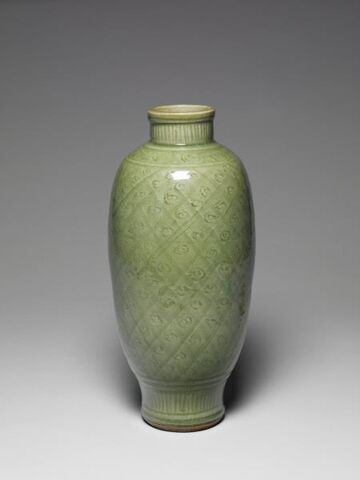
Displaying an elongated ovoid 'olive' profile, this vase is incised with dynamic swirling cloud and wave patterns beneath a glossy olive-green glaze.
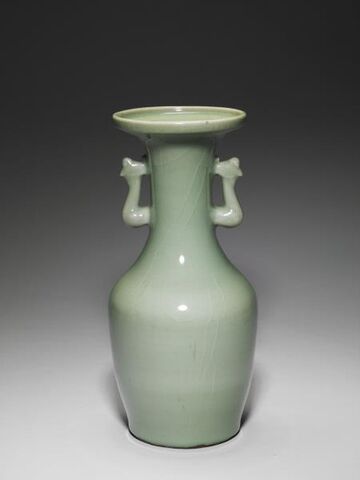
Featuring archaistic flair, this vase has an elongated baluster body and neck adorned with two sculpted phoenix-head loop handles, coated in a translucent celadon glaze.
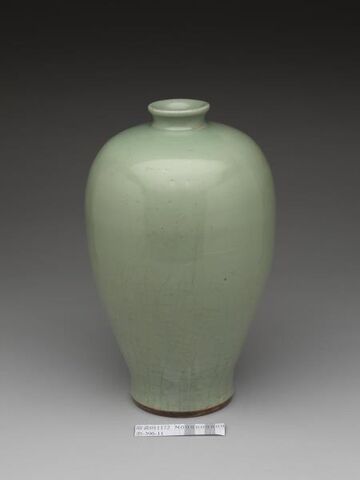
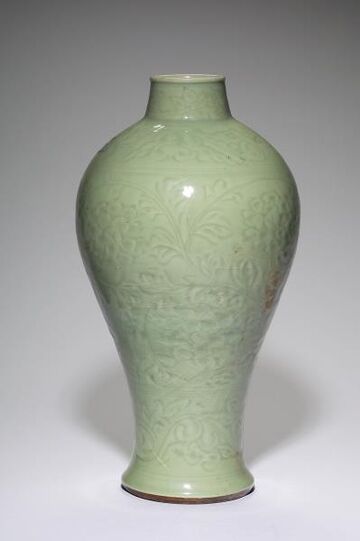
This meiping exhibits the classic profile with an understated mouth, high swelling shoulders, and tapered body covered entirely in a jade-toned celadon glaze.
Tapering toward the mouth and base with a swollen midsection, this olive-form vase is incised with rhythmic botanical scrolls beneath a clear green celadon glaze.
Exhibiting balanced early Ming proportions, this meiping displays a narrow flared mouth and broad shoulders enveloped in a lustrous, unctuous green glaze.
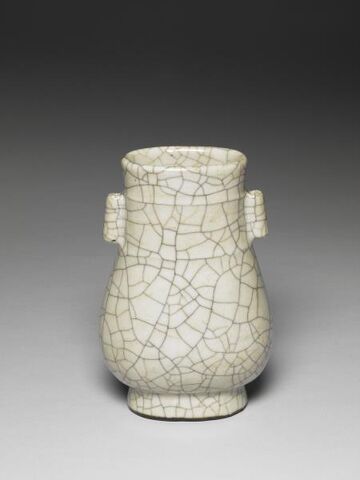
Reviving archaic bronze hu aesthetics, this vase has an ovoid body, tall neck, and twin tubular ears, coated in an even monochrome celadon glaze typical of Qing archaism.
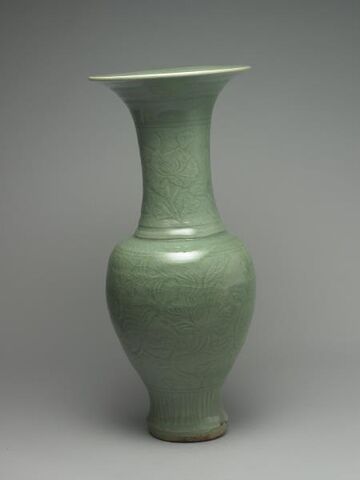
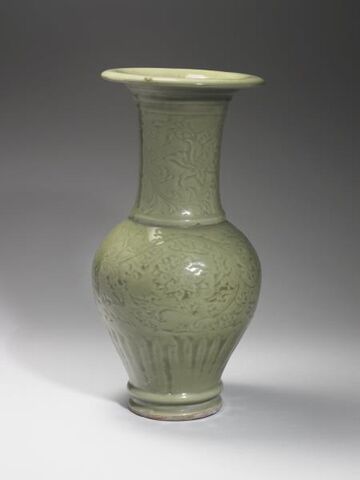
Known as a fengweizun (phoenix-tail vase), this piece has a dramatic flaring trumpet neck and baluster body carved with scrolling peonies beneath a green celadon glaze.
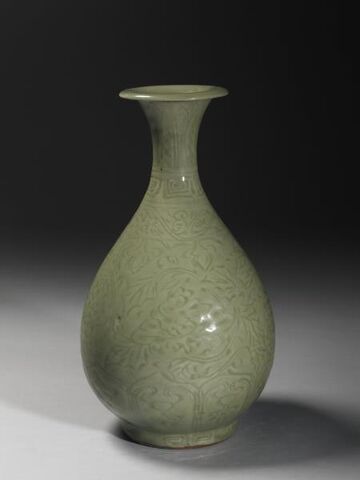
Possessing an S-curved pear-shaped silhouette, this yuhuchun vase is carved with registers of plantain leaves and scrolling floral sprays under a fine celadon glaze.