Historic Ceramic Art, Cultural Heritage, Museum Collections & Auction Provenance.
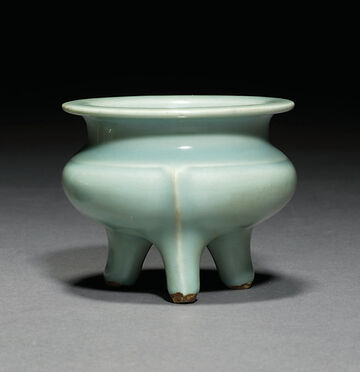
Featuring archaic bronze ding proportions, this censer has three columnar legs and subtle raised flanges, enveloped in a rich, unctuous green glaze.
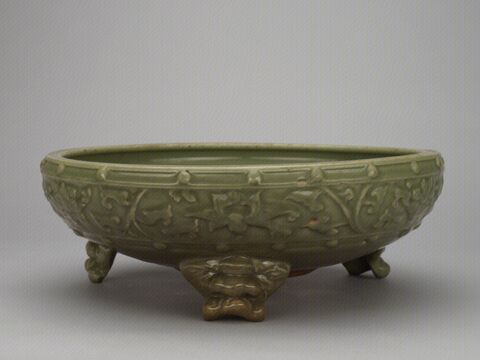
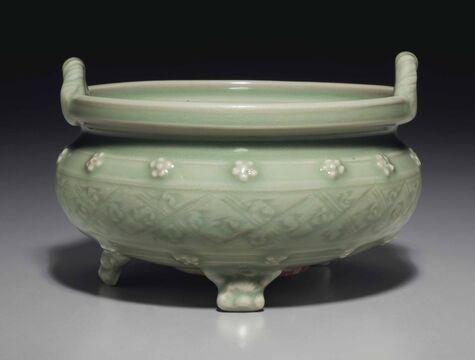
Raised on three cabriole legs, this cylindrical censer is molded with scrolling floral blossoms in relief between raised fillets under a lustrous green glaze.
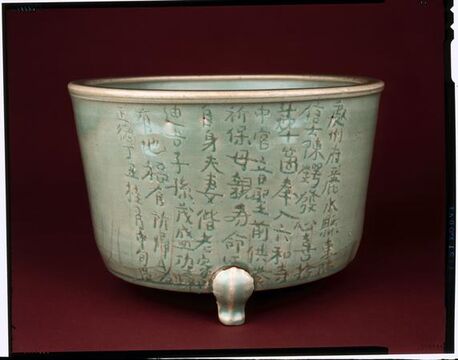
An important historical piece bearing a dated dedicatory inscription from the 12th year of Zhengde (1517), featuring a sturdy cylindrical form supported on three feet under an olive-green glaze.
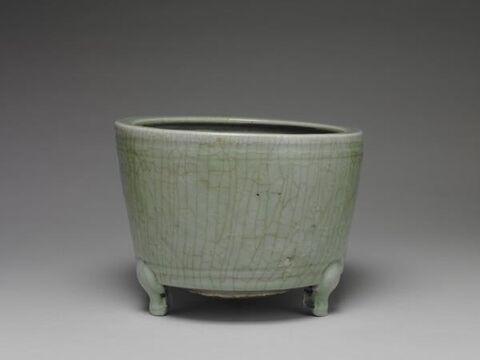
Modeled with an archaic bronze silhouette, this censer rests upon three short cylindrical feet and is coated in an even, glossy olive-celadon glaze.
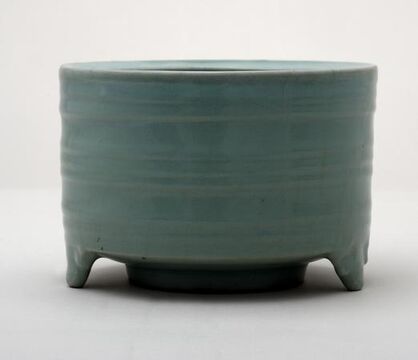
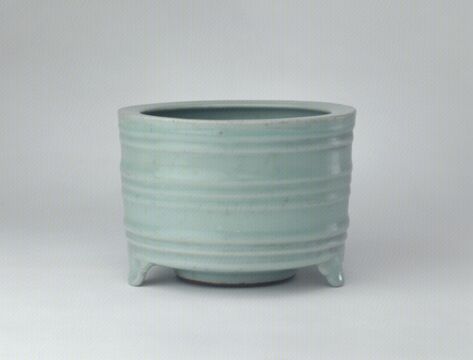
Modelled after ancient bronze lian censers with horizontal bowstring bands around the body, supported on three ruyi-shaped feet beneath an exceptional blue-green glaze.
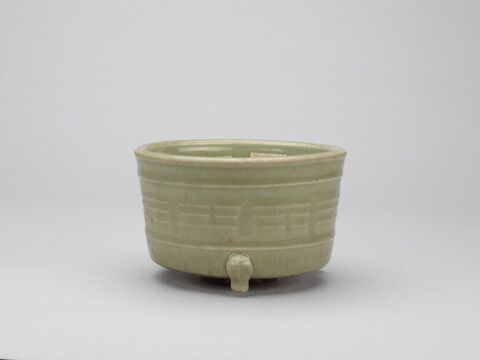
The cylindrical body is carved with the eight trigrams (bagua) between horizontal border registers, raised on three cabriole legs under an olive-green celadon glaze.
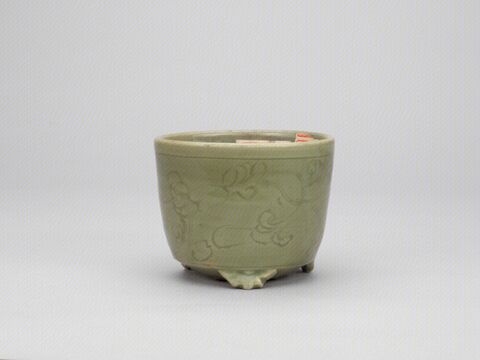
The exterior of this cylindrical censer is carved with undulating lotus vines, resting on three stubby feet under a lustrous olive-green celadon glaze.
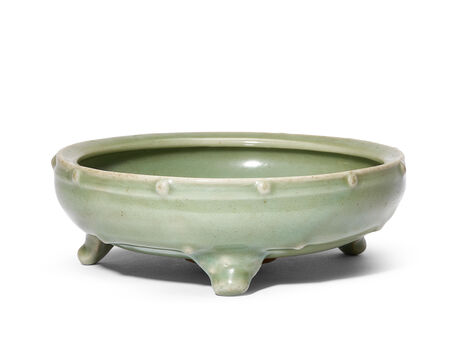
The cylindrical body is encircled by rows of applied drum-nail studs, raised on three cabriole feet beneath an unctuous sea-green celadon glaze.
Supported on three short feet, this incense burner features horizontal bowstring fillets around the exterior and is covered in an unctuous olive-green celadon glaze.
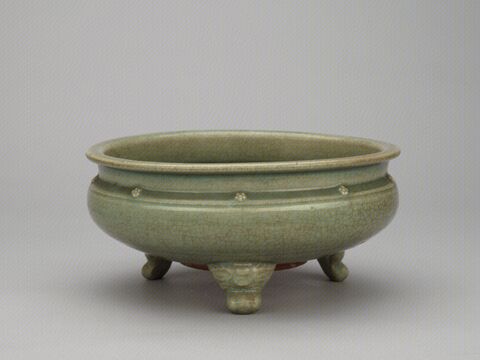
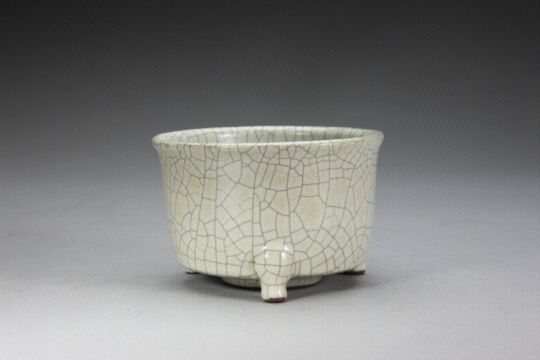
Formed with a straight-walled cylindrical body and supported on three stubby feet, covered in a rich, unctuous celadon glaze filled with intricate crackles.
Inspired by the archaic Han dynasty lian wine vessel, this censer features raised horizontal bowstring bands on a cylindrical body resting on three small feet.
Raised on three cabriole legs, this compressed censer features subtle vertical ridges and is covered in an exceptional unctuous bluish-green celadon glaze.