Historic Ceramic Art, Cultural Heritage, Museum Collections & Auction Provenance.
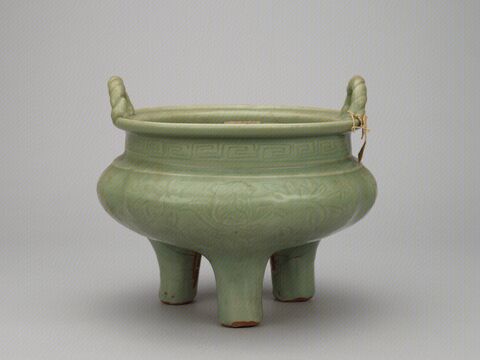
A 16th-century Ming dynasty celadon incense burner resting on three cabriole legs with an olive-green glaze.
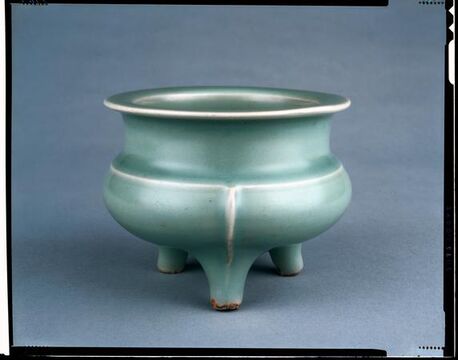
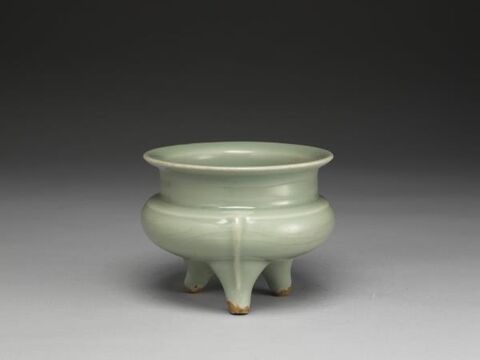
A Song dynasty Longquan celadon censer inspired by bronze li tripods, featuring raised vertical flanges on the exterior lobes and a thick, jade-toned celadon glaze.
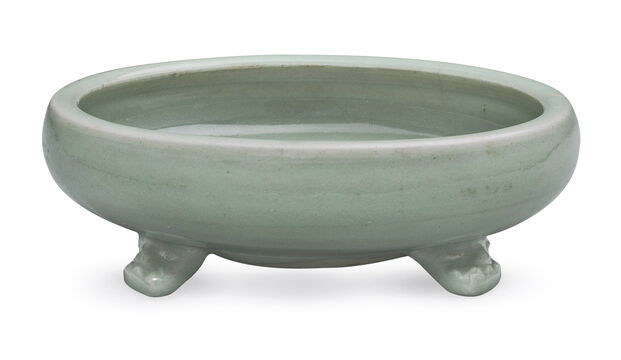
A 13th-century celadon tripod censer supported on three conical feet, showcasing a smooth, jade-like green glaze.
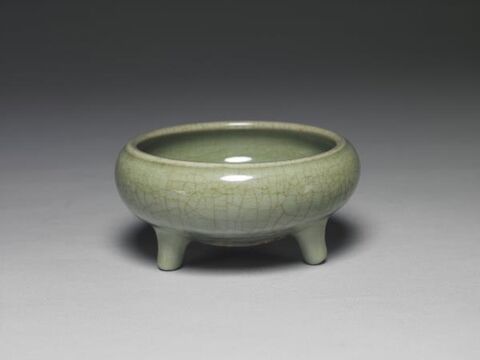
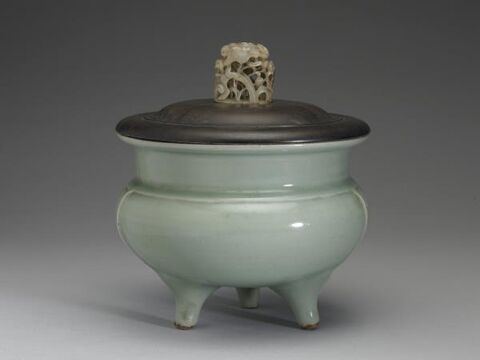
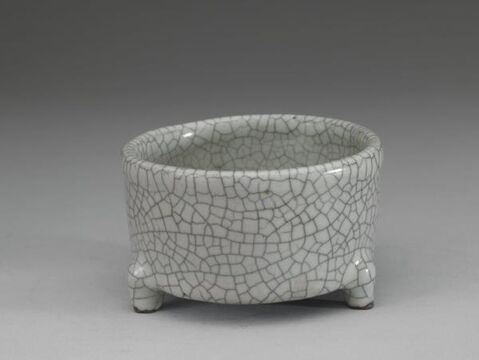
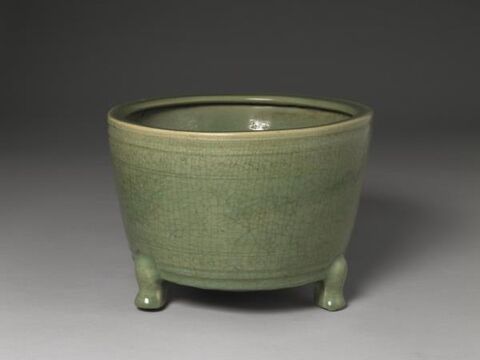
A Chinese Longquan celadon incense burner resting on three cabriole legs, coated overall in a soft green glaze with subtle antique crackling.
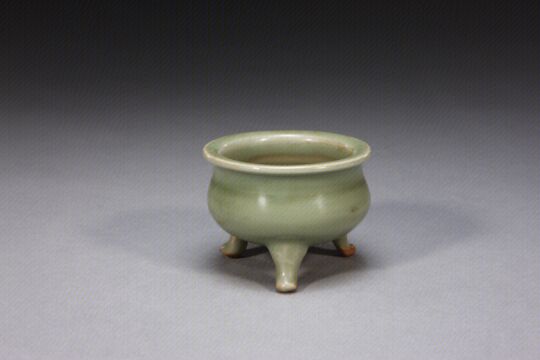
An incense burner modeled after archaic bronze forms with a compressed globular body supported on three slender tapered legs, glazed in pale celadon.
An incense burner modeled after the Neolithic hollow-legged bronze 'li' tripod, covered with a soothing sea-green glaze highlighting white slip-ridged ridges.
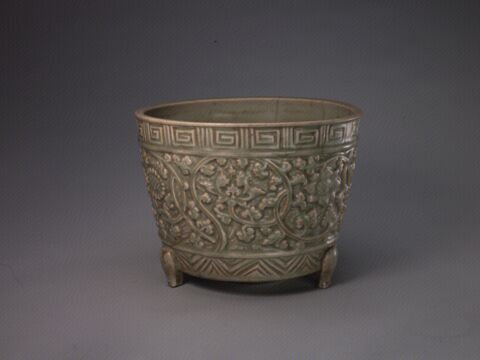
A cylindrical tripod burner decorated in relief with a wide band of blooming lotus flowers, supported on three stepped paw feet under a thick Yuan-period celadon glaze.
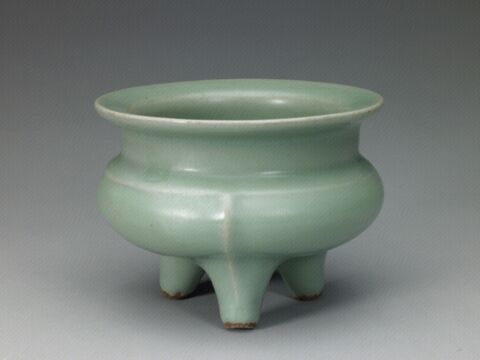
A classic tripod burner with a compressed globular body and outward-flaring rim, glazed in soft grayish-green celadon.
An early celadon tripod burner from the Tang dynasty showing carved decorative bands under an olive-green early celadon (proto-Longquan/Yue) glaze.
A mid-Ming incense burner incised with decorative bands around the waist, fired in a distinctive yellowish-green celadon glaze.
A solid Yuan dynasty incense burner supported on three stubby feet, glazed in a glossy olive-celadon with unglazed foot pads burned orange in firing.
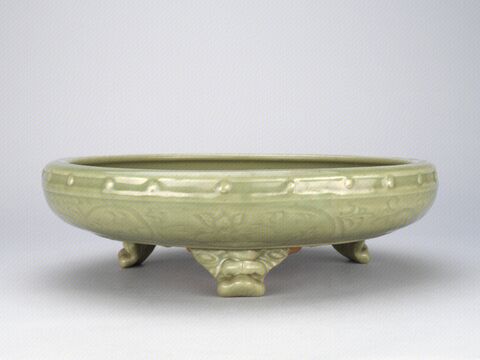
A tripod brush washer mimicking an ancient bronze drum, circled with molded bosses (drum studs) and deeply carved scrolling lotus under a rich celadon glaze.