Historic Ceramic Art, Cultural Heritage, Museum Collections & Auction Provenance.
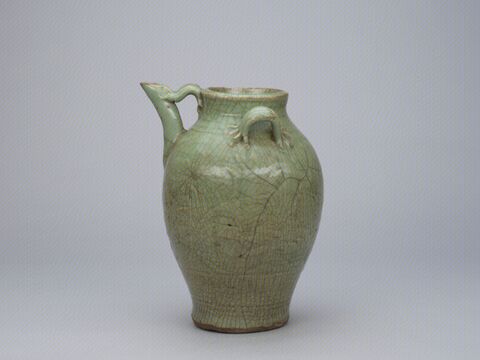
This robust pouring vessel features a graceful spout, arched handle, shoulder loops for suspension, and molded scrolling lotus blossoms beneath a celadon glaze.
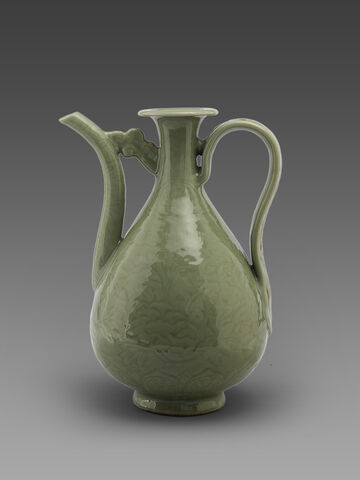
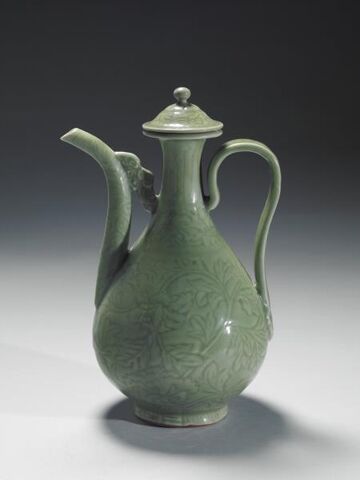
Featuring a curved spout, strap handle, and pear-shaped body molded with relief floral blossoms, finished in a glossy green celadon glaze.
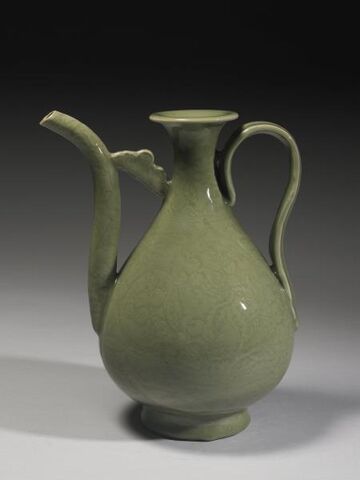
Adapted from the yuhuchun silhouette with an elegant curved spout and handle, this ewer features delicately incised loquat boughs beneath an unctuous celadon glaze.
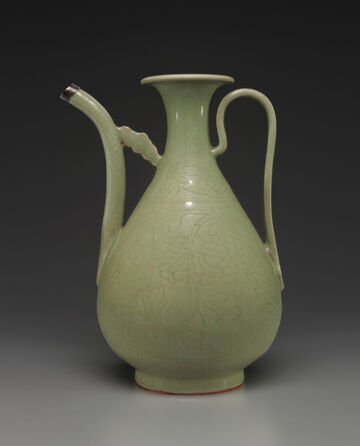
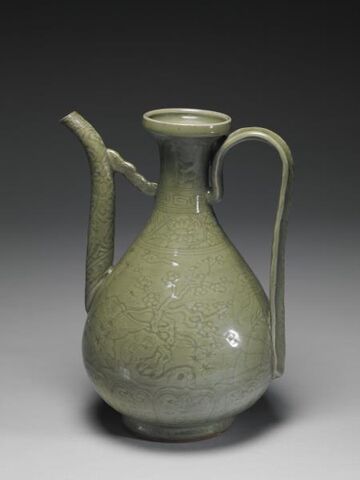
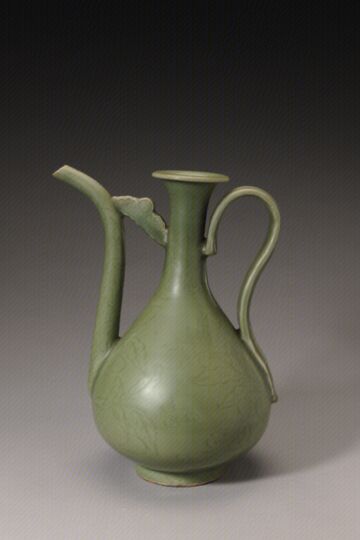
This graceful pouring ewer has an ovoid body incised with blooming peony sprays, linked by an elegant strap handle and tapering spout under an oily green glaze.
An early Ming dynasty Longquan celadon wine ewer with loop handle, curved spout, and lid, carved with delicate flower sprays.
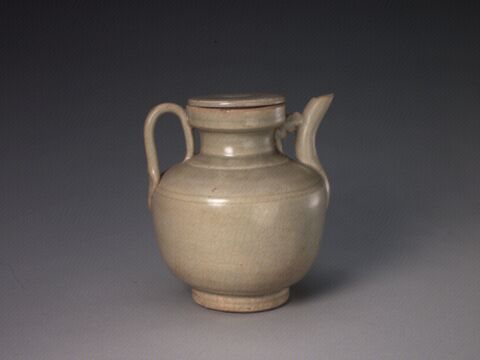
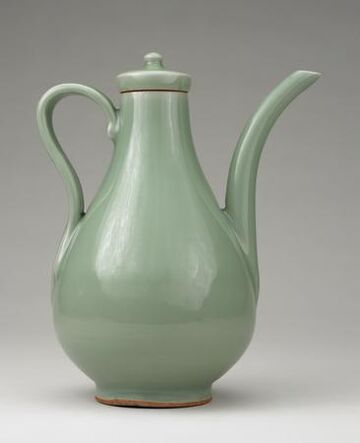
A Yuan dynasty Longquan celadon covered ewer with curved spout, loop handle, and domed lid under an olive-green glaze.
A 13th-century Longquan celadon ewer featuring a graceful curved spout, strap handle, and an unctuous sea-green glaze.
An early Ming dynasty celadon wine ewer carved on the body with the auspicious 'Three Friends of Winter' (pine, bamboo, and plum blossom) beside rocks.
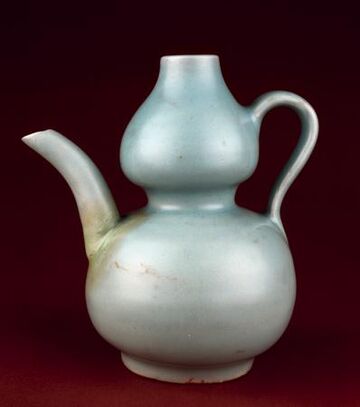
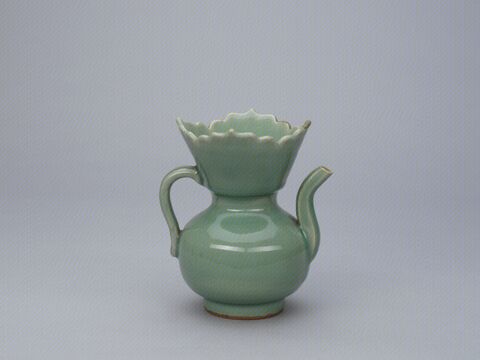
A Qing dynasty celadon ewer shaped with a stepped rim resembling a Tibetan monk's hat (sengmaohu), coated in an even sea-green glaze.
A Ming celadon pouring ewer fitted with an arched loop handle and elegant spout, embellished across the body with incised floral compositions.
A 14th-century celadon pouring vessel with an arched handle, curved spout, and fitted cover, covered in an unctuous green glaze.
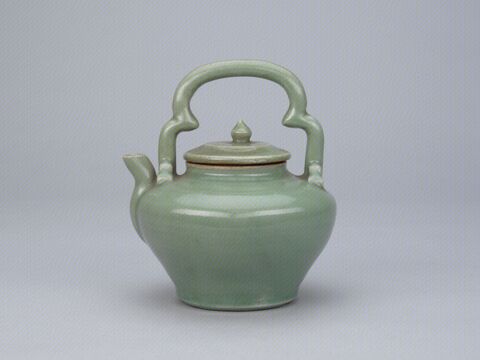
A Ming dynasty wine or water ewer designed with an overhead bridge handle for suspension and pouring, finished in a lustrous celadon glaze.