

Description
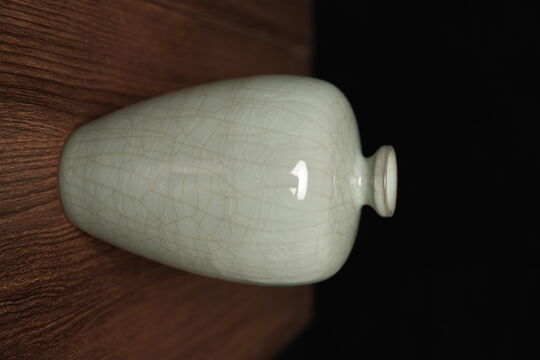
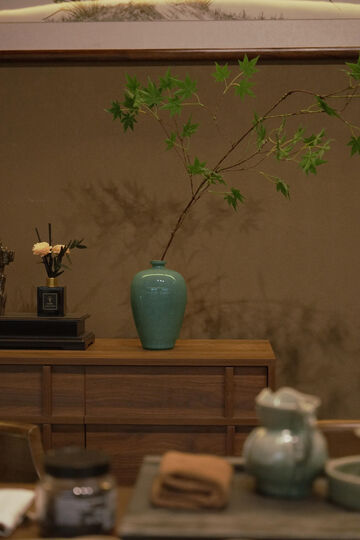
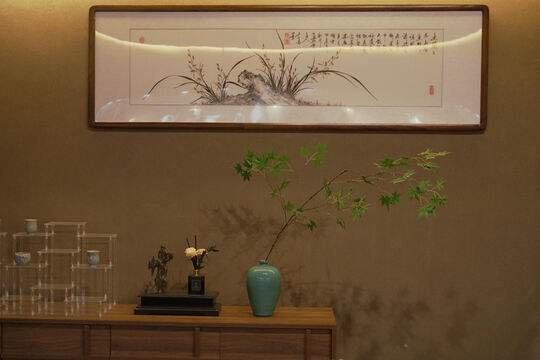
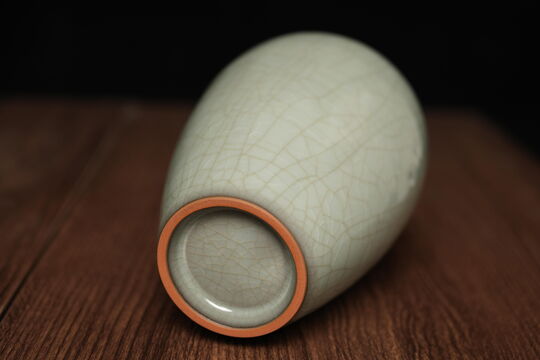
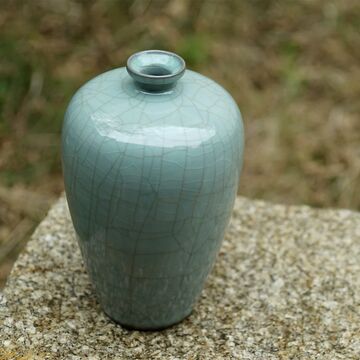
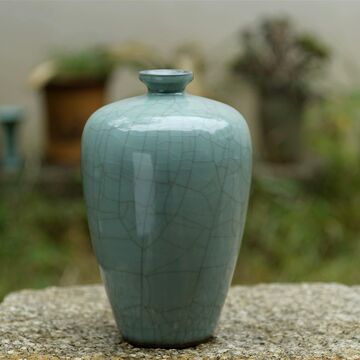
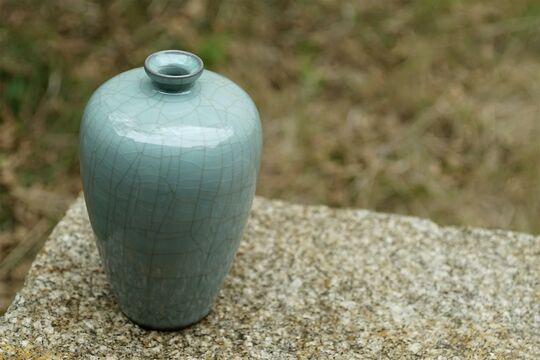
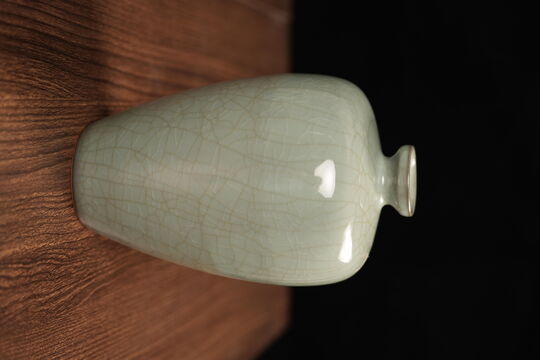
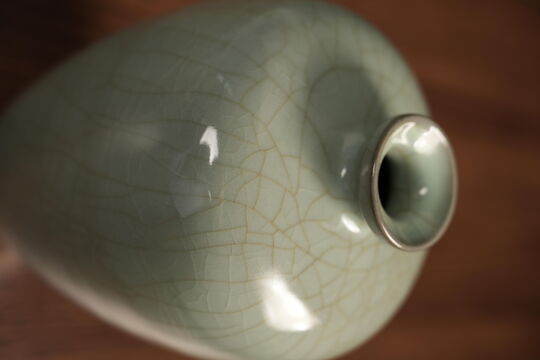
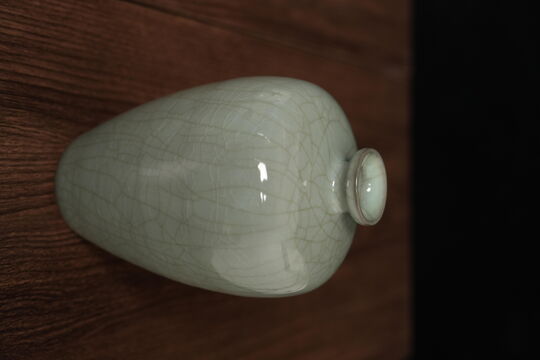
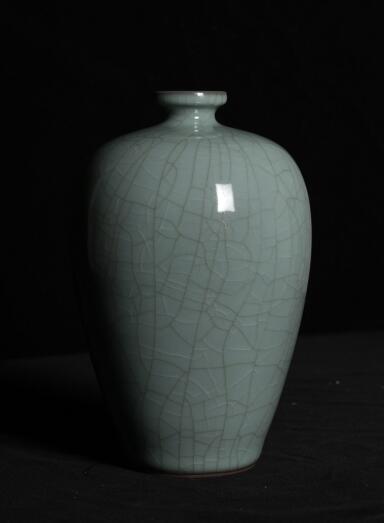
The Meiping vase, renowned as one of the most iconic forms in Chinese ceramics, has maintained a continuous and influential presence throughout the evolution of Chinese pottery and porcelain. Its elegant silhouette—characterized by a narrow mouth, broad shoulders, and gracefully tapering body—embodies a harmonious balance of form and function. Originally intended for holding a single branch of plum blossoms, the Meiping came to symbolize refined beauty and poetic restraint.
Its historical significance can be traced back to the Five Dynasties period, when King Qian Miu of the Wu Yue Kingdom commissioned the renowned Yue Kiln to produce Meiping vases as tribute ware for the imperial court. From that moment onward, the Meiping became a recurring and celebrated form in nearly every major chapter of Chinese ceramic history. It evolved across dynasties—Song, Yuan, Ming, and Qing—adapting in glaze, decoration, and proportion, yet always retaining its dignified presence and cultural resonance.
By the late Qing dynasty, the Meiping had not only cemented its place as a technical and aesthetic achievement but had also come to represent the spiritual and artistic ideals of Chinese material culture. With its graceful posture and subtle symbolism, the Meiping remains a vessel that bridges past and present—a timeless testament to the depth, continuity, and poetic beauty of Chinese ceramic art.
小梅瓶
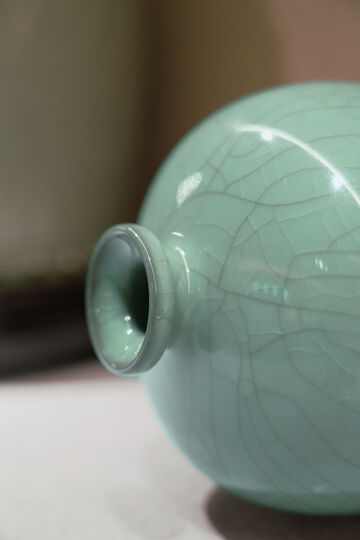
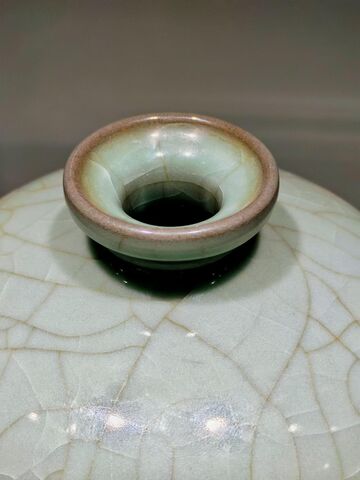
Small Meiping Vase
by Zhang Haiyang
$1680
About the Artist
Highlights
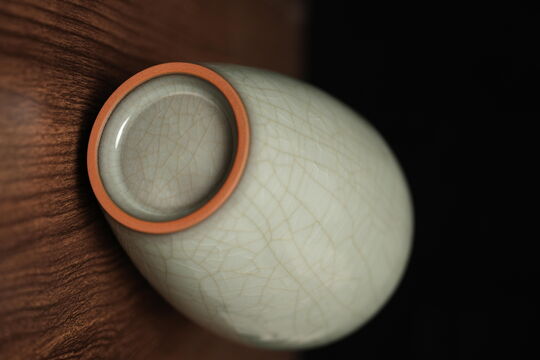
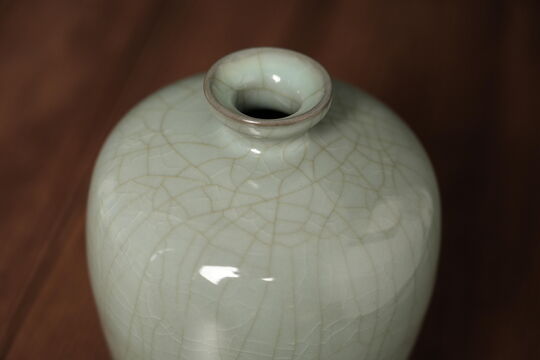
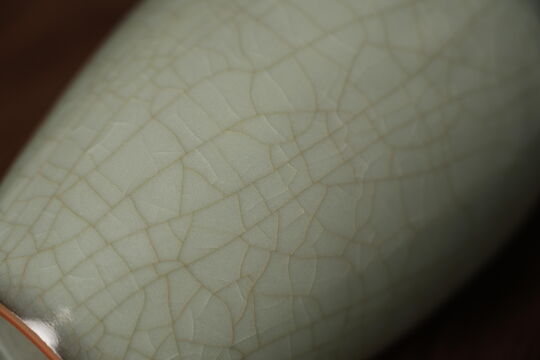
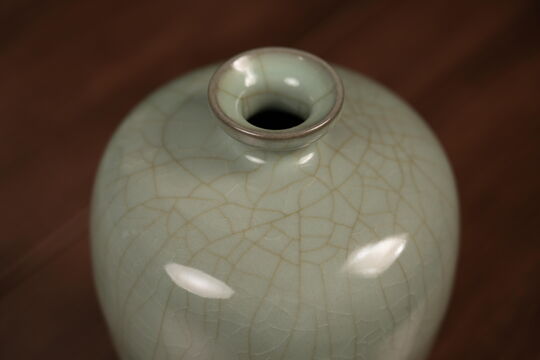
style of the Southern Song Guan kiln