CeladonAge Sparkling: Stories of Celadon Art, Glaze, and Culture


Blind Box

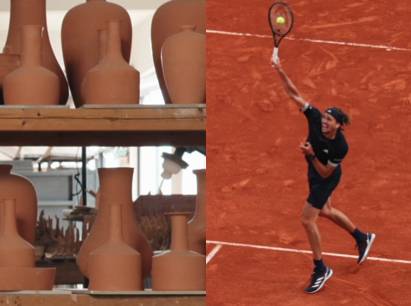
Roland Garros Clay and Celadon Clay

Footprints as Records of Human Action Across Time

Jun 7, 2026

Clay serves as an unexpected bridge between the worlds of tennis and celadon. The red clay of Roland Garros records movement, endurance, and competition, while the clay of Longquan celadon preserves transformation through fire, glaze, and craftsmanship. Though one belongs to sport and the other to ceramic art, both reveal how material remembers human action across time. Tracing their parallel journeys from local traditions to global cultural symbols, the essay explores themes of memory, uncertainty, and mastery. Through the stories of Alexander Zverev's triumph on the clay courts of Paris and Zhang Haiyang's decades-long revival of Southern Song celadon, clay emerges not as a passive substance but as an active collaborator. Whether through footprints on a court or glaze on a vessel, it preserves the traces of human effort and transforms them into enduring forms.
Blind Box

When Longquan Celadon Met the Blind Box

How a Thousand-Year-Old Craft Found New Life in China's New Cultural Economy

Jun 5, 2026

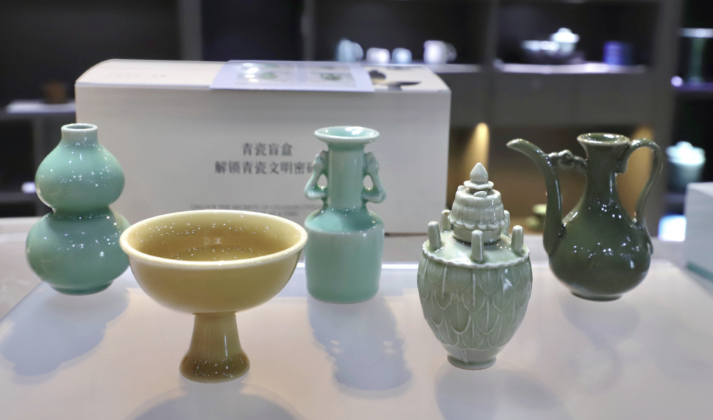
At China’s 2026 New Cultural and Creative Market in Beijing, a Longquan celadon piece appearing inside a blind box highlighted how a 1,700-year-old ceramic tradition is being reintroduced to younger audiences. Known for its jade-green glaze and refined elegance, Longquan celadon is a UNESCO-recognized craft that once spread globally through ancient trade routes. While historically displayed mainly in museums, it is now being transformed into cultural products that fit modern consumption habits. The blind box format turns heritage into surprise and discovery, sparking curiosity about its history and making process. Behind its playful packaging lies highly complex kiln craftsmanship with strict technical demands. The event showed how traditional craftsmanship can stay relevant by connecting with youth culture, emotional engagement, and interactive experiences in contemporary cultural spaces.

Dotted Color

From Diancai to Tobiseiji

Rethinking Flaw and Perfection in Chinese and Japanese Ceramic Aesthetics

May 16, 2026

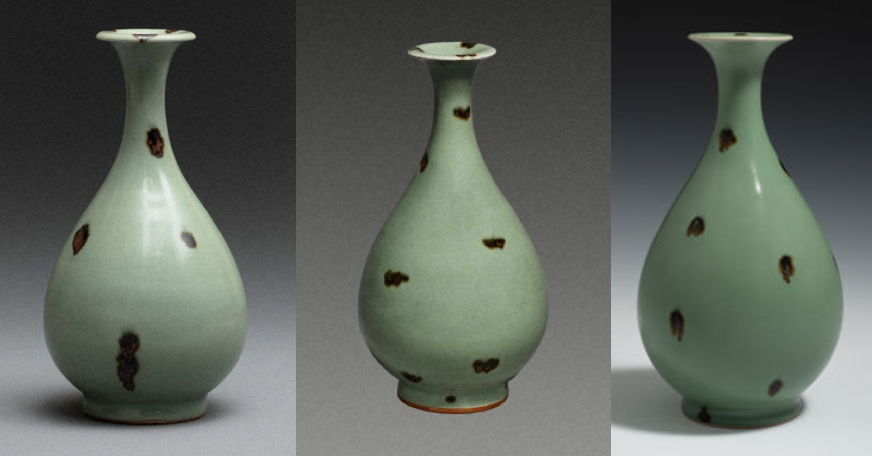
What happens when a flaw becomes more valuable than perfection? The answer lies in a small group of Chinese celadon vases covered with irregular brown spots. Made in the Yuan dynasty at the Longquan kilns, these dotted vessels were dismissed by Chinese literati as imperfect export wares. Yet when they crossed the East China Sea to Japan, they were transformed. Japanese tea masters, guided by the aesthetic of wabi sabi, saw the spots not as mistakes but as expressions of natural beauty and fleeting life. They gave the ware a new name: Tobiseiji, or "flying celadon." One such vase became a Japanese National Treasure. Another, nearly identical, received a lesser rank. Today, Chinese potters are reclaiming this tradition. The dotted vase tells a profound story of how beauty is not fixed, but born from the eyes that behold it.

DMA Celadon Vessels

From Persia to the Tomb

Foreign Influence, Funerary Beliefs, and Historical Change in Two DMA Celadon Vessels

Apr 28, 2026

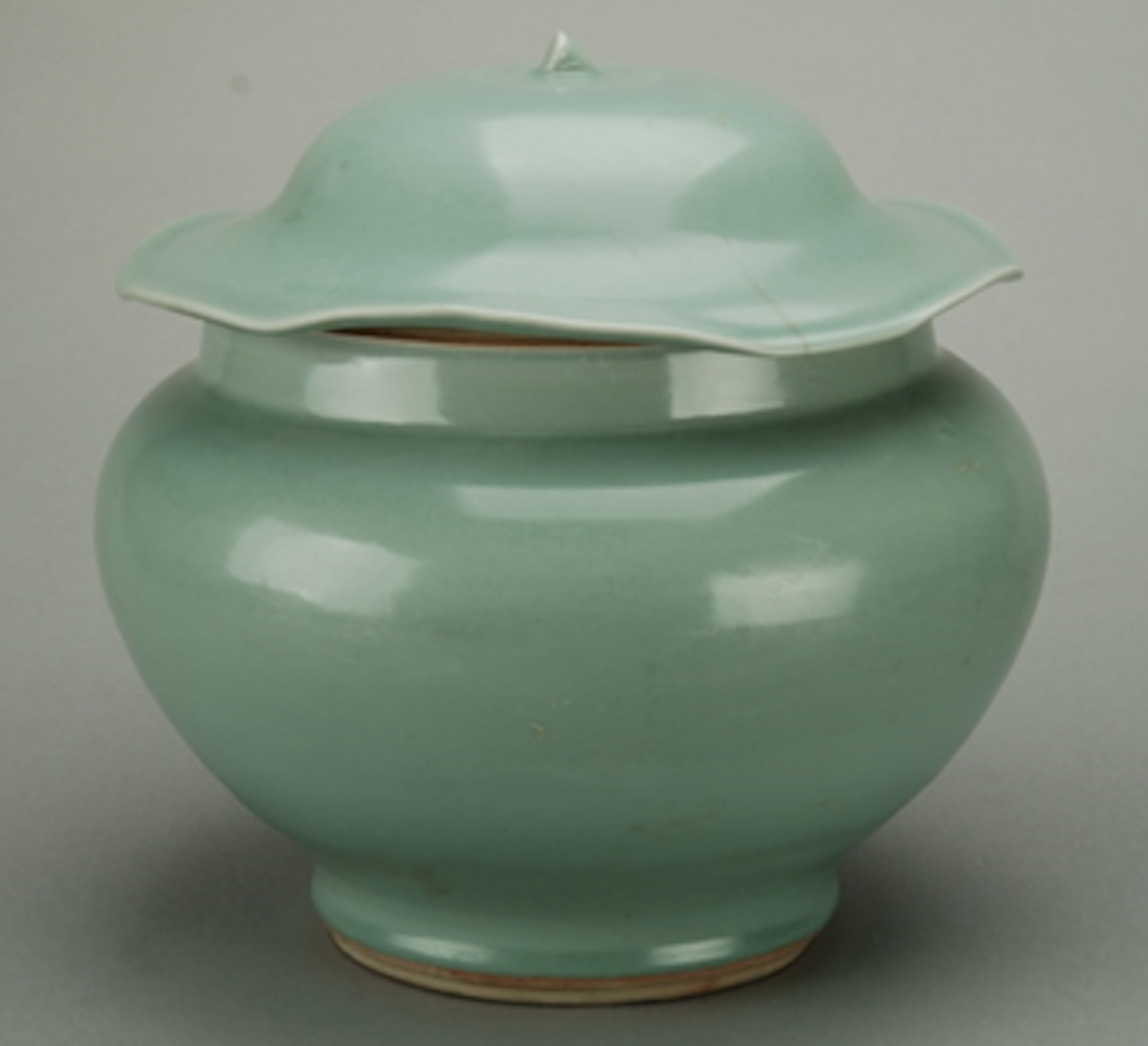
The Dallas Museum of Art houses two remarkable celadon vessels that tell a story of foreign influence, funerary belief, and profound historical change. The Northern Song bottle (975–1000 CE) features a glassy pale green glaze and a six-lobed body modeled after Near Eastern silver vessels, reflecting the cosmopolitan trade of the Silk Road. The Southern Song vase (1100–1200 CE), made a century later after the Song court lost the north and retreated south, displays a thick, jade-like glaze and bears a molded tiger representing the White Tiger of the West, a cosmological guardian. Together, these two DMA masterworks trace a dramatic shift: from looking outward to Persia for inspiration to turning inward toward native Chinese symbolism, all while serving the same ancient purpose of storing provisions for the afterlife.

Dragon Kiln

Dragon Kiln and Schrödinger’s Box

Fire, Glaze, and the State of Uncertainty in Longquan Celadon

Mar 30, 2026

The dragon kiln and Schrödinger’s box are joined here as two models of uncertainty: one material and artisanal, the other conceptual and scientific. In the dragon kiln, uncertainty is produced through fire, airflow, and embodied practice. In Schrödinger’s thought experiment, it is staged through theoretical indeterminacy. Together, they offer a shared language for understanding how outcomes emerge from systems where control is always partial.

Celadon or Qingci

Celadon or Qingci?

Two Names, One Porcelain, and the Stories That Shaped Them

Mar 6, 2026

“Celadon or Qingci?” is a narrative exploration of how a single piece of Longquan celadon porcelain becomes the center of two parallel legend stories that explain its naming and meaning across cultures. Set in a stylized late sixteenth-century Paris shaped by emerging Rococo aesthetics, one legend describes how the porcelain is named “Celadon” after a moment of artistic inspiration during a grand wedding, where its soft green glaze is associated with theatrical performance and refined taste. The second legend, set in Longquan, China, tells a contrasting tale in which the porcelain, known as “Qingci,” is born from hardship, sacrifice, and the imagined devotion of a young woman within a kiln. Together, these stories highlight how beauty is shaped by cultural imagination, blending admiration and suffering into enduring symbols of art, memory, and meaning.

Celadon Meets Love

When Celadon Meets Love

Longquan Celadon as a Timeless Present

Feb 10, 2026

“When Celadon Meets Love” presents Longquan Celadon as a timeless and meaningful alternative to conventional gifts. Unlike temporary items, celadon offers durability, elegance, and cultural depth, reflecting centuries of craftsmanship and recognition by UNESCO. Fired at high temperatures, it features a translucent glaze in serene hues like plum green and powder blue, often earning it the name “ceramic jade” for its smooth texture and symbolic association with purity, harmony, and lasting value. Both functional and artistic, celadon pieces such as vases, bowls, and tea cups carry meanings like resilience, growth, and connection while enriching everyday life through their beauty and sensory qualities. By blending practicality with refined artistry, Longquan Celadon becomes more than a gift; it is a lasting expression of thoughtfulness, cultural appreciation, and enduring care.

Crackles

Crackles: The Poetry of Glaze and Soul of Clay

From Raku’s Flames to Celadon’s Whisper, the Hidden Stories of Ceramics

Jan 11, 2026

Crackle is the hidden poetry etched across the surfaces of ceramic vessels, where delicate fissures transform glaze into intricate networks of light, shadow, and texture. It is a silent dialogue between clay, fire, and human touch, a map of imperfection rendered beautiful, and a testament to the unpredictable dance of kiln, glaze, and cooling. From the bold, smoky drama of raku, where sudden heat and reduction leave dark, lively lines, to the serene, jade-like whispers of celadon, whose subtle networks of fine fissures invite quiet reflection, crackle captures the essence of each firing technique. In Shino and ice crackle, frost-like patterns shimmer with the delicate grace of nature itself, while historic Guan and Ge wares preserve the visual poetry of “gold thread and iron wire,” a precise yet organic lace of crackles tracing centuries of tradition. Beyond technical mastery, crackle is an experience to be savored: it draws the eye along every line, engages the senses, and reminds us that beauty can emerge from imperfection, and that clay and glaze, when touched by fire and imagination, hold stories that transcend time, culture, and the surface itself.

Plant Motifs

Plant Motifs on Longquan Celadon

Symbolism and Beauty of Nature in China’s Famous Green-Glazed Ceramics

Jan 4, 2026

Beyond mere ornamentation, the plant motifs of Longquan celadon function as a sophisticated visual code, translating ancient Chinese philosophies into the medium of green-glazed stoneware. By mimicking the translucent beauty of jade, these ceramics utilize a botanical lexicon—including the plum, orchid, and lotus—to embody ideals of resilience, refinement, and spiritual purity. From the structural symbolism of the gourd to auspicious puns like the cabbage, each design conveys deep-seated wishes for prosperity and protection. This article explores how Longquan artisans integrated natural rhythms into clay, transforming functional vessels into enduring ethical and spiritual metaphors.

Exceptional

Why Longquan Celadon Is Exceptional

A Chinese Masterpiece Refined Over Two Millennia

Dec 5, 2025

Longquan celadon, with a history spanning nearly two thousand years, stands as one of the finest achievements of Chinese ceramic artistry. Its distinctive jade-like glaze and refined forms emerged through generations of technical innovation, from early proto-celadon firing to the sophisticated kiln mastery of the Southern Song dynasty. Over time, evolving cultural aesthetics—from the subtle elegance of Song scholars to the bold shapes favored in the Yuan and Ming periods—shaped its visual identity. Widely traded along the Maritime Silk Road, Longquan celadon became a global cultural ambassador, influencing artistic traditions across Asia, the Middle East, and Africa. Its survival through dynastic upheavals and into the modern era demonstrates enduring cultural resilience. Ultimately, Longquan celadon’s long history not only explains its technical and aesthetic excellence but also secures its status as a timeless symbol of craftsmanship and heritage.

Geng Baochang

A Farewell to a Century of Porcelain Wisdom

In Memory of Geng Baochang (1922 – 2025)

Nov 10, 2025

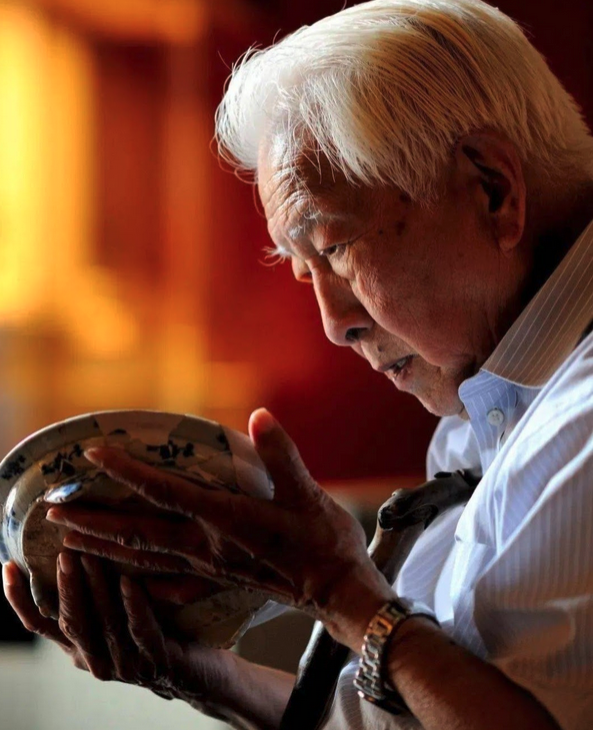
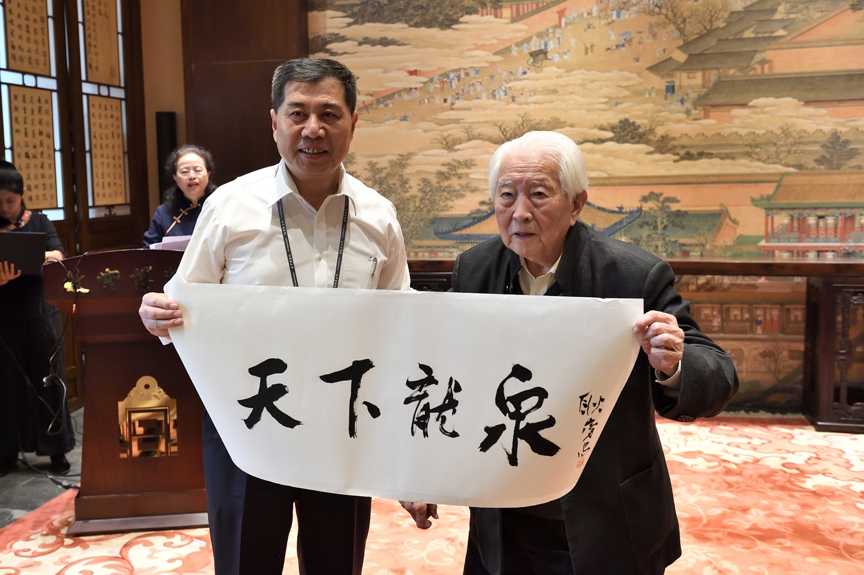
The world of Chinese cultural heritage mourns the passing of a legend. Geng Baochang (1922–2025) — China’s foremost authority on ancient ceramics — passed away peacefully in Beijing at the age of 103. Gentle, kind, and profoundly wise, Geng embodied compassion, insight, and quiet strength throughout his long and extraordinary life. For more than seven decades at the Palace Museum, he personally examined over 360,000 porcelain artifacts, leaving behind a legacy that bridges scholarship, craftsmanship, and humanity. A pioneer of underwater archaeology, he played a central role in the “Nanhai No.1” shipwreck project, unearthing more than 180,000 cultural relics and illuminating the ancient Maritime Silk Road. His landmark work, Appraisal of Ming and Qing Ceramics, remains a timeless cornerstone of ceramic scholarship.

Among all ceramics, Geng’s greatest love was Longquan celadon. He once said, “Longquan is jade made from earth — a conversation between heaven, water, and fire.”

Zhang Haiyang

Standing with Grace

Zhang Haiyang and the Celadon Rebirth of Longquan

Oct 26, 2025

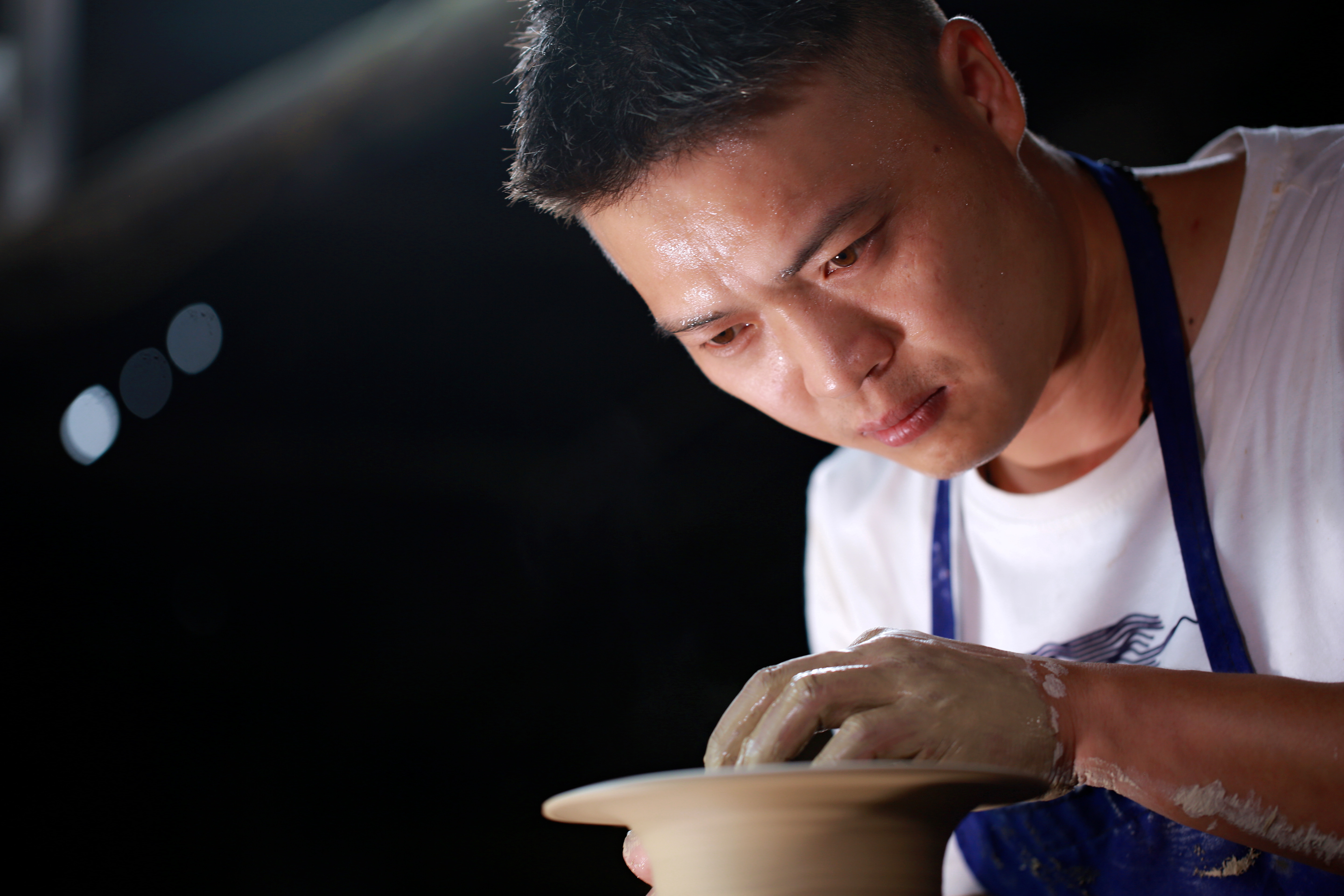
Zhang Haiyang’s journey is not one of overnight acclaim, but of decades marked by persistence, setbacks, and quiet breakthroughs. From a young boy growing up in a family of potters to a master whose works are now held in museum collections and displayed in the offices of global leaders, his path mirrors the very qualities embodied in his celadon: resilience, refinement, and unwavering strength through adversity.

In each vase, each crackle, each faint shimmer of jade green, lives a legacy rekindled—and a future still firing in the flames.

Living Legacy

Longquan of the World

Longquan Celadon: A Living Legacy of Chinese Ceramics

Oct 12, 2025

As the saying goes, "Half of China’s ceramic history lies in Zhejiang, and half of Zhejiang’s ceramic legacy lies in Longquan." This enduring expression, first voiced by renowned ceramic archaeologist Chen Wanli, captures the central role that Longquan has played in the evolution of Chinese ceramics.

More than a craft, Longquan celadon is a living art form—an enduring symbol of China’s artistic excellence, reborn for the future and shared with the world.

Celadon Age

From Stone Age to Celadon Age

A Journey Through Clay, Fire, and Time

Sep 30, 2025

Long before kings ruled and poets wrote, early humans discovered the art of shaping earth and fire into vessels. In the Stone Age, pottery was born - not for beauty, but for survival. Yet as centuries passed, what was once purely practical became deeply cultural.

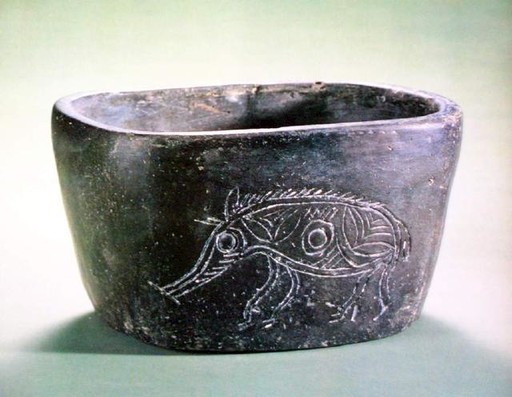
In the low, humid lands of today's Zhejiang Province, two Neolithic cultures - Hemudu and Majiabang - made early pottery with black and red clays, marked by cords, carved lines, and a desire to make everyday tools into something more. These modest beginnings were the first flickers of what would eventually become one of the world's most refined ceramic traditions: celadon.