Historic Ceramic Art, Cultural Heritage, Museum Collections & Auction Provenance.
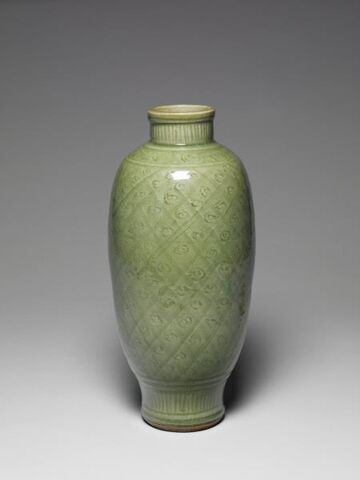
Displaying an elongated ovoid 'olive' profile, this vase is incised with dynamic swirling cloud and wave patterns beneath a glossy olive-green glaze.
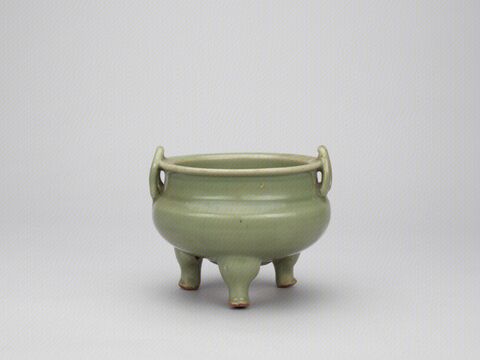
Supported on three cabriole legs, this bronze-form censer has a compressed spherical body and two upright loop handles at the mouth, finished in a thick celadon glaze.
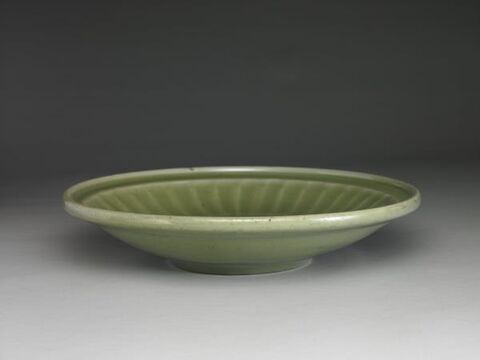
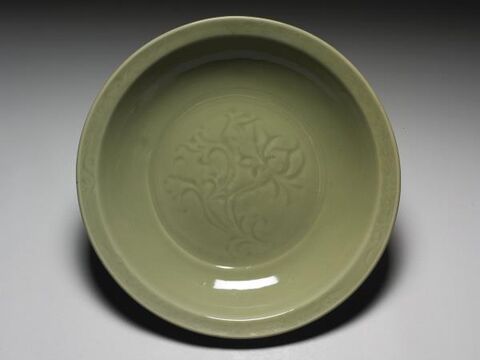
The well is carved with a central chrysanthemum flower head encircled by radiating petals, enrobed in a warm olive-green celadon glaze.
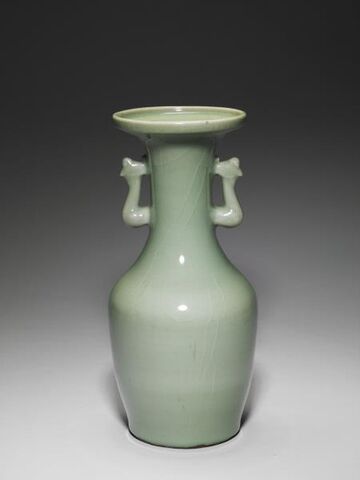
Featuring archaistic flair, this vase has an elongated baluster body and neck adorned with two sculpted phoenix-head loop handles, coated in a translucent celadon glaze.
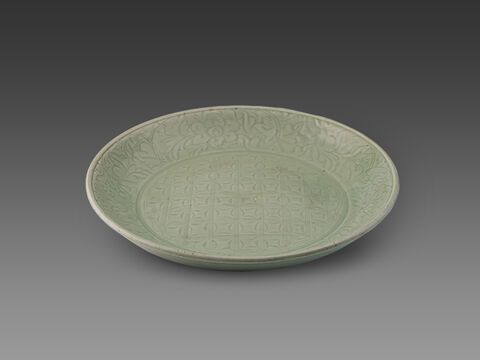
The interior well features a stylized geometric grid or lattice pattern under an unctuous celadon glaze, illustrating decorative diversity in Ming Longquan kilns.
With an everted flattened rim and deep cavetto, this dish displays fluidly combed floral scrolls under a glossy olive-celadon glaze.
Commissioned during the Yongle to Xuande periods, this heavy dish reflects early Ming court taste with deeply carved botanical motifs and a fine, oily sea-green glaze.
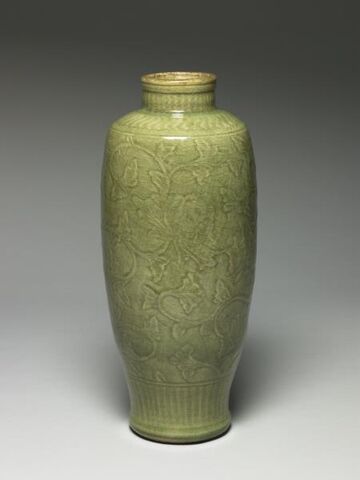
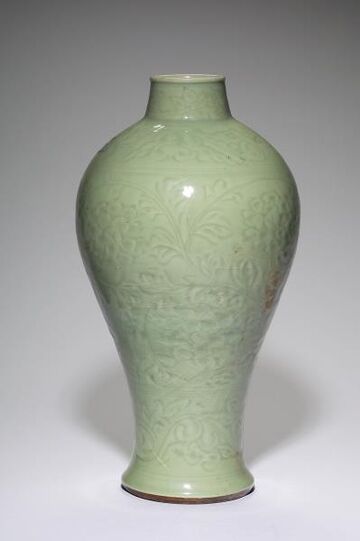
Tapering toward the mouth and base with a swollen midsection, this olive-form vase is incised with rhythmic botanical scrolls beneath a clear green celadon glaze.
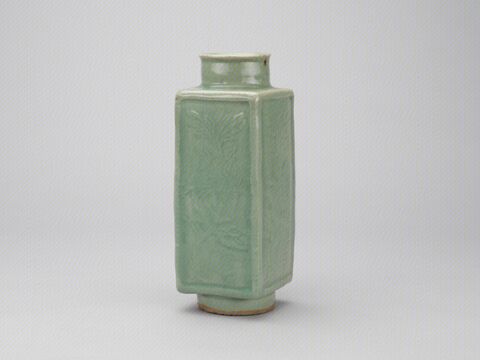
Featuring straight planar sides, an angled shoulder, and a square mouth, this geometric vase is coated in an even celadon glaze that highlights its crisp angular facets.
Exhibiting balanced early Ming proportions, this meiping displays a narrow flared mouth and broad shoulders enveloped in a lustrous, unctuous green glaze.
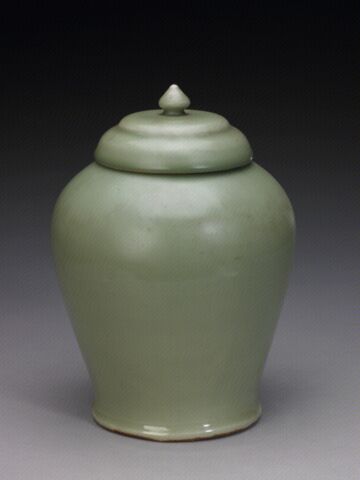
With a sturdy globular profile and domed lid topped with a bud finial, this jar showcases the thick, smooth olive-green celadon glaze of Ming domestic storage vessels.
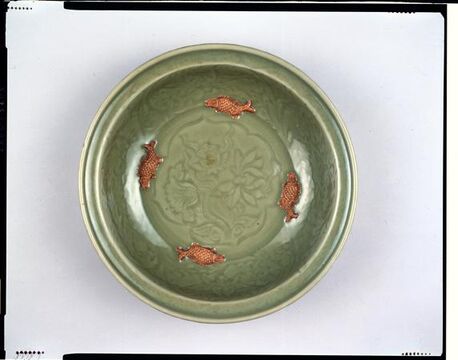
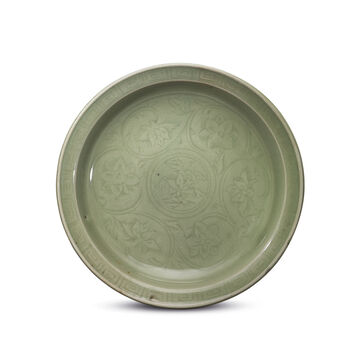
Displaying the refined imperial taste of early Ming Longquan production, this dish is carved with scrolling peonies in the center and bracket lobes along the rim beneath an oily celadon glaze.