Historic Ceramic Art, Cultural Heritage, Museum Collections & Auction Provenance.
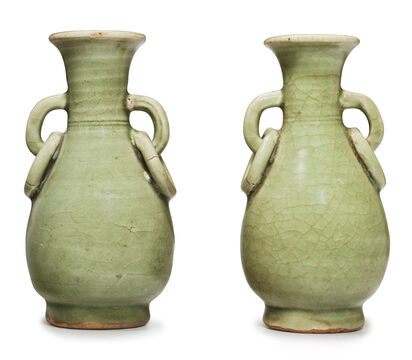
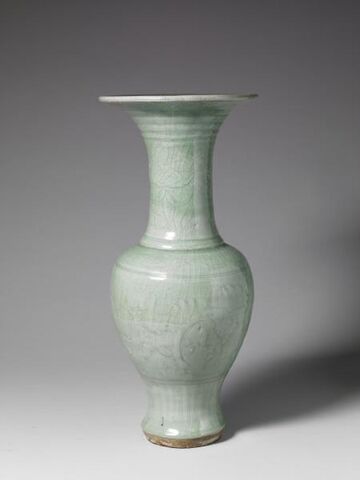
A pair of miniature pear-shaped (yuhuchunping) celadon vases exhibiting graceful flared lips and slender necks.
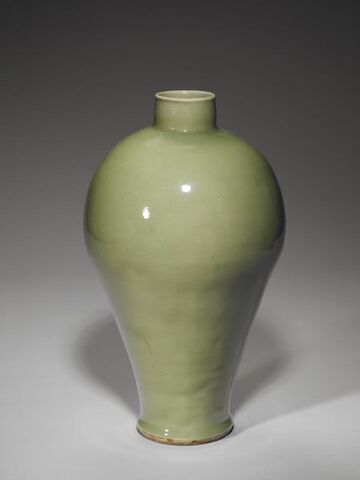
An early Ming dynasty celadon meiping vase possessing powerful swelling shoulders and thick glaze typical of early Imperial-era Longquan kiln tribute pieces.
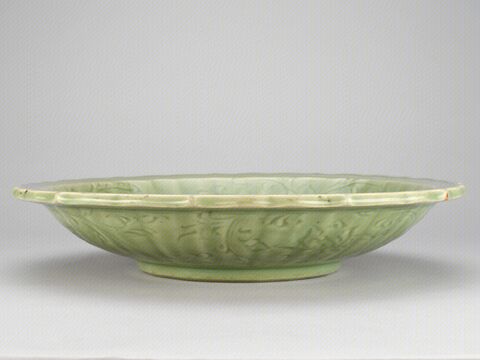
A Ming dynasty celadon dish featuring an undulating barbed foliate rim and a masterfully incised central lotus blossom surrounded by fluted panels.
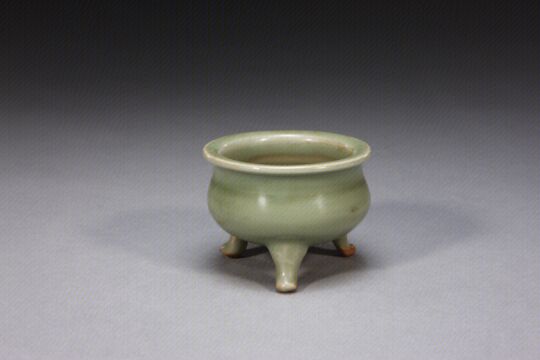
A solid Yuan dynasty incense burner supported on three stubby feet, glazed in a glossy olive-celadon with unglazed foot pads burned orange in firing.
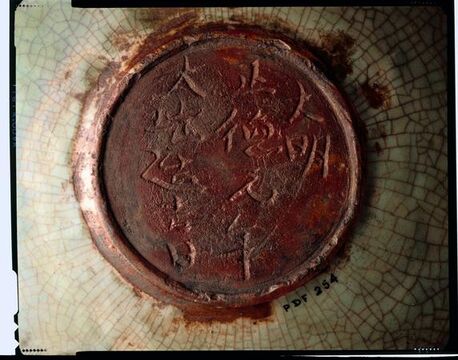
A precisely dated Ming dynasty (Zhengde first year, 1506) celadon ceramic flower planter, serving as a key benchmark for late-Ming Longquan kiln dating.
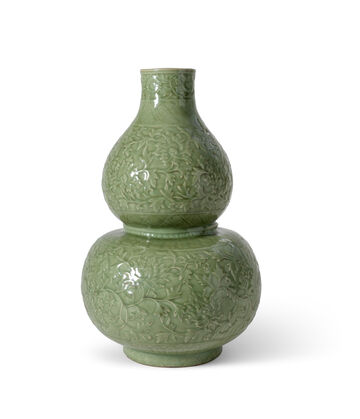
An imposing double-gourd celadon stoneware vase symbolizing fertility and Daoist immortality, coated in a thick, luminous green glaze.
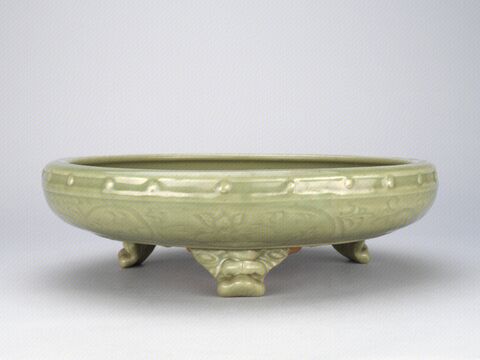
A tripod brush washer mimicking an ancient bronze drum, circled with molded bosses (drum studs) and deeply carved scrolling lotus under a rich celadon glaze.
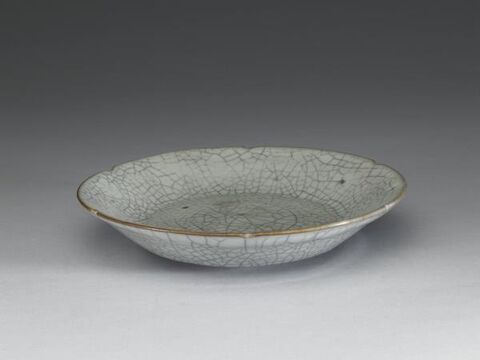
A celadon dish shaped as an open mallow/hibiscus blossom, displaying finely molded indentations beneath a pale jade-green glaze.
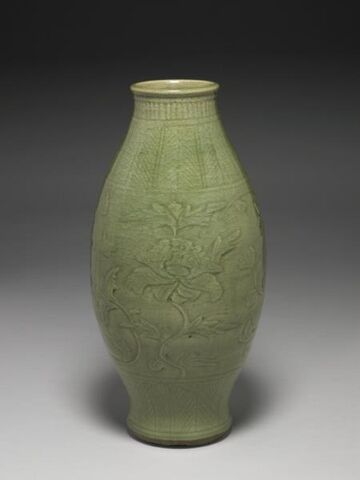
A 16th-century Ming celadon vase of slender olive form with carved flower scrolls across the central body.
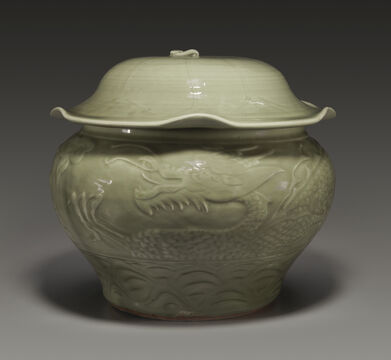
A highly important Longquan celadon baluster jar and lotus-leaf cover deeply carved with continuous flowering peony scrolls.
A Ming period celadon vase decorated with expressive incision work depicting blooming peony heads surrounded by stylized leaves.
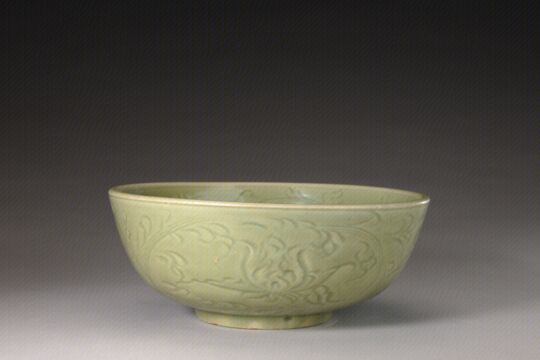
A deep celadon bowl dynamically carved around the exterior with uninterrupted scrolling lotus blossoms, coated in a glossy olive-green glaze.