Historic Ceramic Art, Cultural Heritage, Museum Collections & Auction Provenance.
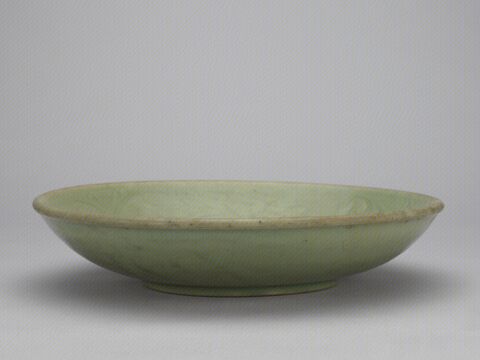
A Ming dynasty celadon dish with gently sloping cavetto incised with flowering lotus branches encircling a central blossom, enveloped in a smooth olive-green glaze.
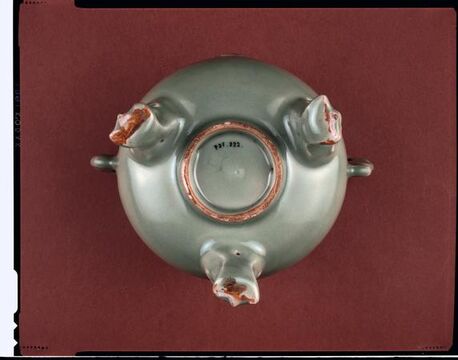
Dating to the 14th century (late Yuan to early Ming), this celadon incense burner stands on three short conical legs with a wide flattened mouthrim and an attractive semi-opaque green glaze.
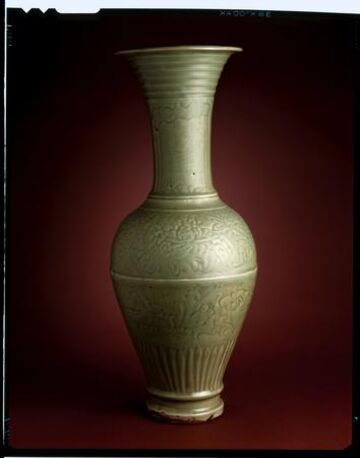
A pivotal reference piece dated by inscription to the fifth year of the Jingtai reign (1454), displaying dynamic carved ornamentation and demonstrating mid-15th century Longquan imperial style.
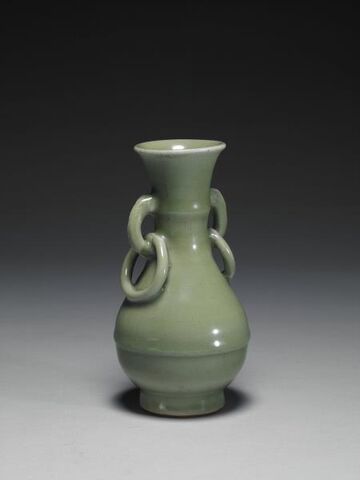
A Ming dynasty vase crafted with relief taotie monster heads holding loose or fixed rings at the neck, draped overall in a thick celadon glaze reminiscent of ancient bronze vessels.
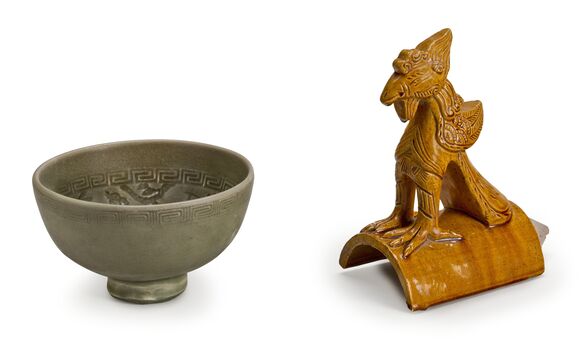
A collectible composite lot consisting of a delicately potted Longquan celadon bowl and an architectural amber-glazed ridge tile sculpted in the dynamic shape of an auspicious phoenix.
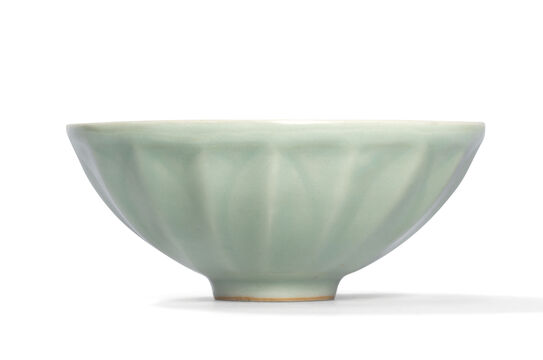
A quintessential Southern Song style Longquan celadon bowl carved around the outer wall with slender lotus petals, flooded with an unctuous, soft bluish-green glaze.
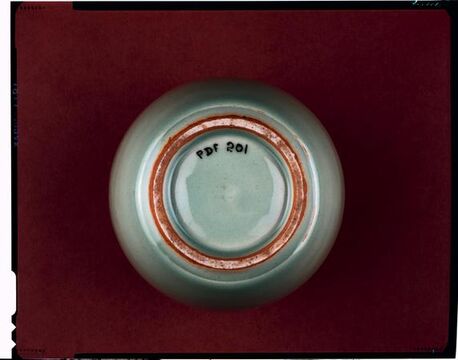
An exceptionally potted early 15th-century Ming celadon jar dating to the Yongle/Xuande reigns from the Percival David Collection, displaying pristine glaze control and harmonious curves.
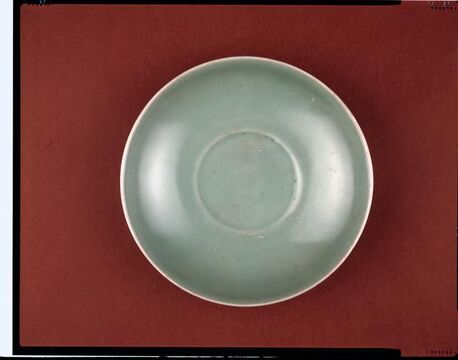
A 13th-century Longquan celadon dish exemplifying the transition between the Southern Song and Yuan dynasties, featuring a smooth, thick glaze pooling around the rounded base.
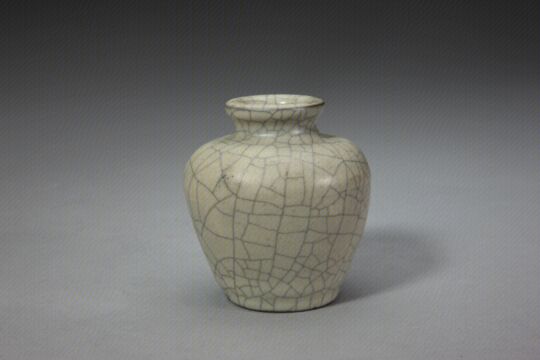
An esteemed Song dynasty Ge ware jar displaying the celebrated double crackle network known as 'gold thread and iron wire' over a muted greyish-green glaze.
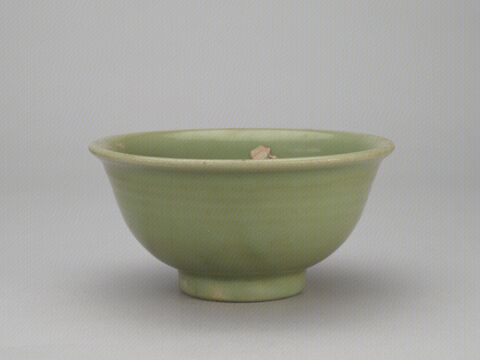
A Ming dynasty celadon bowl with rounded sides, its interior well decorated with molded blossoming flowers beneath a rich, vitreous olive-green glaze.
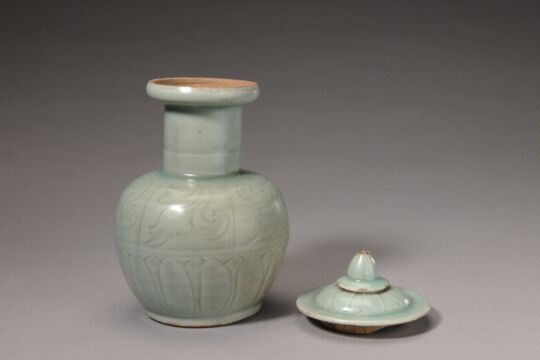
A graceful Song dynasty celadon vase complete with its original fitted cover, exquisitely incised with floral sprays beneath an unctuous, translucent sea-green glaze.
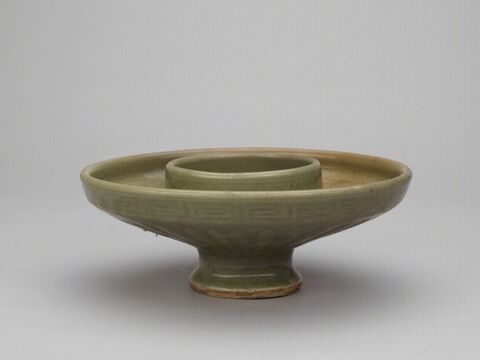
A ceremonial celadon bowl stand crafted during the Ming dynasty, featuring a central raised collar surrounded by carved fluted chrysanthemum petals under a smooth celadon glaze.