Historic Ceramic Art, Cultural Heritage, Museum Collections & Auction Provenance.
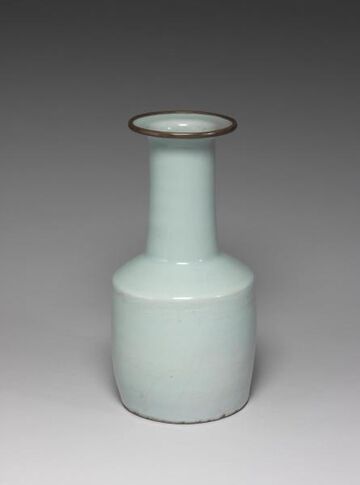
A renowned mallet-shaped (kinuta) celadon vase from the Southern Song dynasty, characterized by a flat cantilevered rim and an unctuous powder-green glaze.
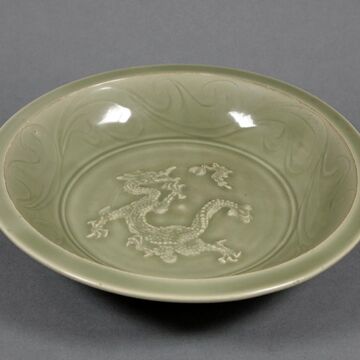
A Yuan dynasty Longquan celadon dish decorated in the interior center with an unglazed biscuit or relief-applied four-clawed dragon chasing a flaming pearl among swirling clouds.
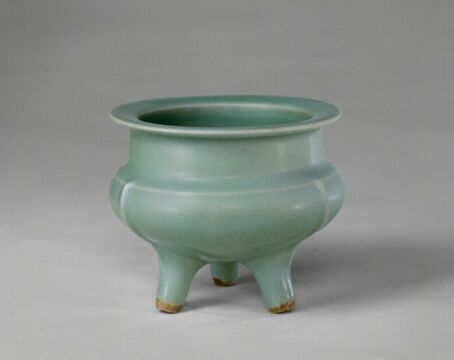
A Song dynasty Longquan celadon censer inspired by bronze li tripods, featuring raised vertical flanges on the exterior lobes and a thick, jade-toned celadon glaze.
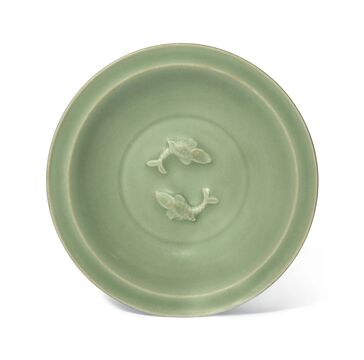
A Longquan celadon dish molded in the interior with two lively fish in high relief, encircled by carved lotus petals on the exterior beneath a sea-green glaze.
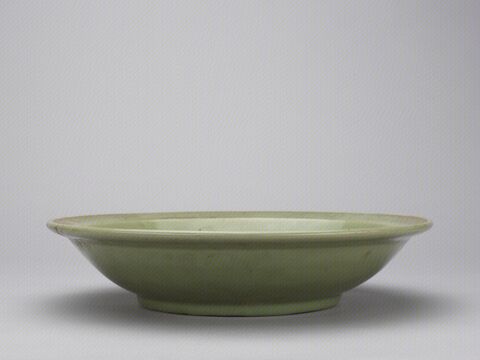
A Ming dynasty celadon plate featuring a flat everted rim, incised floral motifs across the cavetto, and a glossy olive-green glaze.
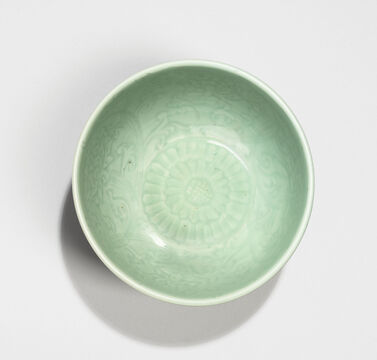
A fine Longquan celadon bowl carved with delicate overlapping lotus petals on the exterior wall, enveloped in an unctuous, soft bluish-green glaze.
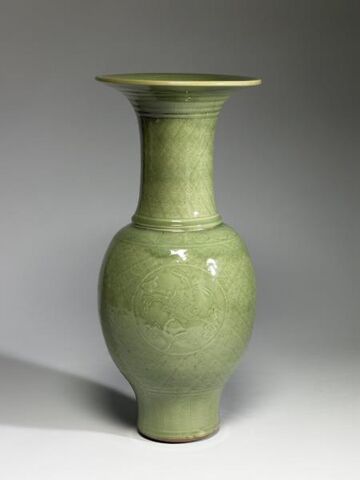
A late Ming dynasty Longquan celadon phoenix-tail (fengweizun) vase, boasting a widely flared neck and an ovoid body carved with dense peony scrolls.
A Song dynasty Longquan celadon washer featuring an everted lip and two molded twin fish in high relief at the center, covered in an unctuous green glaze.
A Ming dynasty celadon double-bottomed warming bowl, known as a Zhuge bowl, with a hollow interior chamber designed to hold hot water and maintain food temperature.
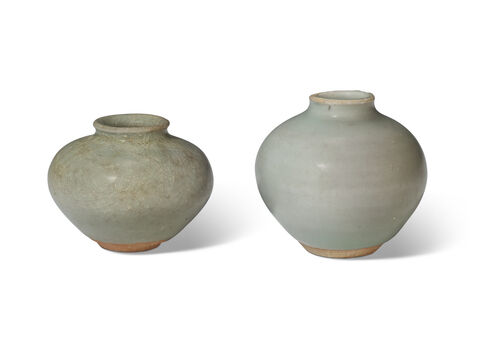
Two miniature Longquan celadon jarlets of globular form, covered in soft green celadon glazes with unglazed recessed bases.
A late Ming dynasty Longquan stoneware jar from the British Museum, presenting a sturdy globular form and a thick, glassy celadon glaze.
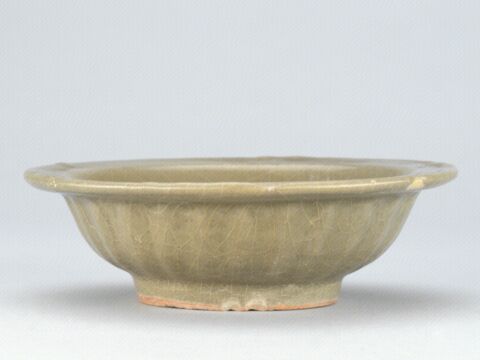
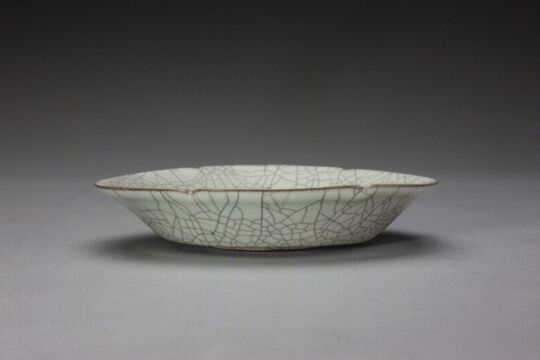
A Song dynasty Ge ware dish featuring an indented foliate rim and a network of dark and golden crackles across an unctuous pale celadon glaze.