
When Longquan Celadon Met the Blind Box
How a Thousand-Year-Old Craft Found New Life in China's New Cultural Economy
At China's inaugural New Cultural and Creative Market in Beijing, a miniature celadon blind box became a symbol of how ancient craftsmanship is connecting with a new generation.
A Surprise Hidden in a Blind Box
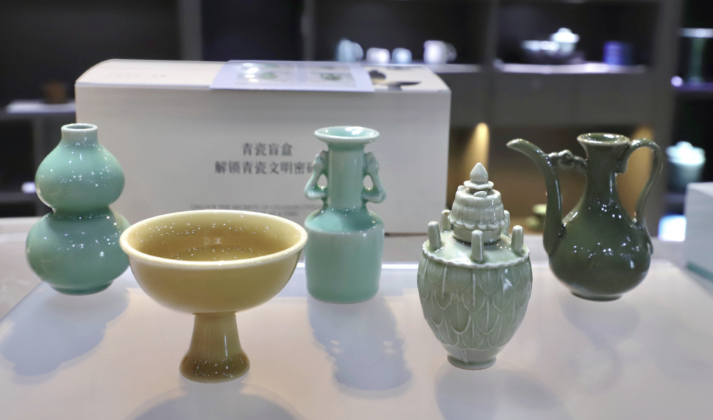
On May 15, 2026, Beijing's Chaoyang Park welcomed thousands of visitors to the inaugural China New Cultural and Creative Market and Trendy Toy Carnival, a 10-day event that brought together museums, designer toys, intangible cultural heritage, performances, food, and interactive experiences. The park was transformed into a large cultural landscape where traditional heritage, contemporary design, and youth culture existed side by side, creating an environment that felt closer to a living cultural city than a conventional market.
Among the most popular attractions were blind boxes that visitors eagerly opened throughout the day. Each box offered a moment of anticipation and surprise, containing collectible figures or cultural products designed to appeal to younger audiences. Yet one blind box stood out in a different way, revealing not a toy or character, but a miniature piece of Longquan celadon. The reaction was immediate, as visitors who expected something modern suddenly found themselves holding an object connected to a ceramic tradition that stretches back more than a thousand years.
Although small in size, the celadon piece created a strong sense of connection. It bridged a gap between contemporary consumer culture and ancient craftsmanship, showing how traditional art can enter modern life through unexpected formats. In that moment, the blind box became more than a product. It became an entry point into cultural memory.
The Timeless Beauty of Longquan Celadon
Longquan celadon originates from Longquan in Zhejiang Province and has a history of more than 1,700 years. Its most celebrated period was during the Song and Yuan dynasties, when kilns in the region produced ceramics known for their refined shapes and distinctive jade green glaze. These works were highly valued not only in China but also across Asia and beyond, becoming part of early global trade networks through maritime routes.
Traditional descriptions of fine celadon often compare its color to jade and its surface to mirror-like clarity, reflecting an aesthetic system that values subtlety, balance, and quiet elegance. Rather than relying on bright decoration or dramatic forms, Longquan celadon achieves its beauty through controlled simplicity and careful attention to material behavior under fire.
Over centuries, Longquan celadon traveled widely across continents and was discovered in archaeological sites ranging from ancient ports to shipwrecks. This global circulation made it one of the most influential ceramic traditions in Chinese cultural history. Today, its firing techniques are recognized as UNESCO Intangible Cultural Heritage, confirming its importance as both an artistic and historical achievement.
Despite this recognition, Longquan celadon now faces a contemporary challenge. Like many traditional crafts, it must find ways to remain relevant in a world shaped by digital entertainment, fast consumption, and constantly shifting cultural attention.
Beyond the Museum Showcase
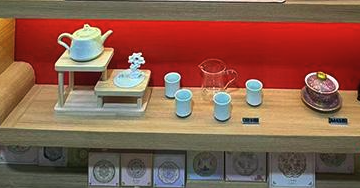
For a long time, most people encountered celadon in museums or collections, where it was preserved and admired as historical art. While this protected its legacy, it also created distance between the craft and everyday life. It was something to observe rather than something to experience.
In recent years, designers, museums, and cultural institutions have worked to change this relationship by developing cultural and creative products inspired by celadon. These include tea sets, home objects, accessories, and decorative items that integrate traditional aesthetics into modern lifestyles. Through these forms, celadon is no longer confined to display cases but becomes part of daily environments.
The celadon blind box represents one of the most innovative expressions of this transformation. Blind boxes are popular among younger consumers because they combine uncertainty, discovery, and emotional engagement. By using this format, Longquan celadon enters a cultural system already familiar to contemporary audiences, allowing tradition to be encountered through curiosity rather than instruction.
Instead of requiring prior knowledge, the blind box creates a first moment of attraction. Only afterward do questions arise about its origin, meaning, and craftsmanship. In this way, the object functions as a bridge between curiosity and cultural learning.
Craftsmanship in Miniature
Although visually simple, miniature celadon production involves significant technical difficulty. Small ceramic forms amplify imperfections, meaning that even minor variations in clay, glaze composition, or kiln temperature can change the final result in noticeable ways. This makes precision essential at every stage of production.
To reproduce the traditional celadon appearance, developers studied museum collections and conducted repeated experiments. The iconic jade green glaze, which defines Longquan celadon, is the result of complex interactions between minerals, heat, and kiln atmosphere. Achieving a stable version of this color required extensive testing and comparison under different lighting conditions.
Many prototypes were rejected before reaching a satisfactory outcome, and even successful pieces remained subject to uncertainty during firing. In some batches, only a portion of items survived the kiln process without damage, reflecting the fragile balance between control and natural variation that defines ceramic production.
Behind the playful appearance of the blind box lies a long process of refinement, repetition, and technical problem solving that connects modern production with traditional craftsmanship.
Living Heritage in Action
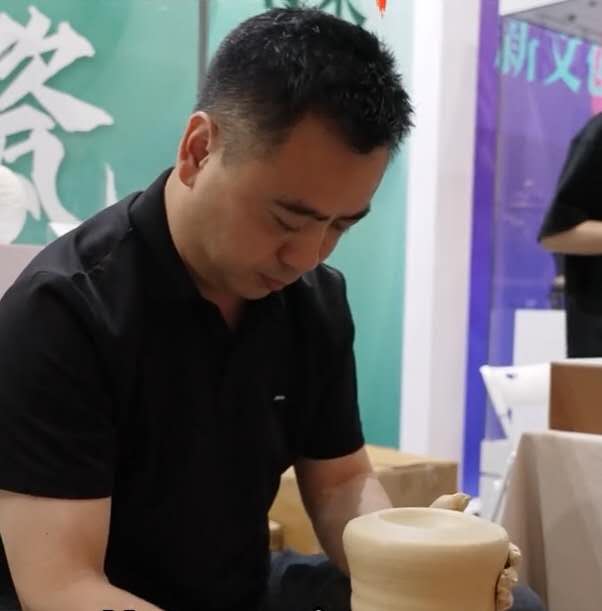
At the cultural market, visitors also encountered live demonstrations by master artisan Ding Junliang, a Zhejiang Arts and Crafts Master and inheritor of Longquan celadon firing techniques. Working directly with clay, he demonstrated how raw material gradually becomes a refined vessel through hand shaping and careful control of form.
Visitors gathered closely around the demonstration area, observing each movement as the clay transformed under skilled hands. Many were seeing the process for the first time, gaining insight into the physical labor and accumulated knowledge behind each finished piece.
These demonstrations emphasized that celadon is not only an object of history but also a living craft that continues to depend on human skill, patience, and experience passed down across generations.
When Heritage Meets Youth Culture
One of the defining features of the event was the coexistence of traditional heritage and contemporary youth culture within the same space. Museum exhibitions, designer toy brands, and intangible cultural heritage displays were positioned side by side, creating a setting where different cultural systems could interact directly.
In this environment, Longquan celadon found a natural place. Its traditional identity remained unchanged, yet its presentation adapted to new forms of engagement. The blind box format, in particular, demonstrated how heritage can be reintroduced through participation rather than passive viewing.
This shift aligns with the preferences of younger generations, who increasingly value experience, interaction, and emotional meaning in cultural consumption. In this context, celadon becomes not only a historical artifact but also a medium for personal discovery.
A Shared Language Across Cultures
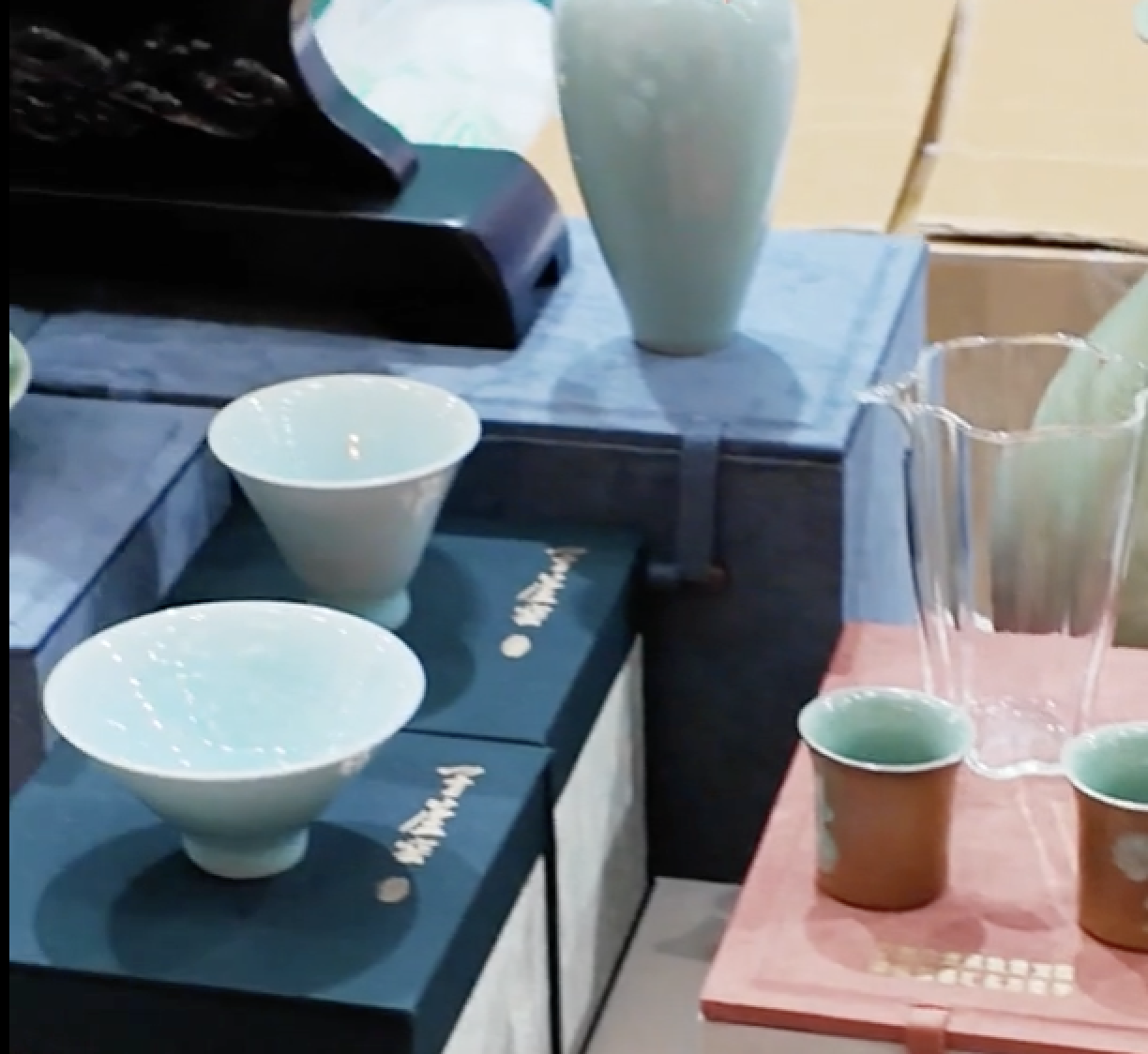
International visitors at the event also showed strong interest in celadon. Many stopped to observe demonstrations and asked questions about its production, glaze, and history. Their responses highlighted an important point: craftsmanship communicates beyond language barriers.
The appeal of celadon lies in its material honesty and visible connection between maker and object. In a global environment dominated by mass production, handmade ceramics offer a different form of value based on time, attention, and human effort.
As a result, Longquan celadon functions not only as a cultural heritage object but also as a form of cultural communication that can be understood across different backgrounds.
The Future Glows Green
As evening approached, Chaoyang Park remained full of movement as visitors continued exploring exhibitions and cultural installations. Among them, a young visitor carefully placed a celadon blind box piece into her bag, treating it as both a keepsake and a discovery.
This moment reflects a broader shift in how cultural heritage is experienced today. Rather than remaining static in museums, traditions like Longquan celadon continue to evolve through new forms of engagement and reinterpretation.
The China New Cultural and Creative Market demonstrated how ancient craftsmanship can be reintroduced into contemporary life without losing its identity. While formats and audiences change, the underlying connection between people and cultural objects remains consistent.
As long as new generations continue to encounter celadon in new ways, the relationship between past and future will remain active, continuing to evolve through each new moment of discovery.