
Crackles: The Poetry of Glaze and Soul of Clay
From Raku’s Flames to Celadon’s Whisper, the Hidden Stories of Ceramics
There is a quiet magic in the surface of a ceramic vessel—a network of delicate lines, a web of fractures, a map of time and fire. To the untrained eye, these fine fissures may seem like imperfections, flaws in an otherwise perfect surface. To the observant, they are stories etched by fire, a language of texture, light, and emotion that transforms clay and glaze into something alive. Crackle is where control meets chance, where material meets imagination, and where history and artistry converge.
It is the visible signature of the kiln, a subtle choreography of heat, cooling, and the chemical interplay between clay and glaze. To appreciate crackle is to see beyond the functional object into the poetic life of ceramics.
Raku: Fire, Smoke, and Dramatic Energy
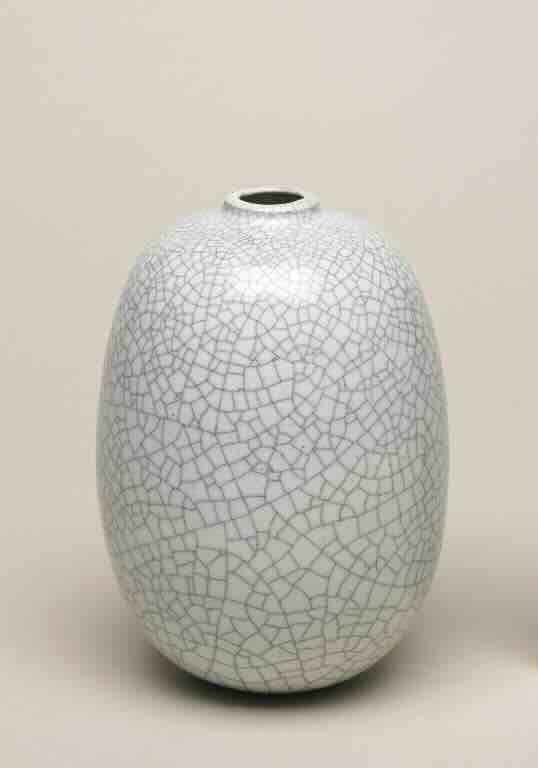
The most dramatic form of crackle can be found in raku, a Japanese firing technique where vessels are pulled from the kiln while glowing red-hot. Imagine a potter tongs in hand, smoke curling around a freshly fired bowl. In that moment, the clay is alive, the glaze quivering, and the air itself seems to hold its breath. The piece is plunged into sawdust, straw, or newspaper, creating a chemical reduction that leaves dark, smoky lines tracing the cracks.
Raku crackles are bold, graphic, and alive with movement. Wide fissures carve paths across the surface like lightning, while smaller, delicate lines branch unpredictably. Each vessel tells a story of fire’s intensity, of heat meeting cold, of the ephemeral thrill of the kiln. No two raku pieces are the same; the crackles are a visual record of chance, a celebration of imperfection.
To admire raku crackle is to surrender to spontaneity. One can follow the paths of the lines, noting how they intersect, diverge, and wrap around the contours of the vessel. The dark smoke trapped in the fissures contrasts against the lighter glaze, creating a striking visual rhythm. Raku invites viewers to feel the drama of creation and to embrace the beauty of impermanence.
Celadon: The Whisper of Elegance
If raku crackle is the shout of fire, celadon crackle is a whisper. High-fired celadon vessels, often with translucent, jade-like glazes, develop fine, delicate networks of fissures as the glaze contracts slightly more than the clay body during cooling. Unlike raku, the cooling process is slow, deliberate, and patient, resulting in cracks that are subtle, even, and refined.
Celadon crackle is best appreciated under soft light, which highlights the interplay between shadow and glaze. A single line may branch gently, catching light differently along its path, while deeper fissures create miniature valleys that draw the eye inward. Some crackles are stained with pigments or ink to emphasize the pattern, revealing the hidden poetry of the glaze.
Historically, East Asian potters likened celadon crackle to ice cracks on a frozen lake, ripples in calm water, or the veins of jade, elevating these vessels from functional objects to contemplative art. Celadon invites meditation and reflection. Viewing a celadon bowl is not a passive act; it is an experience of patience, of noticing nuance, and of feeling the quiet dialogue between material, fire, and maker.
Guan and Ge Ware: Lace of History
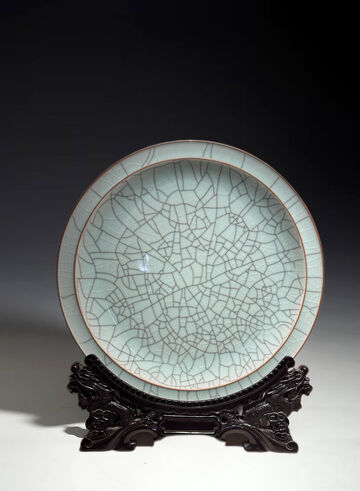
Centuries ago, Chinese potters perfected the art of intentional crackle in high-fired porcelains. Guan ware, produced for the Song Dynasty court, featured thick, opaque glazes with intricate crackle networks. Ge ware pushed this further with double crackle patterns, where broad primary lines were overlaid with finer, secondary fissures.
These crackles were not accidents. They were carefully controlled, a balance of precision and unpredictability, creating surfaces that resemble lace or frost. Some lines were likened to gold thread and iron wire—the golden veins tracing wide fissures like sunlight catching the edges, the dark iron-like threads carving paths through shadows. Each vessel becomes a tapestry of fire, glaze, and clay, a delicate interplay of light and shadow, history and human touch.
Admiring a Guan or Ge ware vessel is like tracing a frozen river on a winter morning—delicate, layered, and infinitely detailed. The “threads” of gold and iron invite the viewer to follow every subtle nuance, every branching path, as though reading a story written in glaze. Each crack tells the story of the kiln, the potter’s hand, and centuries of tradition.
Shino and Ice Crackle: Organic Patterns
In Japan, Shino glazes produce thick, creamy surfaces punctuated by soft, organic crackles. Unlike the boldness of raku, Shino crackle is earthy, subtle, and textural. Carbon or iron caught in the tiny fissures can create gentle shadows, adding a quiet depth and nuance that makes the glaze feel almost alive. Shino pieces invite the viewer to linger, to appreciate the interplay of light and color, and to notice how the surface seems to breathe under the eye.
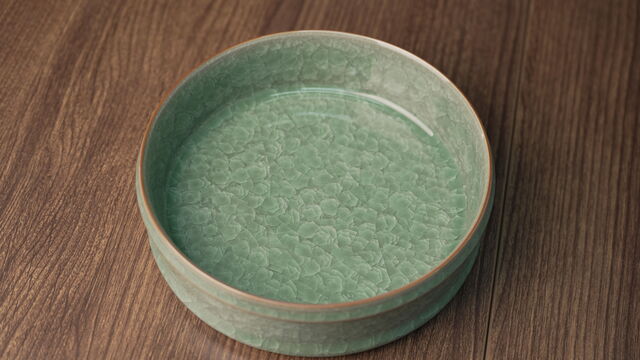
Ice crackle and snowflake crackle elevate this sense of delicacy into something almost ethereal. Dense networks of fine lines spread across the glaze like frost creeping across a windowpane on a winter morning. Some lines converge into tiny starbursts, while others meander freely, tracing paths that evoke frozen rivers, glimmering spider webs, or the subtle veins of a leaf. When sunlight or soft indoor light plays across the surface, the crackles seem to shimmer, revealing hidden patterns that shift with every glance. Each piece becomes a miniature landscape of frozen time, inviting viewers to slow down, follow the intricate networks with their eyes, and marvel at the quiet, natural-like artistry produced by the kiln’s fire and the potter’s patient hand.
Shino and ice crackle vessels encourage a meditative experience, a form of seeing that is less about functionality and more about feeling the subtle tension between fire, glaze, and clay. The delicate fractures become a visual rhythm, a quiet music, that reminds us that imperfection can hold its own, serene beauty.
Majolica and Tin-Glaze: The Passage of Time
In Europe, tin-glaze ceramics such as majolica and faience display a different kind of beauty in crackle. Often fired at low temperatures, these glazes develop fine lines over time, darkening as the object ages. Here, crackle becomes a visual record of history, showing the effects of centuries, use, and care. A plate from the 17th century, its cracks highlighted by a subtle patina, invites contemplation of time itself, of objects lived with, loved, and handled by generations.
Naked Raku and Saggar Firing: Fire as Gesture
Some modern potters use naked raku or saggar firing to let crackle become the primary expressive element. In naked raku, the glaze is sacrificial, flaking away to reveal carbon-stained lines that trace the surface of the clay. Saggar firing produces unpredictable crackle-like patterns as smoke and chemicals interact with the vessel. These techniques are bold, sculptural, and highly personal—each crack is a gesture of fire, hands, and material, immortalized in clay.
How to Truly Appreciate Crackle
Crackle is more than a visual effect; it is a dialogue between artist, kiln, and observer. To fully appreciate it:
- Look slowly and attentively: Some crackles are subtle, others dramatic. Let your eyes wander over the surface, noticing the variation of line, depth, and direction.
- Observe light and shadow: Crackles create miniature landscapes on the surface. The way light interacts with them can dramatically alter their appearance throughout the day.
- Feel the texture: When handling pieces, notice the slight undulations crackles create. The surface comes alive beneath the fingertips.
- Imagine the fire: Each fissure represents heat, contraction, and the invisible tension between glaze and clay. Picture the kiln, the rising flames, and the cooling clay.
- Connect emotionally: Let crackle evoke feeling. Raku thrills with energy; celadon soothes; aged majolica invites nostalgia.
Seeing Imperfection as Beauty
Crackle reminds us that perfection is not the goal of art. It celebrates imperfection, transience, and the unpredictability of natural processes. It shows the beauty of what cannot be completely controlled. In a world that prizes precision and uniformity, crackle encourages patience, mindfulness, and wonder.
Whether it is the dramatic dark fissures of raku, the soft jade whispers of celadon, the layered lace of Guan ware, or the frosty intricacy of ice crackle, every piece is a visual poem. The cracks are the words, the glaze the voice, and the kiln the storyteller.
Next time you encounter a ceramic vessel, look closely at its surface. Let your gaze follow the tiny networks of cracks, imagine the heat and hands that shaped them, and feel the emotion they carry. Crackle is not merely a technical curiosity; it is a conversation across time, culture, and material, a meditation on imperfection, and a celebration of the artistry of fire.
In raku, you see drama and chance. In celadon, subtlety and serenity. In historical and contemporary wares, layers of texture, shadow, and memory. To appreciate crackle is to experience the poetry of clay and glaze, a delicate intersection of nature, craft, and human vision.