Dragon Kiln and Schrödinger’s Box
Fire, Glaze, and the State of Uncertainty in Longquan Celadon
The Dragon-Shaped Kiln
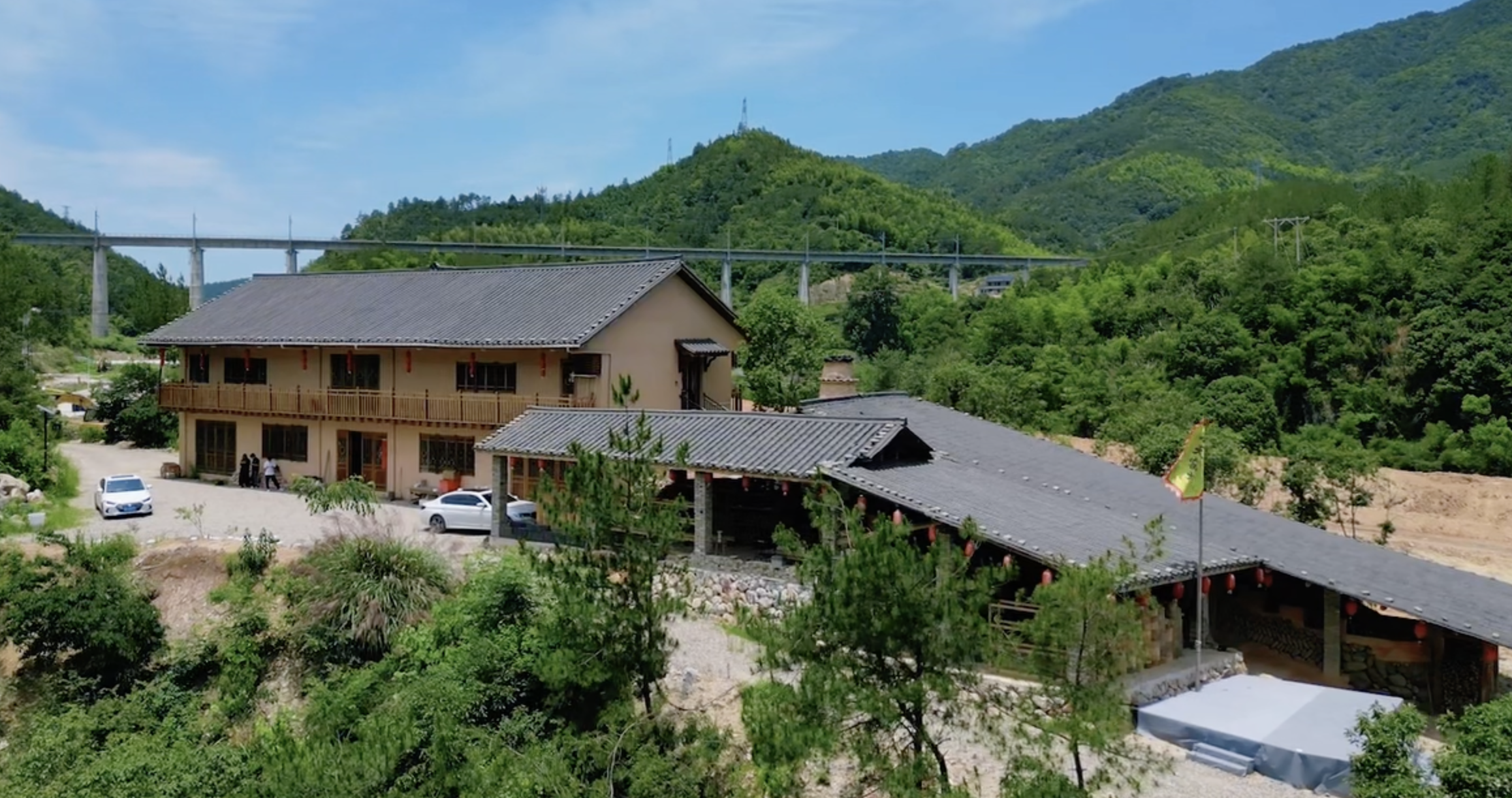
The dragon kiln, or longyao, is a traditional ceramic kiln built along a hillside, extending for roughly sixty meters. Its structure follows the natural slope of the land, rising in segmented tiers like a creature resting against the earth. From above, its long curved form resembles a dragon, which gives the kiln its name.
This design is both architectural and elemental. The incline allows flame and heat to travel upward naturally, producing a gradient of temperature from the lower firebox to the upper chambers. The kiln is not a uniform container of heat but a continuous field of transformation shaped by terrain, airflow, and combustion. It behaves less like a machine than like a living system, where human intention and environmental force remain tightly interwoven.
Crafting Before the Fire
Long before the kiln is lit, Longquan celadon has already passed through a sequence of transformations. Stone is crushed into fine powder, clay is washed, aged, and kneaded until it reaches the right plasticity. It is then shaped, trimmed, dried, and refined through repeated attention to proportion and surface.
After an initial firing, the vessels are glazed and prepared for their final passage through the dragon kiln. Each stage demands precision, patience, and accumulated skill. Yet even perfect execution cannot guarantee a predictable outcome. The work is already moving toward uncertainty long before fire is introduced. Control increases as form develops, but so does exposure to indeterminacy.
Fire and the Structure of Uncertainty
Inside the dragon kiln, temperatures can exceed 1300°C. Yet heat is never evenly distributed. Distinct thermal zones emerge along its length, shaped by airflow, fuel placement, and position on the slope.
Kiln masters rely less on instruments than on perception. They read flame color, listen to the movement of air, and respond through embodied knowledge developed over years of practice. Traditional wisdom describes this balance as three parts human effort and seven parts natural force, a formulation that acknowledges the limits of control even within skilled operation.
Within this system, outcomes cannot be fully predetermined. Some vessels emerge with luminous, even glaze, while others show ash deposits, warping, or subtle variations in tone and texture. These variations are not merely defects. They are material inscriptions of the kiln’s internal variability, where control and contingency coexist without resolution.
Ritual, Attention, and the Act of Firing
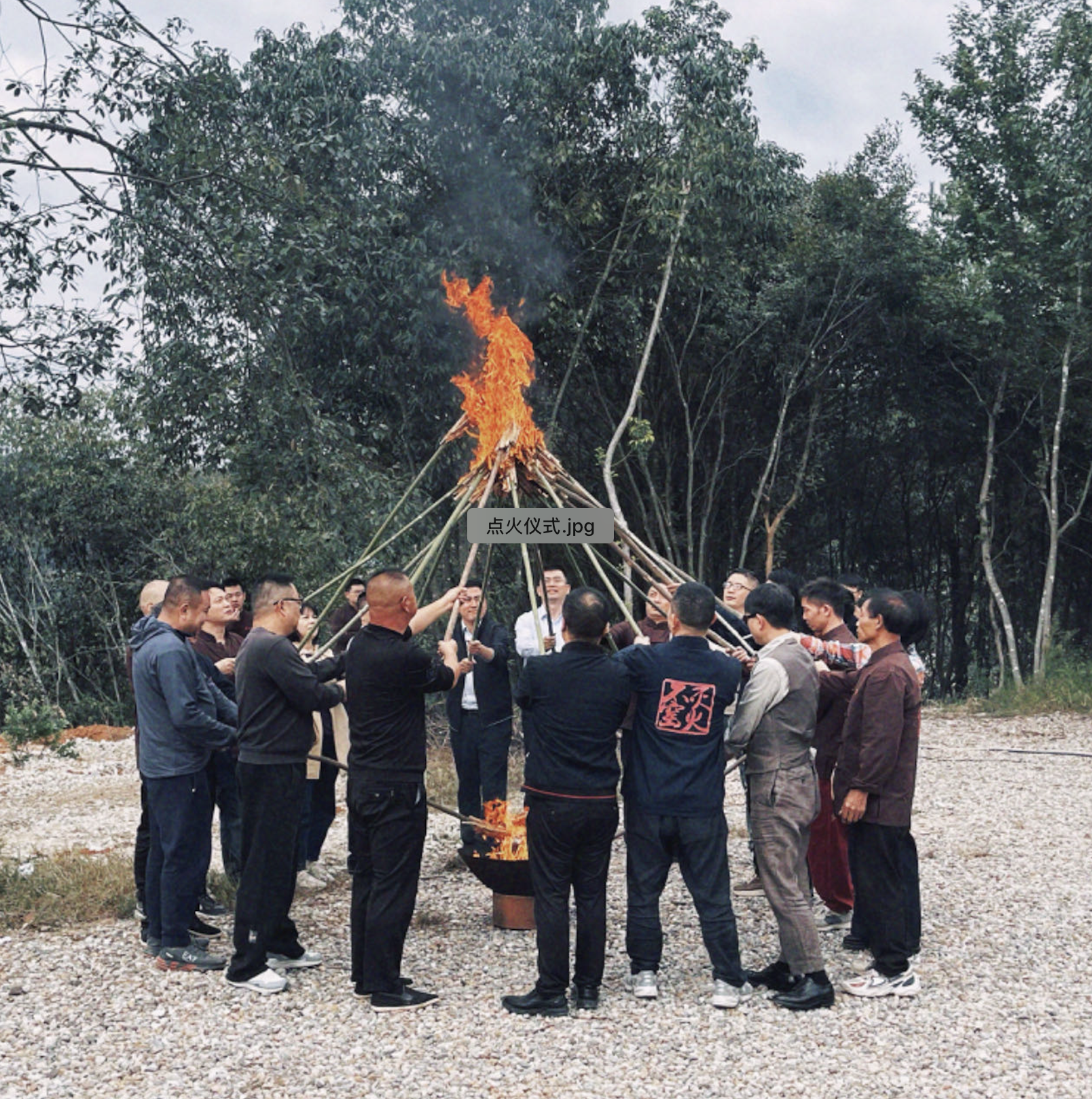
Firing a dragon kiln is not only a technical procedure but also a ritual act. Before ignition, ceremonies are often performed to honor heaven, earth, and the kiln itself. Incense is burned, hands are cleansed, and gestures of respect are made in sequence.
These practices acknowledge a fundamental condition. Fire cannot be fully mastered. It can only be engaged. The kiln becomes a site where craftsmanship, cosmology, and attention converge, and where making is inseparable from the recognition of limits.
Once ignited, the kiln demands continuous care. Wood is fed into its chambers for many hours, sometimes more than a full day. The structure appears almost animate, breathing through heat, smoke, and sound, responding in real time to subtle shifts in fuel and airflow.
Kiln Opening and Schrödinger’s Box
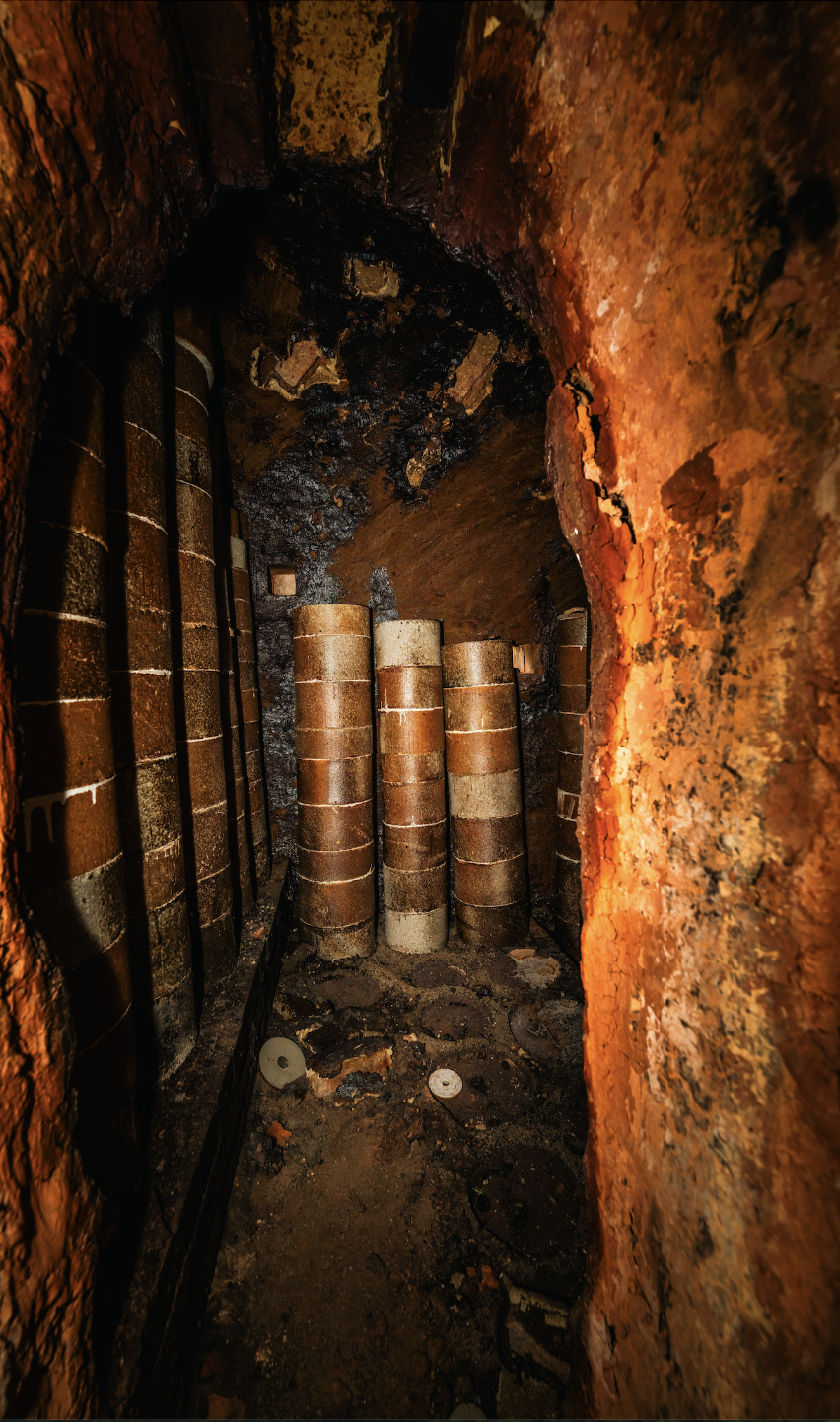
After firing, the kiln is sealed and left to cool for several days. Within its chambers lie hundreds of ceramic pieces, each enclosed in protective saggars. Their final conditions are unknown.
During this interval, the kiln resembles a macroscopic version of Schrödinger’s box, a system in which outcomes remain unresolved until observation occurs. Each piece exists, conceptually, in a state of suspended potential, neither fully successful nor failed, neither fixed nor disclosed.
The opening of the kiln collapses this field of possibility.
As bricks are dismantled and residual heat escapes, the saggars are removed one by one. Each opening becomes a moment of revelation. A glaze resolves into clarity or reveals unexpected variation. A surface declares its stability or deviation. With each act of exposure, uncertainty is converted into specificity.
Yet unlike the abstract thought experiment, nothing in the dragon kiln is detached from its history. Every outcome carries traces of its conditions, its position in the kiln, and its exposure to flame, ash, and oxygen flow. What appears as resolution is always shaped by the material memory of uncertainty.
Glaze as Surface and Depth
Among Longquan celadon wares, glaze is the most visually expressive element. Its tones range from pale bluish green to deep jade hues, often described in poetic terms such as powder blue or plum green. The surface appears soft and luminous, as if it holds light rather than reflects it.
This effect emerges from subtle chemical interactions between clay body, minerals, temperature, and kiln atmosphere. Slight variations in oxygen levels or heat exposure can produce entirely different results. No two surfaces are identical.
In Chinese aesthetic tradition, these colors are associated with jade, an object long linked to purity, restraint, and moral refinement. Celadon glaze inherits these associations, transforming material chemistry into cultural expression.
Transmutation Through Fire
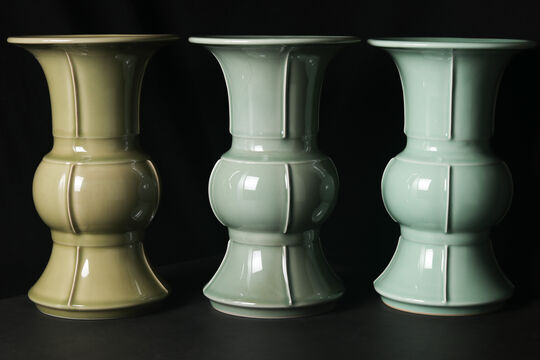
What occurs in the dragon kiln is more than transformation. It is transmutation. Clay becomes ceramic, but more significantly, it becomes an object that carries both intention and accident within its form.
Transmutation implies passage into a different order of being. It is not simply change, but elevation through exposure to elemental force. The kiln thus operates as a site of conversion, where raw earth is reconstituted as cultural and aesthetic object.
Importantly, this passage does not eliminate uncertainty. It incorporates it. The final work is neither fully controlled nor fully accidental, but a stabilized trace of both.
Tradition in Contemporary Practice
Today, dragon kiln firing continues as both craft practice and cultural heritage. Contemporary workshops and cultural initiatives invite participants to observe firing processes, experience wood fueled kilns, and witness kiln opening events.
These practices translate embodied knowledge into shared experience while preserving techniques that resist full automation or digitization. The expertise of kiln masters remains grounded in perception, memory, and tacit judgment rather than purely measurable data.
At the same time, artisans continue to experiment within traditional frameworks. The dragon kiln remains a living system, historical in origin but contemporary in practice, continuously reactivated through use.
Living with Uncertainty
The dragon kiln and Schrödinger’s box converge on a shared proposition. Uncertainty is not an absence of knowledge, but a condition of emergence.
In the kiln, uncertainty is not resolved in advance. It is staged, sustained, and ultimately revealed. Making is not the elimination of indeterminacy, but its structured engagement.
Within a world increasingly oriented toward precision, reproducibility, and control, the dragon kiln preserves another logic of creation. It suggests that variation is not noise but meaning, and that unpredictability is not failure but possibility.
Within its long earthen body, fire does not simply obey. It negotiates. In that negotiation, clay passes through transmutation, emerging as form shaped equally by intention and chance, control and collapse.