Roland Garros Clay and Celadon Clay
Footprints as Records of Human Action Across Time
Clay is often treated as a neutral material, something passive that simply receives form. Yet in practice, clay is never neutral. It is a field of resistance, memory, and transformation. It records pressure, speed, heat, and gesture. In two seemingly distant worlds, tennis and ceramics, clay becomes a medium that shapes behavior as much as it is shaped by it. The red courts of Roland Garros and the jade-toned surfaces of celadon ceramics may appear unrelated, but both are systems in which movement is disciplined by friction, and form emerges through controlled struggle.
This essay explores an unexpected parallel between Roland Garros clay and celadon clay. One is designed for athletic performance under pressure, the other for ceramic transformation under fire. Yet both operate as stages where time, force, and material response become visible and meaningful.
From Origin to the World: Tennis and Celadon as Global Materials
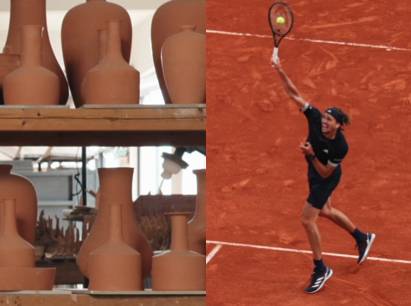
Both tennis and celadon began as localized cultural systems and gradually evolved into global languages of material and practice.
Modern tennis emerged in Britain, but one of its most iconic expressions developed on the red clay courts of Paris. What began as a recreational pastime became a worldwide sport, played across continents and cultures. Among its many surfaces, clay acquired a special status. It rewards patience over haste, endurance over explosiveness, and strategy over raw power. The clay court became not merely a venue, but a philosophy of play.
Celadon followed a remarkably similar trajectory. Longquan celadon, born in the kiln centers of Zhejiang, developed from regional ceramic traditions into one of the most influential ceramic styles in East Asian history. Through maritime trade routes and cultural exchange, celadon traveled to Korea, Japan, Southeast Asia, the Middle East, and eventually Europe and North America. What began as a local ceramic language became a global symbol of refinement, admired for its jade-like glaze and understated elegance.
Both systems share a parallel journey:
- Local origins rooted in specific geography
- Continuous refinement through generations
- Global dissemination through trade and cultural exchange
- Transformation into internationally recognized symbols
The Surface of Nations
Materials often become symbols long before people consciously recognize them as such. Over time, certain surfaces come to represent not only a craft or a sport, but an entire cultural imagination. The red clay of Roland Garros and the celadon clay of Longquan belong to this rare category.
For France, Roland Garros is more than a tennis tournament. It is a cultural stage where national identity is performed annually before a global audience. The red clay surface has become inseparable from that identity. Broadcast worldwide each spring, it represents a style of play associated with patience, endurance, and tactical intelligence.
Matches on clay unfold slowly, like extended negotiations rather than rapid exchanges. The surface rewards construction rather than impulse. In this sense, Roland Garros is not only a sporting venue but a cultural language. Each generation of players leaves new footprints while participating in a tradition that remains visually and materially continuous.
Longquan celadon occupies a similar position within Chinese civilization.
During the Song dynasty, celadon became one of the most refined expressions of ceramic aesthetics. It embodied restraint, balance, and quiet beauty. Its subtle green glaze shifts with light, while its surface crackle patterns reveal themselves gradually. Through maritime trade, Longquan celadon traveled across Asia and beyond, becoming an early form of cultural transmission.
Contemporary works such as Zhang Haiyang’s “Yuli” vases continue this tradition, presenting celadon as a living cultural language on global stages, including the Paris Paralympic Games.
Both Roland Garros clay and Longquan celadon thus function as cultural ambassadors:
- One expresses identity through movement
- The other expresses identity through form
- Both transform earth into meaning
Clay as Resistance and Feedback
On the courts of Roland Garros, clay is not simply a surface. It is an active participant in the game. The crushed brick composition slows the ball, absorbs impact, and produces distinctive bounce patterns. Players must adapt continuously to changing conditions.
Clay introduces three key conditions:
- Deceleration of force and extended rallies
- Emphasis on endurance and physical persistence
- Visibility of movement traces through footprints and slides
Every slide becomes a negotiation between control and instability. The court becomes a temporal map of effort. Roland Garros clay does not erase motion. It records it.
Celadon Clay as Latent Transformation
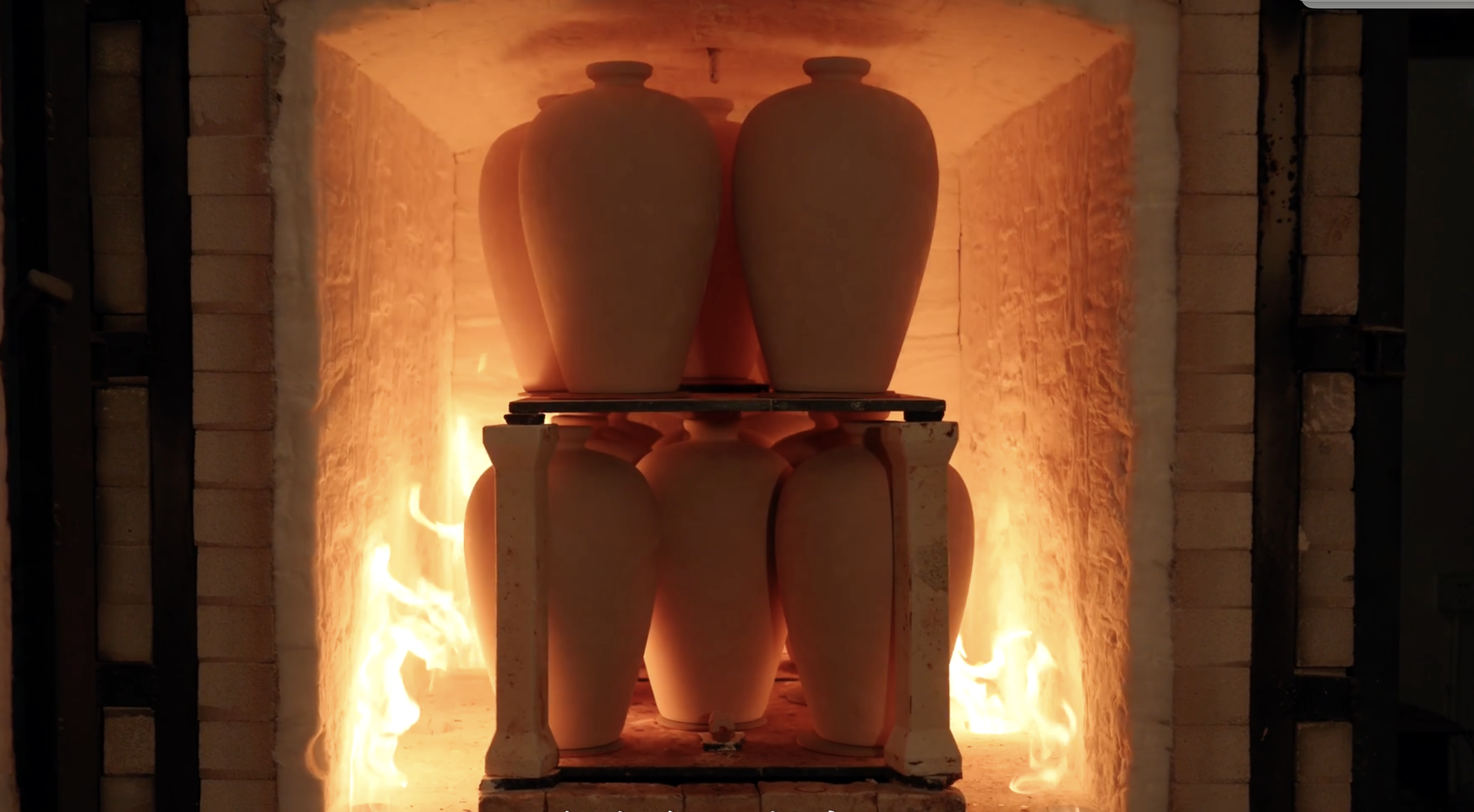
Celadon clay operates in a different temporal system. Before firing, it is soft and unstable. After firing, it becomes stone-like and permanently transformed.
In Longquan tradition, clay is part of an integrated system involving body composition, glaze chemistry, and kiln atmosphere. Iron-rich clays combined with reduction firing produce surfaces resembling jade rather than earth.
Celadon clay introduces:
- Delayed transformation through kiln firing
- Invisible atmospheric influence
- Stabilization into permanent form
Unlike tennis clay, celadon clay does not record motion directly. It internalizes it.
Two Temporalities of Material Action
The difference between the two materials is fundamentally temporal.
- Tennis clay operates in real time
- Celadon clay operates through delayed transformation
One records action as it happens. The other reveals action only after it has disappeared.
Control, Uncertainty, and Environmental Force
Both systems exist between control and unpredictability. At Roland Garros, players adapt to weather, surface wear, and physical exhaustion. In celadon firing, ceramicists confront kiln atmosphere, flame paths, and temperature fluctuations.
In both cases:
- Environment overrides intention
- Material resists full control
- Outcomes emerge through interaction
Trace, Surface, and Memory
Tennis clay remembers through temporary marks, while celadon clay remembers through internal transformation. One is erased and renewed; the other is preserved and fixed.
Movement as Form, Form as Movement
On clay courts, movement produces form. In celadon, form preserves movement.
- Tennis clay: movement → form
- Celadon clay: form → memory of movement
The Making of a Red Clayer
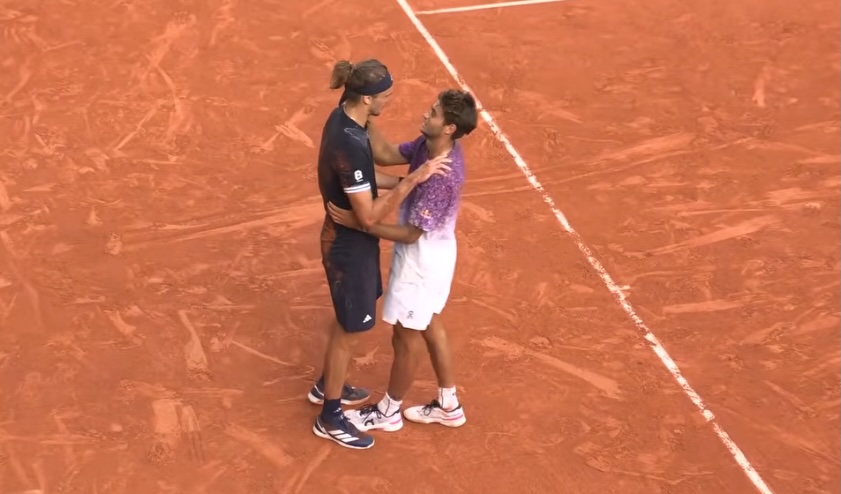
On the red clay of Roland Garros, identity is shaped through endurance. Alexander Zverev’s 2026 French Open victory marked a transformation after years of struggle and adaptation.
Clay rewards patience and resilience. Every slide leaves a mark. Every footprint becomes evidence of effort. At championship point, Zverev collapsed onto the red clay of Court Philippe-Chatrier. Athlete and surface merged.
In celadon, the clay body is usually hidden beneath glaze. In tennis, the clay becomes fully visible. One conceals. The other reveals.
At that moment, the clay was no longer background. It was identity.
He became a Red Clayer.
The Making of a Celadon Reviver
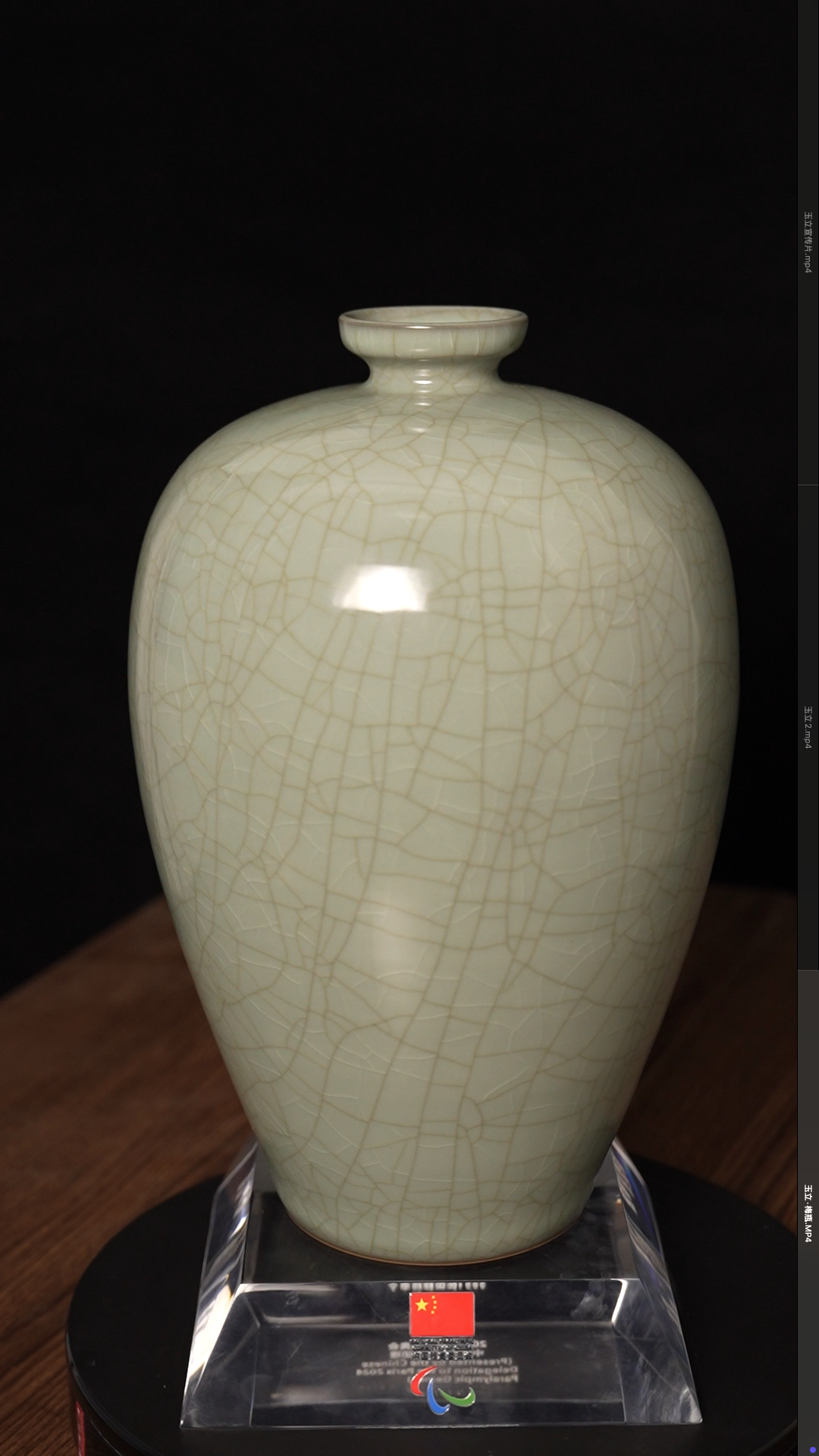
Zhang Haiyang devoted decades to reviving Southern Song official kiln celadon. His path required abandoning commercial certainty in favor of experimental practice.
He searched for mineral sources, studied museum fragments, and conducted repeated kiln experiments. More than ninety firings failed.
The kiln became his court. Each firing was a match against uncertainty.
Finally, after years of persistence, he opened a kiln and saw success: soft blue-green glaze, crackle patterns, and deep iron-rich foot coloration.
The kiln had responded.
Later, his “Yuli” celadon vases were presented at the Paris Paralympic Games as cultural gifts symbolizing resilience.
In tennis, victory is a score. In celadon, victory is a glaze.
He became a Celadon Reviver.
Two Clays, One Logic of Material Intelligence
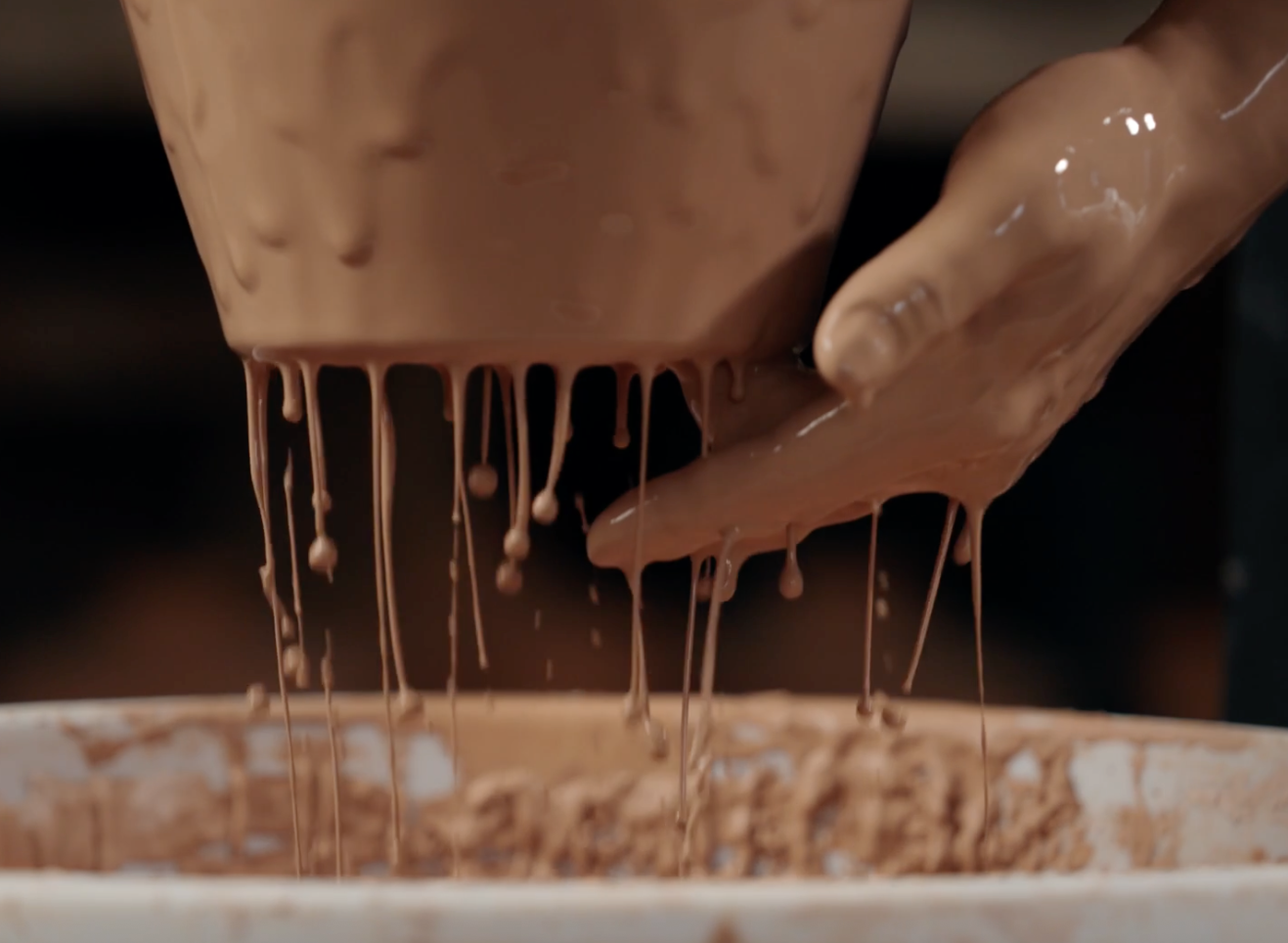
Roland Garros clay and Longquan celadon clay share a deeper logic. Both are active materials that shape human action while being shaped by it.
At Roland Garros, clay shapes athletic intelligence. In Longquan, clay shapes aesthetic intelligence.
One records footsteps. The other records fire.
One preserves movement. The other preserves transformation.
Yet both reveal the same truth: material is not passive. It is a collaborator in human creation.
Whether beneath the feet of a champion or within the walls of a kiln, clay remembers what humans do with it and transforms those actions into lasting form.