Historic Ceramic Art, Cultural Heritage, Museum Collections & Auction Provenance.
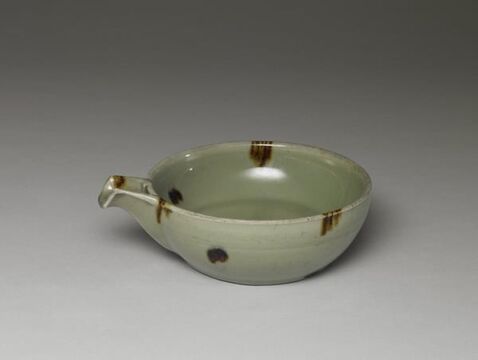
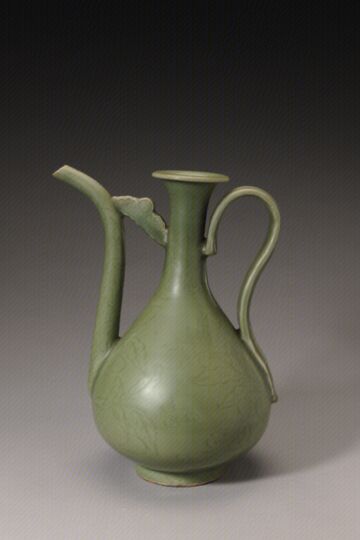
A 14th-century spouted pouring vessel (yi) finished in a soft green glaze intentionally accented with dynamic iron-oxide brown spots (tobi seiji).
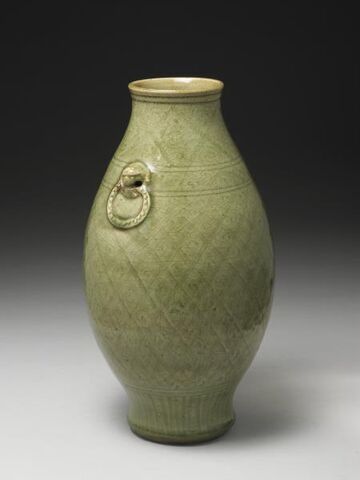
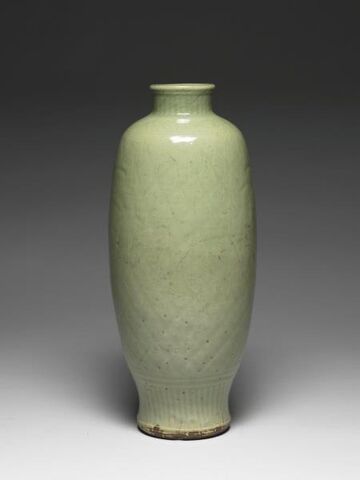
An ovoid olive-shaped vase carved with diaper and lozenge grounds, typical of 16th-century Ming ceramic ornament, covered in a glossy celadon glaze.
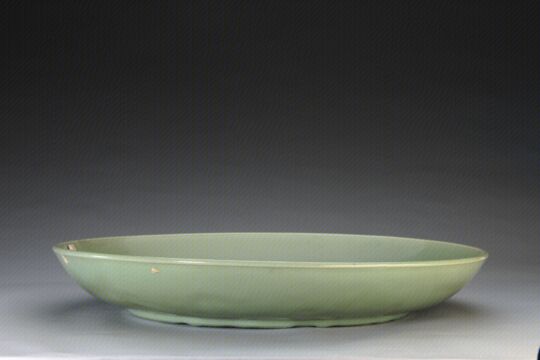
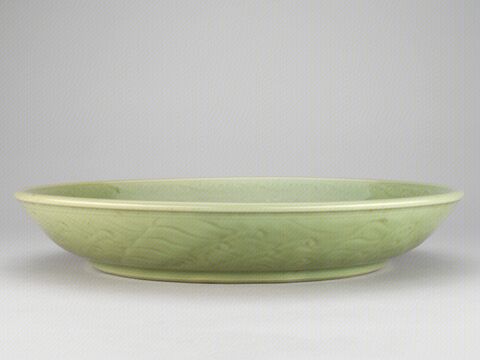
A heavy-bodied Ming celadon serving dish with gently rounded sides and a wide base, covered in a rich sea-green glaze.
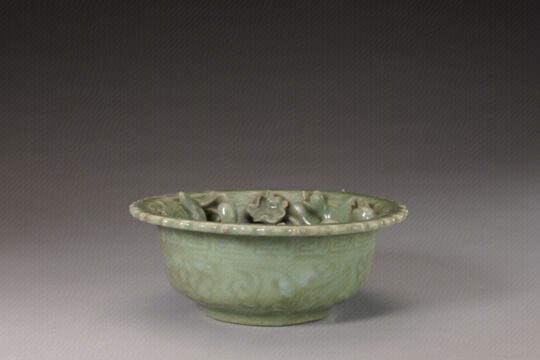
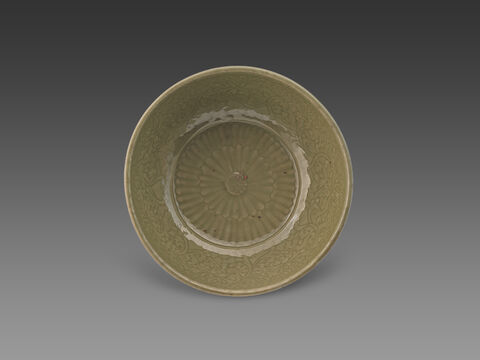
A deep celadon bowl molded or carved with exuberant auspicious motifs of boys playing among undulating lotus scrolls, conveying wishes for male progeny.
A Ming celadon vase of elongated olive form combining crisply incised lattice backgrounds with naturalistic floral blossoms under a rich feldspathic glaze.
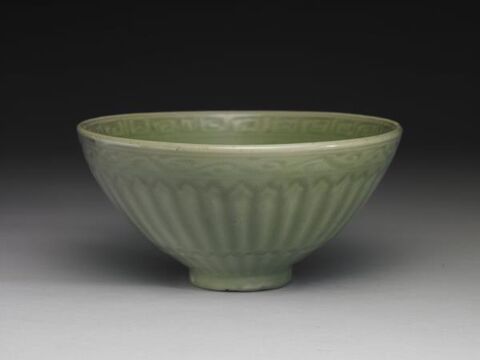
An early Ming dynasty bowl featuring carved exterior petal ribs that echo Buddhist lotus symbolism, enrobed in a warm olive celadon glaze.
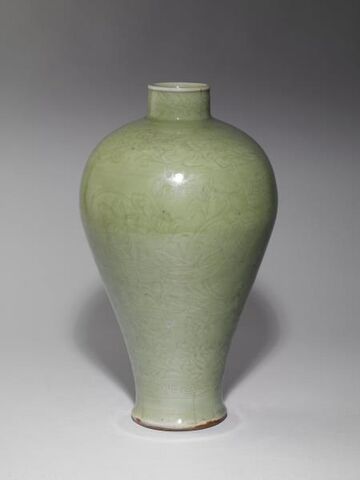
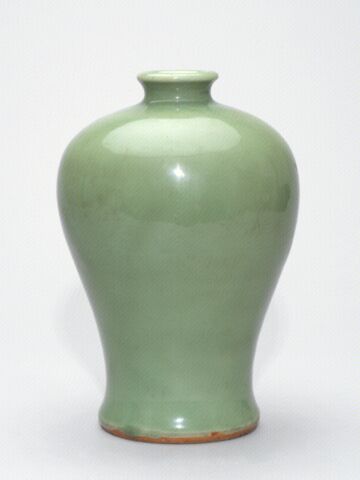
A gracefully contoured meiping vase with high swelling shoulders and a small collared neck, fully glazed in lustrous green celadon.
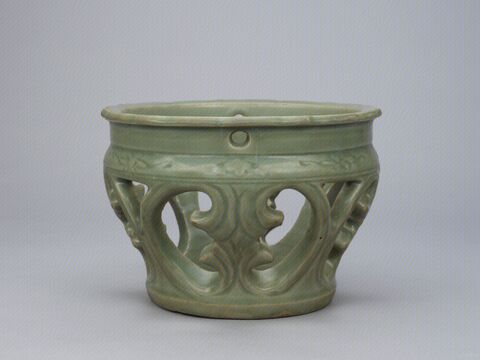
A ceramic stand or base pierced with intricate openwork apertures, designed to support censers or ornamental vessels while showcasing bright celadon glaze pools.
A finely finished Ming celadon bowl with elusive, softly incised anhua floral scrolls visible beneath the glossy surface glaze.
A Ming celadon pouring ewer fitted with an arched loop handle and elegant spout, embellished across the body with incised floral compositions.
A baluster-proportioned meiping vase enrobed in a deep olive-celadon glaze, with characteristic Ming potting strength.
A large Ming celadon platter incised with fluid scrolling peonies across the interior floor, enveloped in a translucent green glaze.