Historic Ceramic Art, Cultural Heritage, Museum Collections & Auction Provenance.
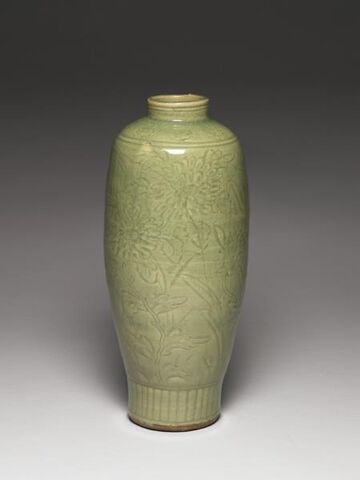
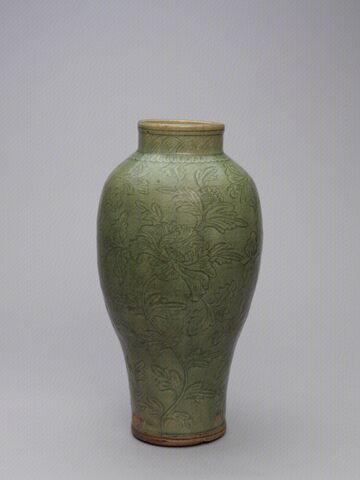
A celadon vase of olive shape (ganlanping) dating to the 16th-17th centuries, incised with delicate floral scrolls.
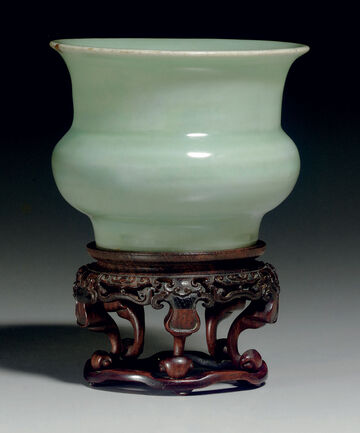
A classic Longquan celadon zhadou (spittoon or leavings vessel) featuring a wide trumpet mouth and a compressed globular lower body.
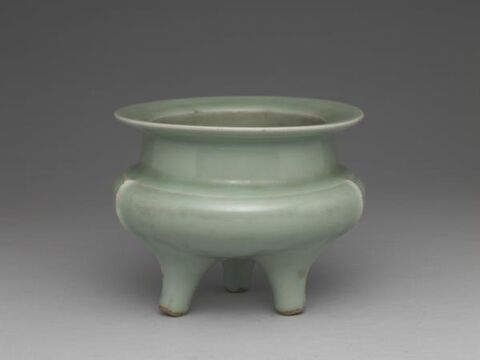
A Southern Song dynasty Longquan celadon incense burner raised on three short cylindrical feet, coated with an unctuous powder-green glaze.
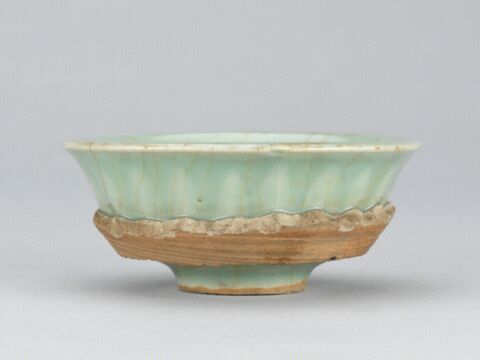
A classic Song dynasty bowl showing refined potting, with carved overlapping lotus petals wrapping around the exterior belly under a soft, luminous green glaze.
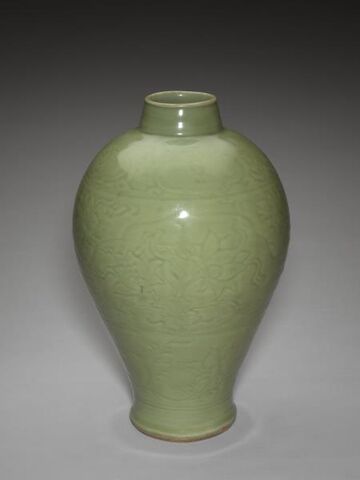
A 14th-century celadon meiping vase decorated around the body with shaped ogival panels enclosing floral sprays under a sea-green glaze.
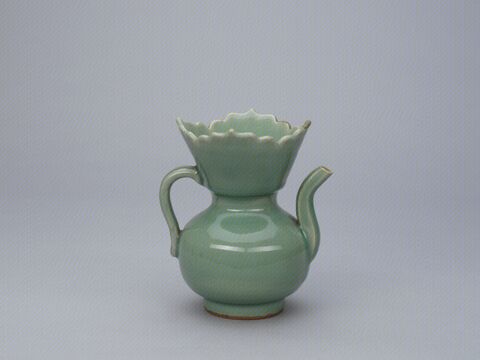
A Qing dynasty celadon ewer shaped with a stepped rim resembling a Tibetan monk's hat (sengmaohu), coated in an even sea-green glaze.
A Ming dynasty celadon vase decorated with carved floral registers across the neck and body under a lustrous glaze.
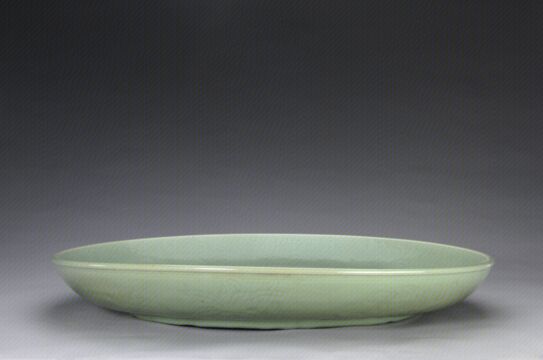
A Ming dynasty celadon plate decorated in the center with carved blossoming and fruiting peach branches symbolizing longevity.
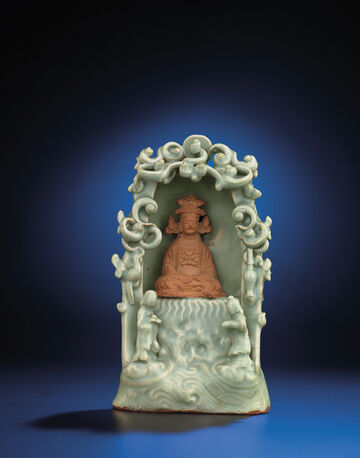
A Longquan celadon shrine portraying Guanyin seated within a rocky cavern surrounded by biscuit-fired acolytes under a jade-green glaze.
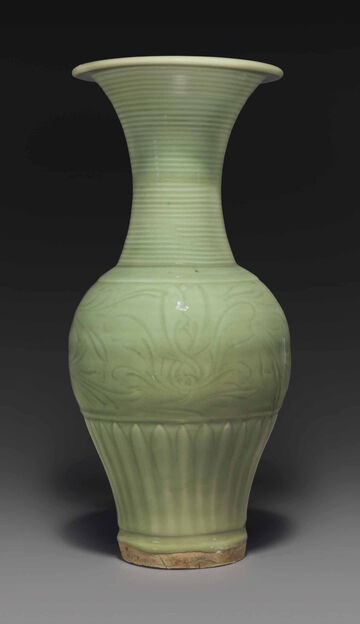
A carved Longquan celadon vase of phoenix-tail form with a trumpet neck and ovoid body covered in incised flowers.
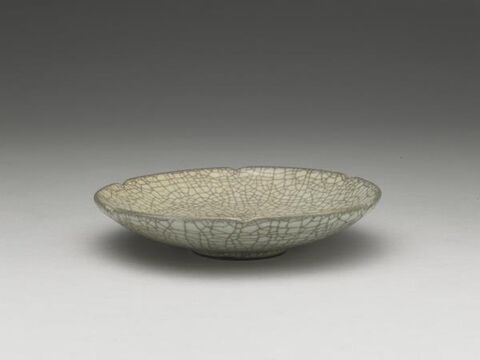
A Song dynasty celadon dish modeled with multi-lobed petal indentations simulating an open hibiscus blossom, washed in an even translucent green glaze.
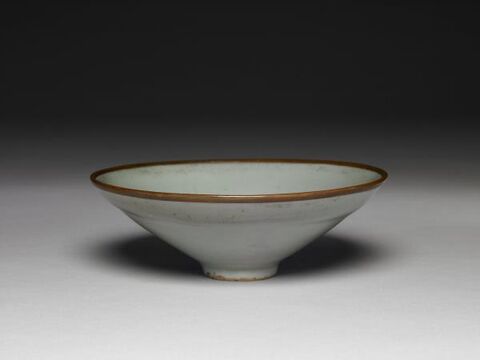
A Southern Song to Yuan dynasty celadon cup with a flared rim and delicate foot, covered in a soft green glaze.