Historic Ceramic Art, Cultural Heritage, Museum Collections & Auction Provenance.
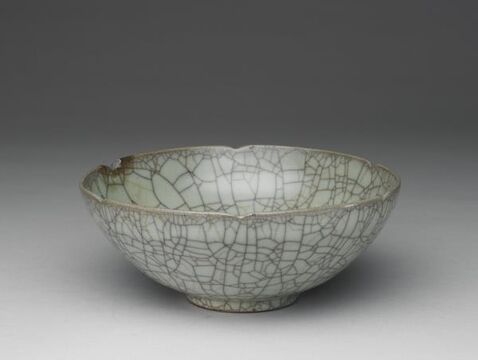
The rim of this finely potted bowl is notched into elegant mallow or hibiscus petals, draped in a smooth, translucent sea-green glaze.
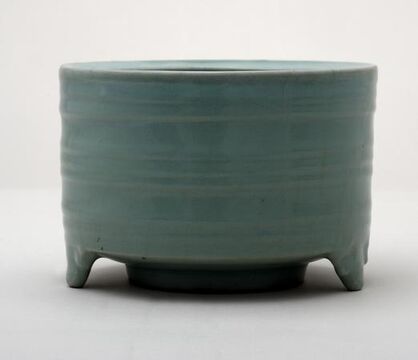
Featuring archaic bronze ding proportions, this censer has three columnar legs and subtle raised flanges, enveloped in a rich, unctuous green glaze.
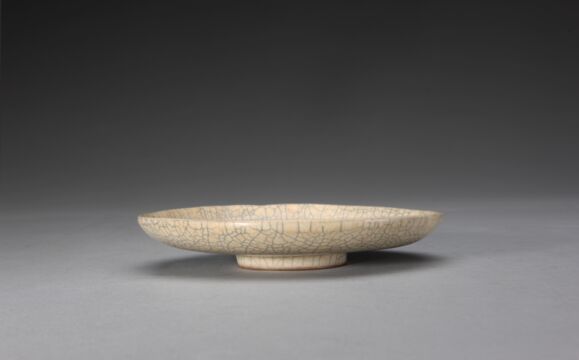
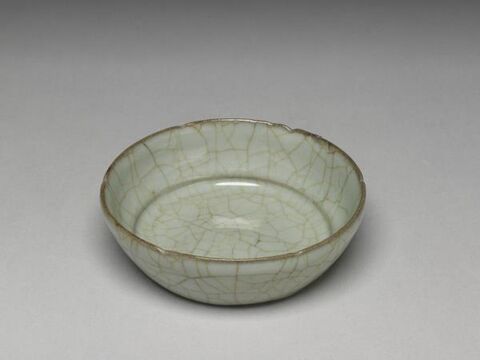
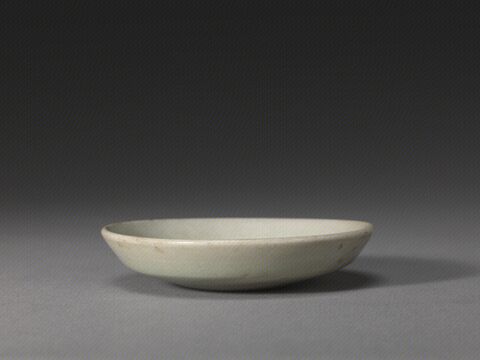
This circular dish is coated in an opaque rice-yellow to beige glaze suffused with an intricate web of fine dark and gold crackles, displaying a dark body at the rim and foot.
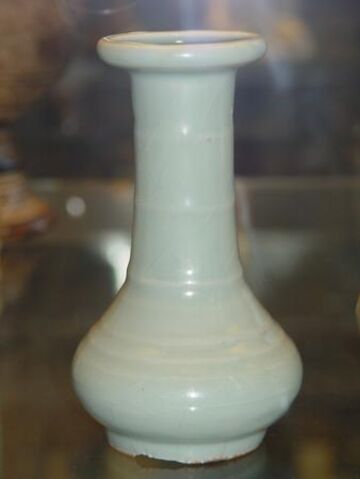
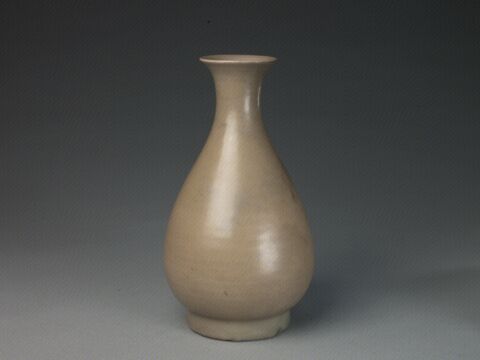
Featuring a slender neck and swelling rounded belly, this vase demonstrates the elegant simplicity of Song monochrome ceramics under a soft green glaze.
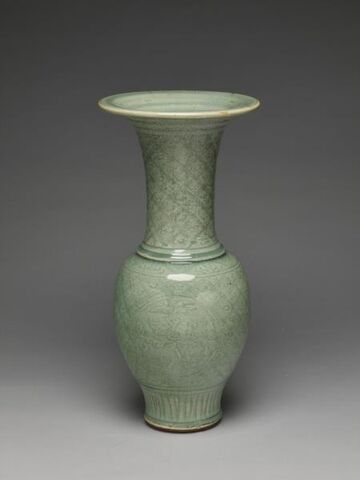
Characterized by its voluptuous swelling body, narrow neck, and widely flared mouth, this yuhuchun vase is covered in a glossy, translucent celadon glaze.
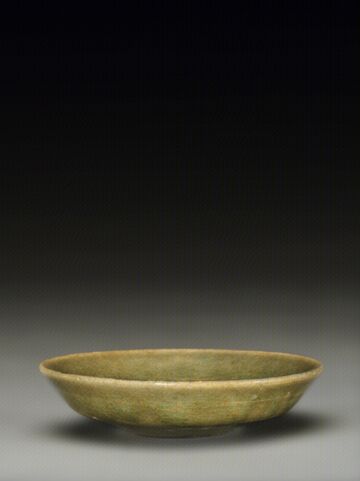
This delicate shallow dish is incised with fluid botanical lines across the central well, covered in an unctuous sea-green celadon glaze.
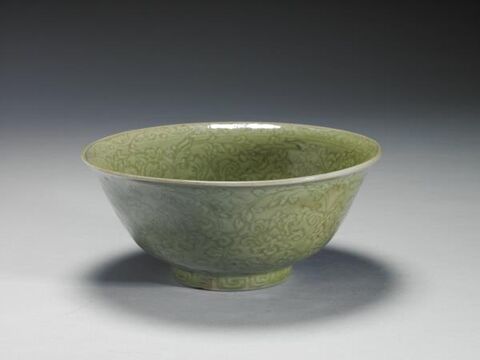
Incised with scrolling Indian lotus blossoms (baoxianghua) around the exterior and interior cavetto, coated in an even, smooth green celadon glaze.
A scholar's desk washer with an undulating mallow-lobed rim and shallow well, coated in a pale sea-green celadon glaze that pools in the interior corners.
Featuring fluidly carved peony and lotus blossoms spanning the belly and neck, enveloped in a thick, lustrous green celadon glaze.
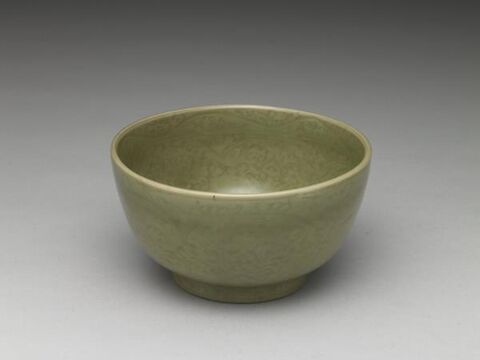
This bowl has deep, curving walls and an incised central flowering spray, enveloped in an unctuous olive-celadon glaze.
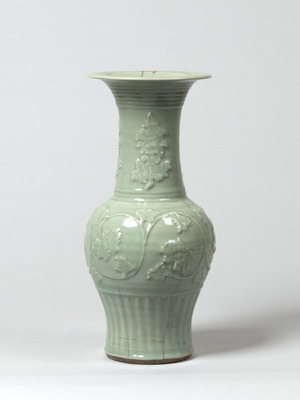
This vase is a type of celadon porcelain with a carved design of peonies that is generally called ukibotande ('peony-carved ware') in Japan. Peonies were a popular motif for celadon porcelain during the Southern Song dynasty (1127-1279) in China. Since ceramics decorated with peonies have been excavated from a 14th-century sunken ship off the Shinan Coast of Korea, ukibotande seems to have continued to be produced through the Yuan dynasty (1277-1368).
This dish features a distinctive stepped '折腰' (waisted) profile and a central incised swimming fish amid combed waves, covered in a soft green glaze.