Historic Ceramic Art, Cultural Heritage, Museum Collections & Auction Provenance.
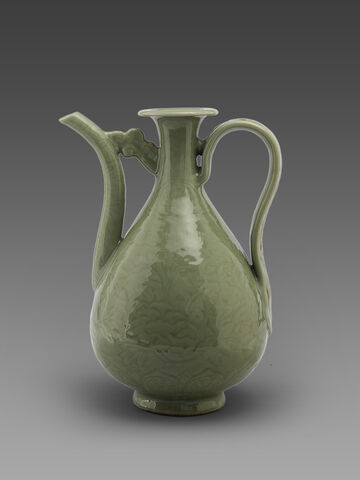
Featuring a curved spout, strap handle, and pear-shaped body molded with relief floral blossoms, finished in a glossy green celadon glaze.
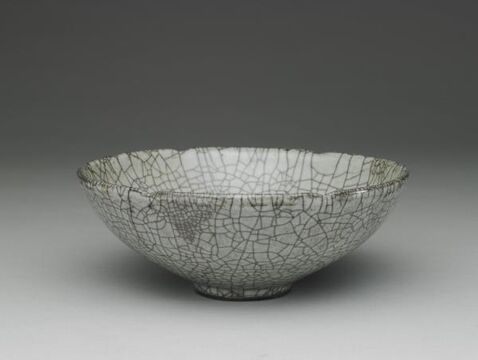
The rim of this finely potted bowl is notched into elegant mallow or hibiscus petals, draped in a smooth, translucent sea-green glaze.
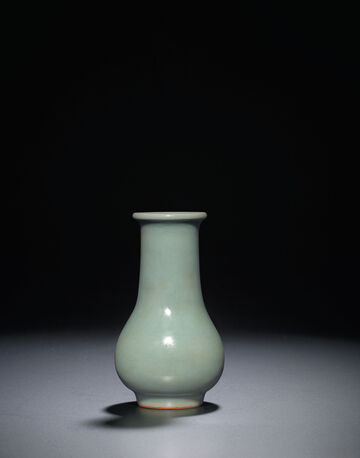
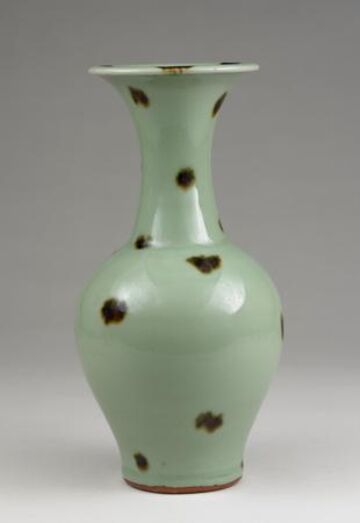
Potted with a flared mouth, slender neck, and rounded body, this vase highlights the translucent, jade-toned celadon glaze of the Longquan kilns.
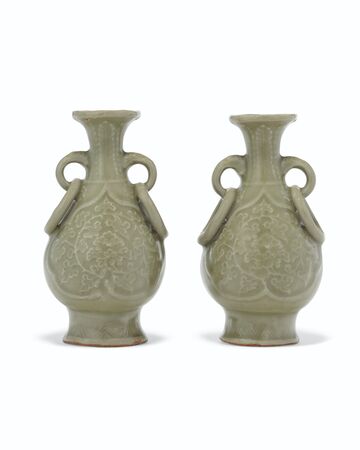
These delicate companion vases display pear-shaped bodies molded with raised floral sprays and loop handles on the neck beneath an attractive green celadon glaze.
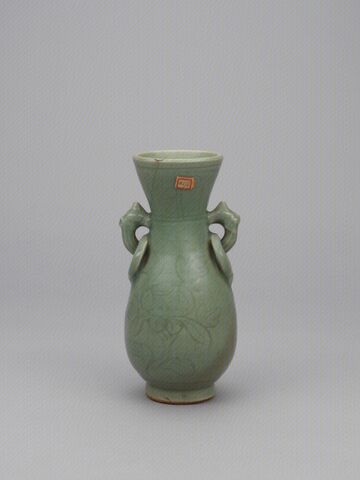
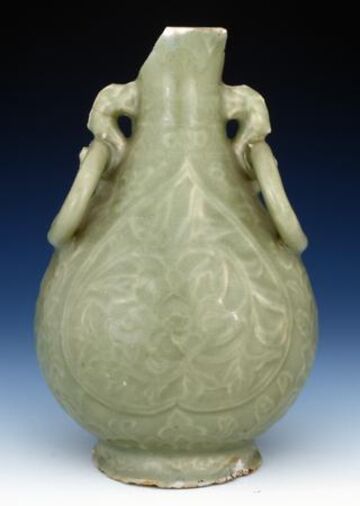
Decorated with carved scrolling foliage on the body, the neck is flanked by two monster-mask loop handles carrying loose rings under an unctuous celadon glaze.
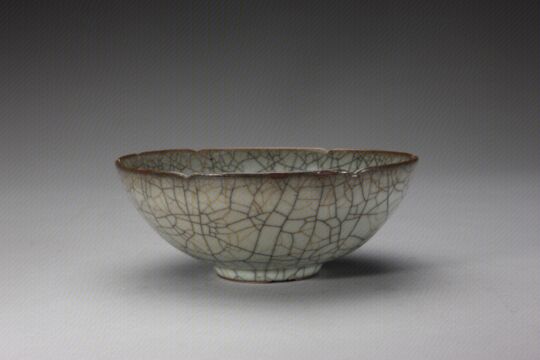
The mouthrim is indented into a mallow flower form, coated in an unctuous greenish-grey glaze suffused with the classic Ge ware crackle matrix.
A well-potted baluster vase covered in a rich, saturated celadon glaze, characteristic of Longquan wares produced for temple worship and export during the 14th century.
Created in the early 15th century, this vase showcases the lustrous jade-like glaze and crisp incised registers favored by the early Ming imperial court.
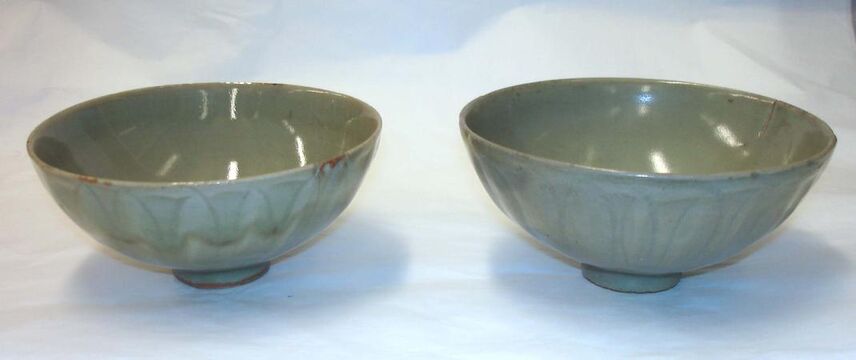
Exhibiting the minimalist elegance of Song aesthetics, this bowl features steep flaring sides, a small footring, and a silky sea-green monochrome glaze.
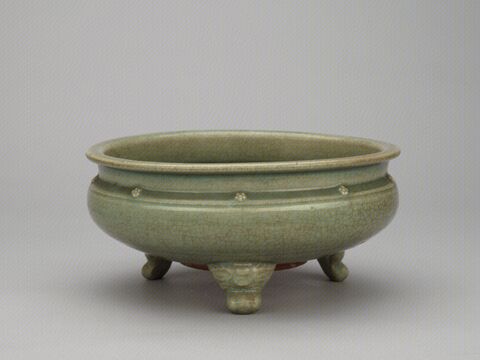
Modeled with an archaic bronze silhouette, this censer rests upon three short cylindrical feet and is coated in an even, glossy olive-celadon glaze.
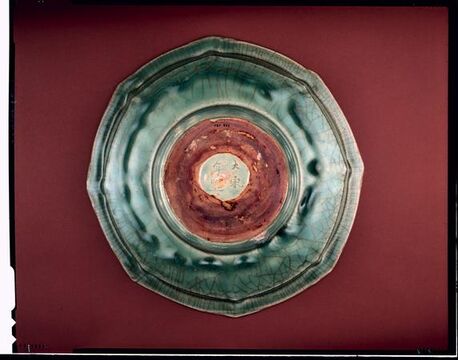
Produced in the waning years of the Ming dynasty, this dish retains the heavy potting and deep olive-green glaze typical of late Longquan kilns.
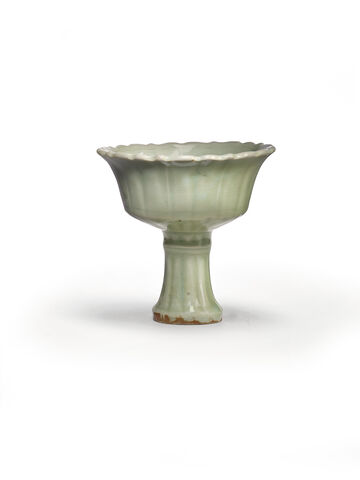
This elegant wine cup has a deep rounded bowl perched on a hollow columnar stem, wrapped in a smooth, jade-like green celadon glaze.