Historic Ceramic Art, Cultural Heritage, Museum Collections & Auction Provenance.
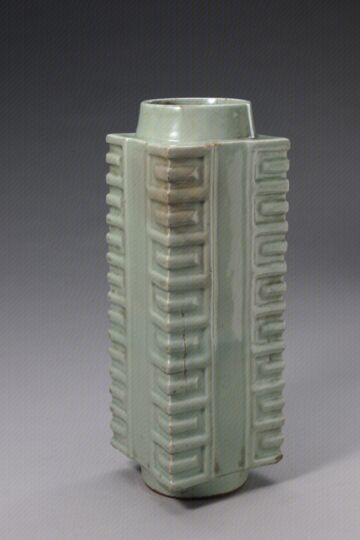
An archaic jade-cong-inspired quadrangular vase with raised horizontal bands and circular mouth and foot, representative of the Song archaistic ceramic renaissance.
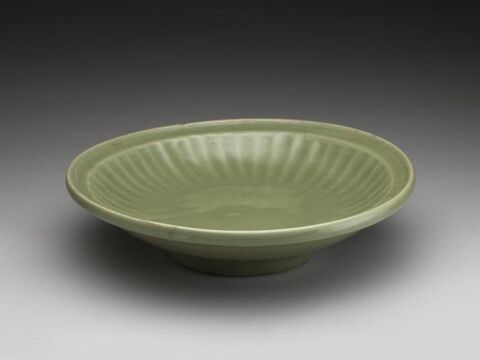
A circular celadon plate decorated in the center with a rendered chrysanthemum spray, surrounded by radiating fluting under an olive glaze.
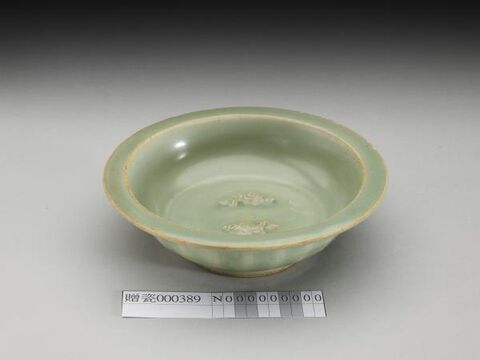
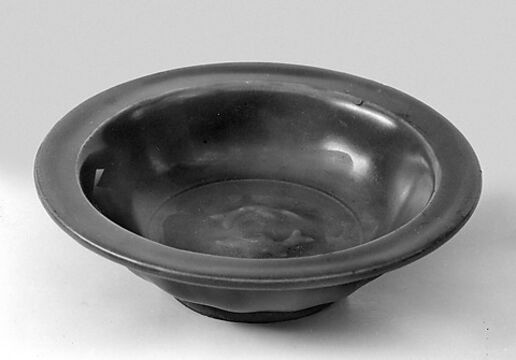
A classic Longquan-style celadon washer featuring two molded fish swimming in opposite directions on the interior well beneath a thick green glaze.
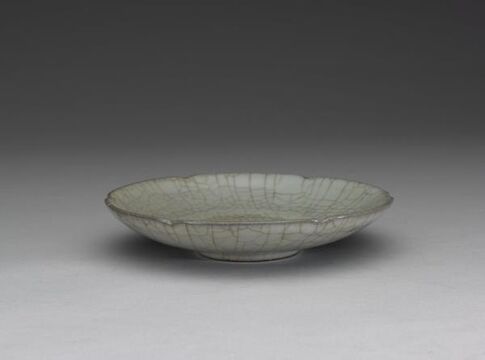
A delicately potted celadon saucer dish featuring an undulating petal-lobed rim echoing a blooming hibiscus flower, covered in an unctuous glaze.
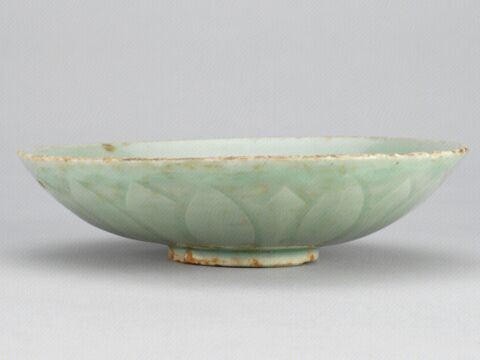
A shallow celadon dish modeled with densely molded flutes resembling chrysanthemum petals around the cavetto, coated in a serene green glaze.
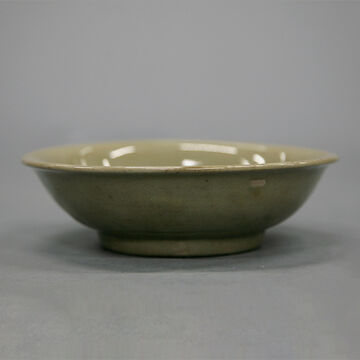
A Ming dynasty Longquan celadon plate with molded medallion designs beneath an olive-toned feldspathic glaze, illustrating the export and domestic dining ware of the period.
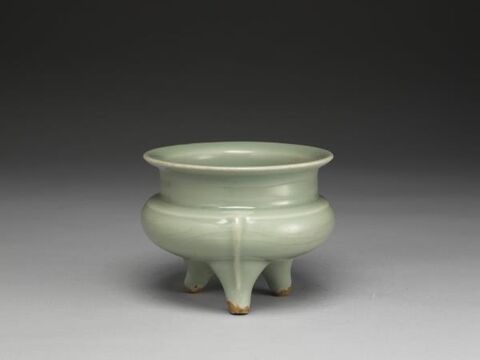
An incense burner modeled after archaic bronze forms with a compressed globular body supported on three slender tapered legs, glazed in pale celadon.
A 13th-century celadon basin featuring twin fish molded in relief at the center, signifying harmony and abundance, covered in a glossy sea-green glaze.
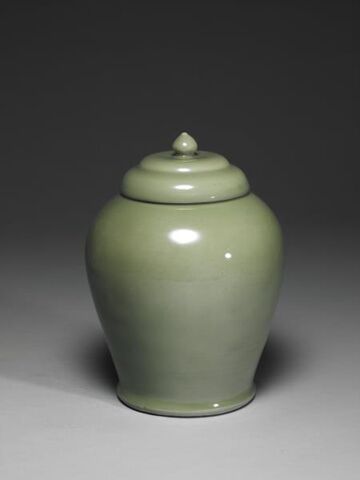
A stoutly potted Ming celadon storage jar complete with its matching lid, applied with a durable olive-green glaze.
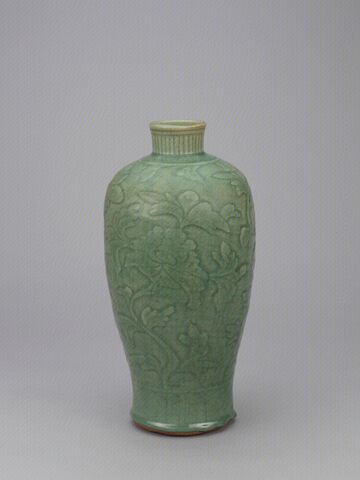
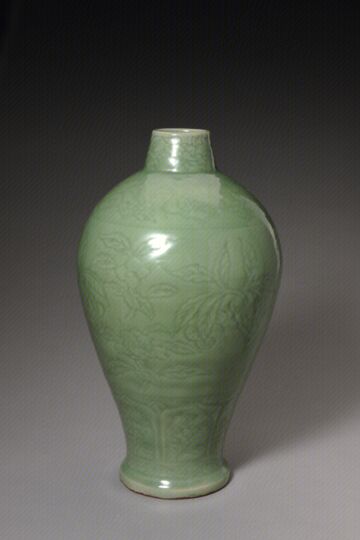
A classic high-shouldered meiping vase with a narrow tapered base and small mouth, enrobed in a rich monochrome celadon glaze typical of Ming Longquan wares.
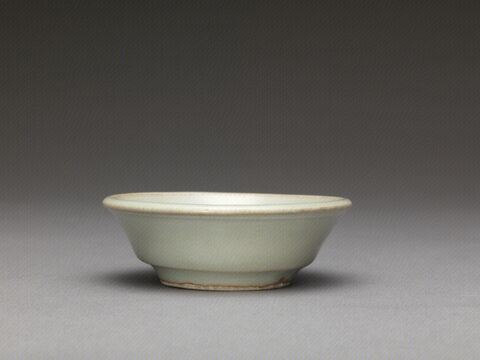
A petite scholar's desk water receptacle potted with minimal ornamentation to showcase the pure, jade-like celadon glaze.
A magnificent Ming dynasty meiping vase deeply carved with branches bearing peach, pomegranate, and finger citron (the 'Sanduo' or Three Abundances), draped in a translucent celadon glaze.