Historic Ceramic Art, Cultural Heritage, Museum Collections & Auction Provenance.
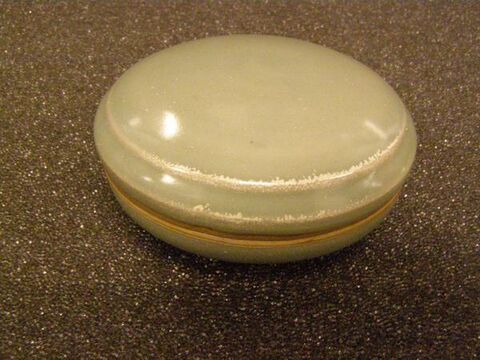
A circular ceramic lid from a jar or box, finely glazed in Southern Song celadon with a delicately molded finial handle.
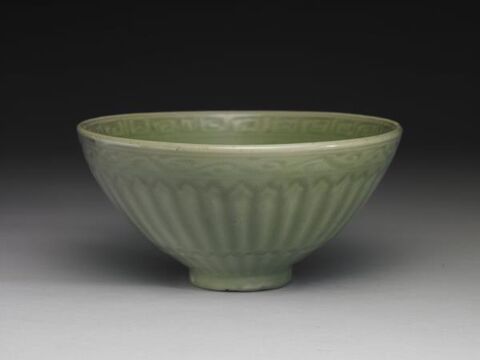
An early Ming dynasty bowl featuring carved exterior petal ribs that echo Buddhist lotus symbolism, enrobed in a warm olive celadon glaze.
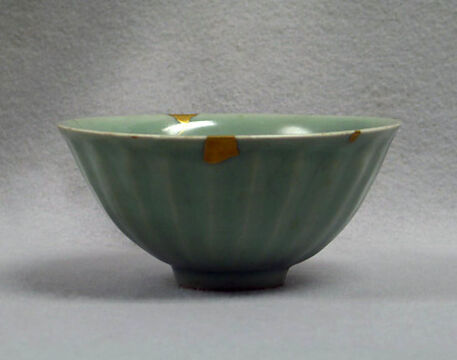
A 13th-century celadon bowl displaying the soft satiny glaze finish and solid potting characteristic of late Song through Yuan Longquan production.
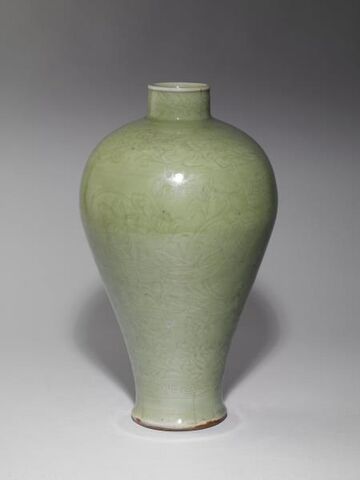
A gracefully contoured meiping vase with high swelling shoulders and a small collared neck, fully glazed in lustrous green celadon.
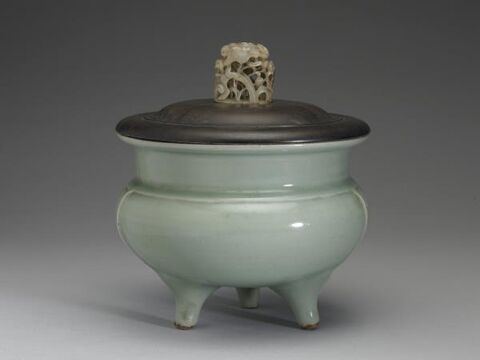
An incense burner modeled after the Neolithic hollow-legged bronze 'li' tripod, covered with a soothing sea-green glaze highlighting white slip-ridged ridges.
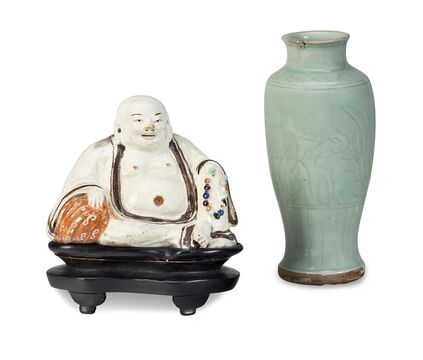
An auction lot comprising a small Longquan celadon glazed baluster vase together with a painted Cizhou sculptural figure of the smiling Buddha Budai.
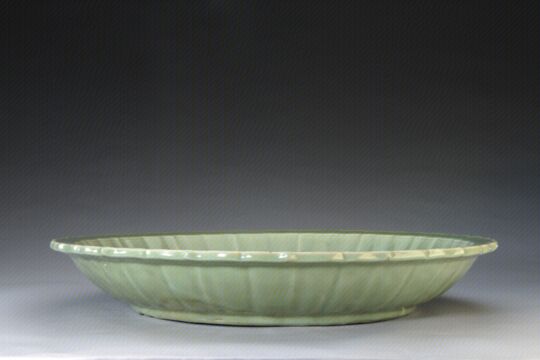
A Yuan dynasty celadon charger with bracketed foliate edges, molded fluting in the cavetto, and a glossy olive-green glaze.
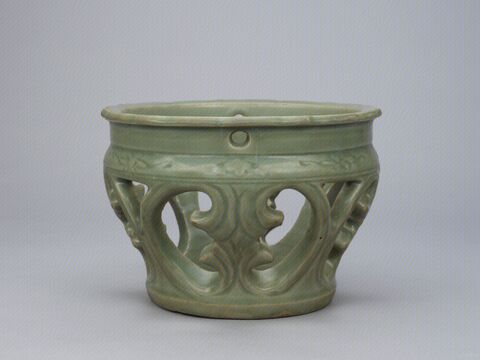
A ceramic stand or base pierced with intricate openwork apertures, designed to support censers or ornamental vessels while showcasing bright celadon glaze pools.
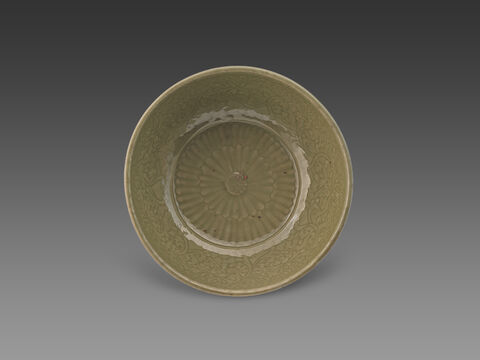
A finely finished Ming celadon bowl with elusive, softly incised anhua floral scrolls visible beneath the glossy surface glaze.
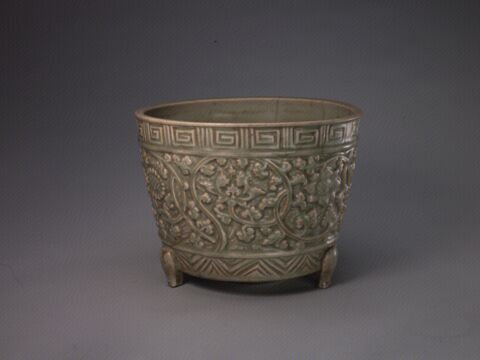
A cylindrical tripod burner decorated in relief with a wide band of blooming lotus flowers, supported on three stepped paw feet under a thick Yuan-period celadon glaze.
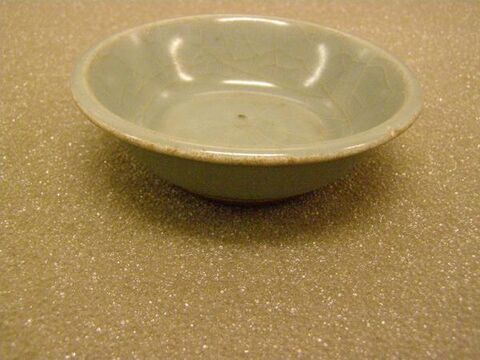
A Chinese celadon glazed ceramic dish of the Song dynasty, exhibiting balanced proportions, a trimmed footring, and a serene green hue.
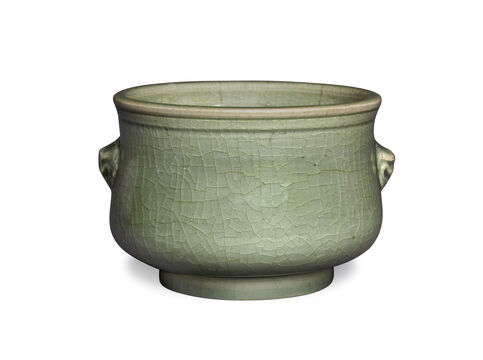
An unctuous celadon-glazed censer suitable for ritual altars or scholars' desks, featuring a lustrous green glaze over grey porcelain.