Historic Ceramic Art, Cultural Heritage, Museum Collections & Auction Provenance.
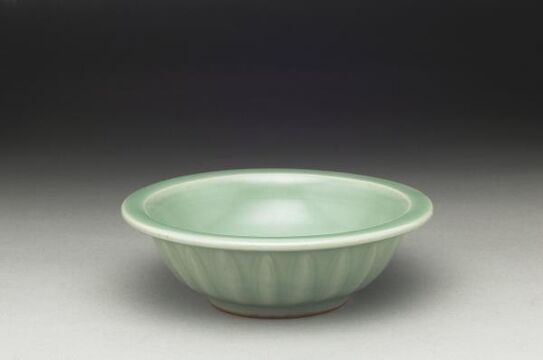
An iconic Southern Song Longquan piece combining molded twin fish in the interior well with deeply carved upright lotus petals wrapping around the exterior.
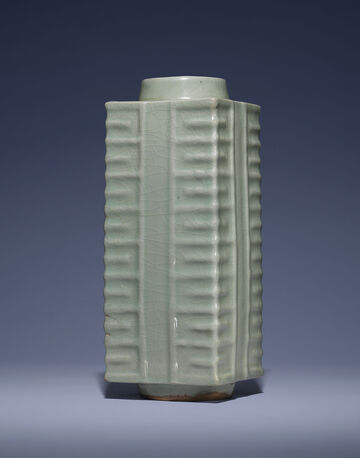
A substantial quadrangular vase imitating an ancient jade cong with corner trigram-like raised registers, enveloped in an unctuous soft bluish-green celadon glaze.
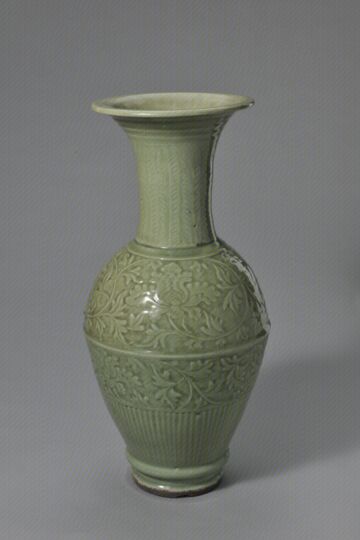
A large yen-yen or phoenix-tail vase featuring a trumpeting flaring neck and rounded baluster body adorned with sculpted scrolling lotus vines under a thick green glaze.
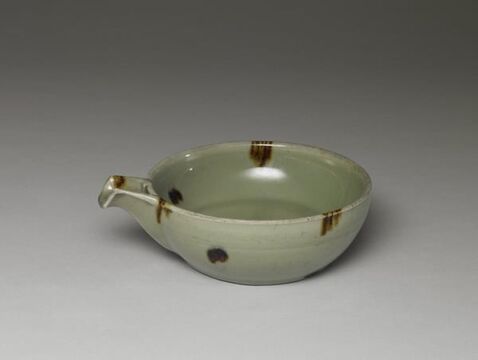
A 14th-century spouted pouring vessel (yi) finished in a soft green glaze intentionally accented with dynamic iron-oxide brown spots (tobi seiji).
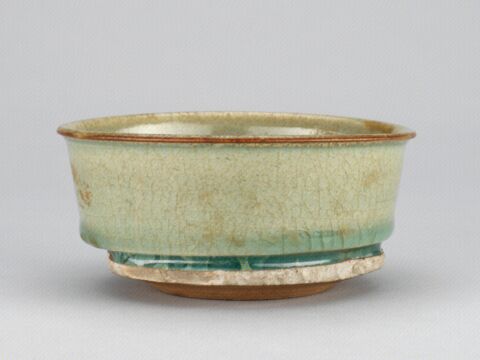
A restrained Song celadon brush washer of clean cylindrical form, celebrating pristine glaze thickness, jade-like tactility, and minimal silhouette.
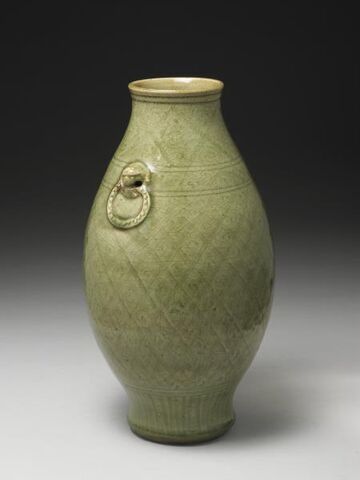
An ovoid olive-shaped vase carved with diaper and lozenge grounds, typical of 16th-century Ming ceramic ornament, covered in a glossy celadon glaze.
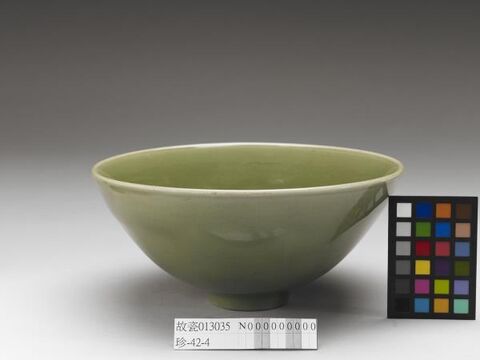
A circular ceramic bowl with outward flaring walls resting on a neat footring, finished in an even monochrome celadon glaze.
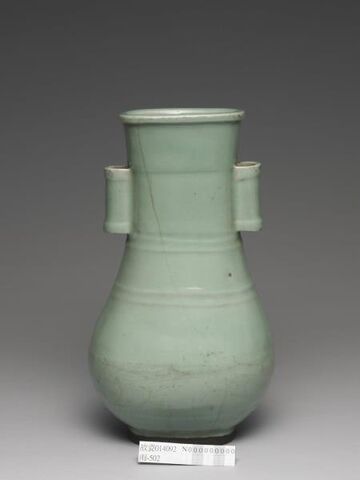
A celadon vase designed with cylindrical tubular handles flanking the neck, reflecting the traditional pitch-pot (touhu) arrow vase tradition.
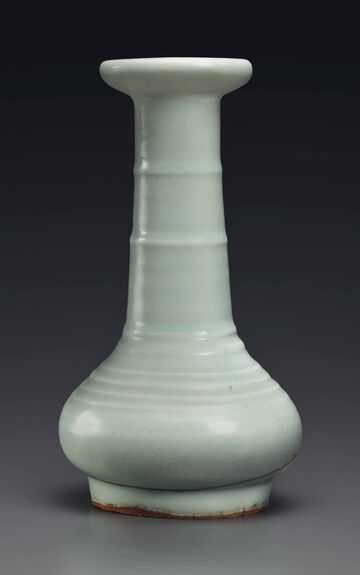
A masterwork Longquan vase featuring a tall ribbed neck reminiscent of bamboo culms, coated in a flawless powder-green (kinuta) celadon glaze.
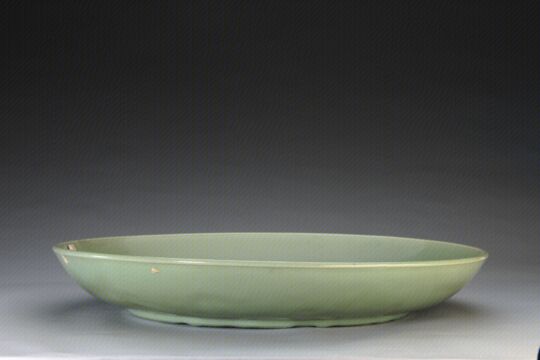
A heavy-bodied Ming celadon serving dish with gently rounded sides and a wide base, covered in a rich sea-green glaze.
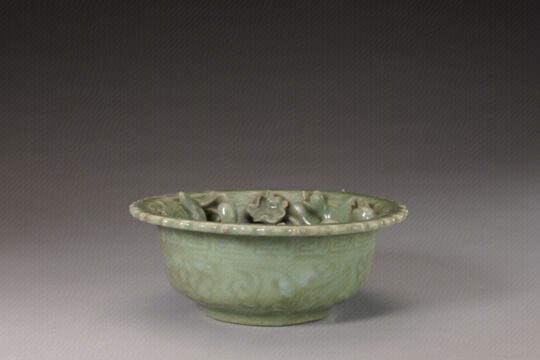
A deep celadon bowl molded or carved with exuberant auspicious motifs of boys playing among undulating lotus scrolls, conveying wishes for male progeny.
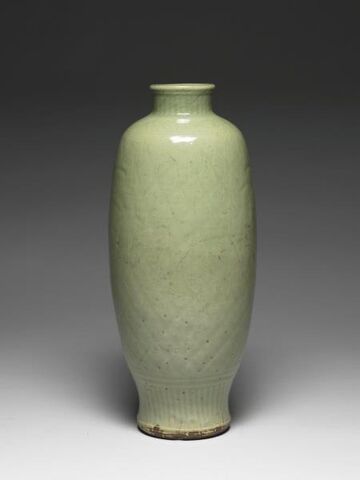
A Ming celadon vase of elongated olive form combining crisply incised lattice backgrounds with naturalistic floral blossoms under a rich feldspathic glaze.